Travelling on a Women’s Expedition in India taught Liz how to navigate everything from crossing the road to eating communally thanks to guidance from her local leader.
If there’s one thing I learned from my trip in India: it isn’t really a place you fully figure out. You experience it, little by little – from erratic traffic and midday heat to streets that never seem to sleep and the warmth of total strangers – usually with a few surprises along the way.
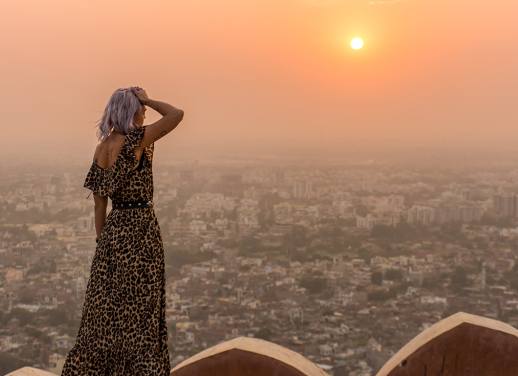
There’s 35.5 million people in Delhi and judging by the traffic when I landed at 11 pm, every single one of them was awake.
Before going to India, I did what I always do before a big trip. I read every article about what to know before visiting and watched countless videos about what to pack. I bought the linen pants (and the matching linen shirts).
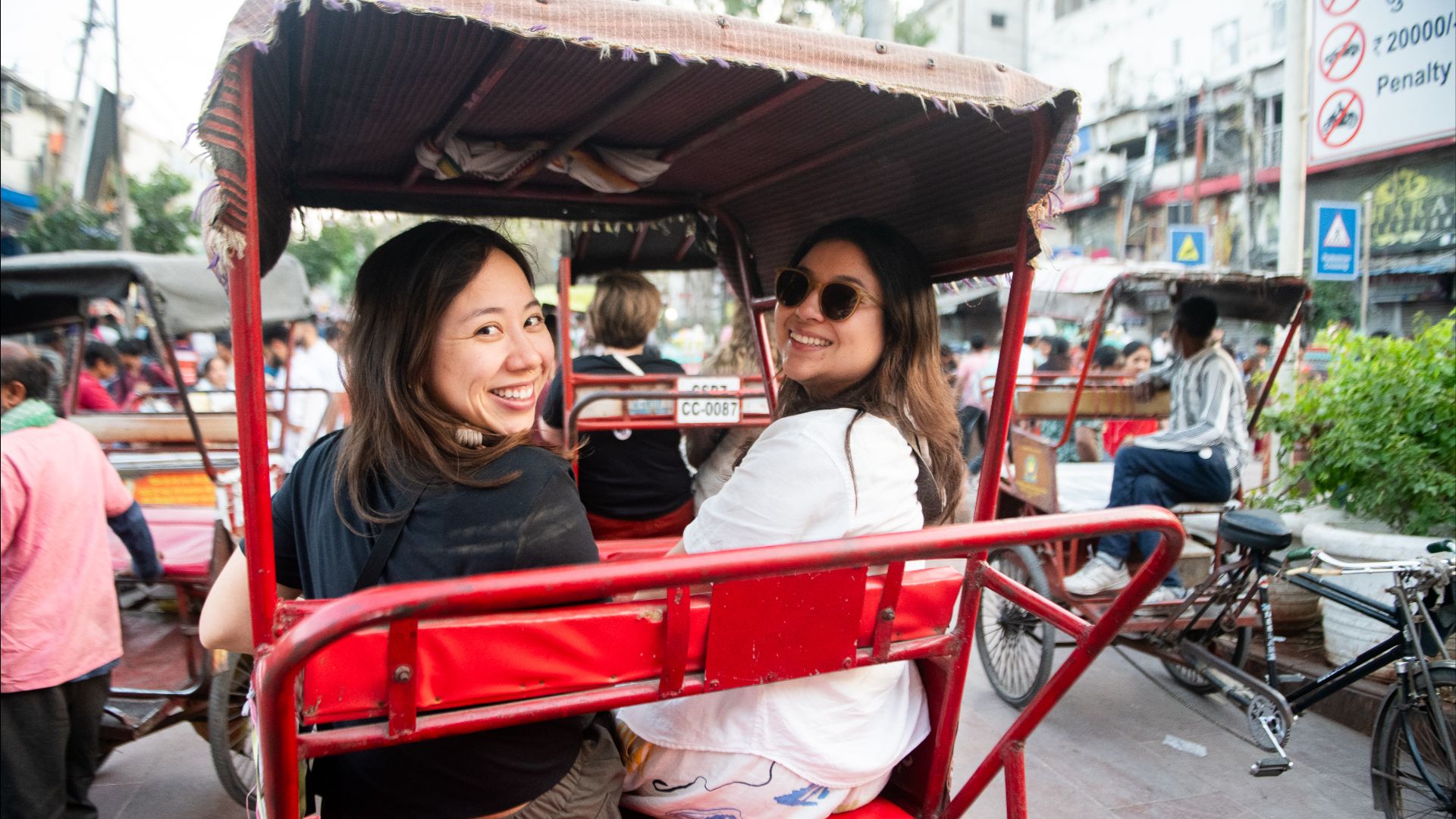
Even after all of that, I landed feeling wildly unprepared. Diwali celebrations were around the corner. Delhi, already alive with festivities, left me reeling with culture shock – a phrase I’ve heard often, but never fully understood. I spent my first few days gripping the rickshaw seat every time we merged into traffic, only to realise there’s actually a rhythm to it all.
Pretty quickly, I was glad not to be figuring all of this out alone.
I travelled on Intrepid’s Women’s Expedition in Rajasthan. Our local leader, Parul, ended up becoming the person we relied on for pretty much everything. At various points, she acted as our translator, crossing guard, food-safety expert, cultural decoder, unofficial group therapist and Hindu deity encyclopedia. But she also just felt like the kind of local friend who can navigate anything.
‘I feel so privileged to share Indian culture and I’ve heard many times from travellers their perspective changes after visiting,’ Parul says. ‘Helping shift peoples’ perception of my country is an honour.’


It’s different experiencing India as a solo female traveller
India is one of those places people from North America seem to have extreme opinions about. As a solo female traveller, I arrived with my senses dialled up, constantly trying to separate real caution from the anxiety other people had projected on me before I even boarded the plane.
Parul’s perspective helped a lot. ‘India has genuine safety concerns, just like many countries, but international media sometimes creates the impression that women cannot travel independently here,’ she explained.
At our welcome meeting, a few women admitted they hadn’t left the hotel yet because they simply didn’t know where to begin. How do you hail a ride safely? What’s considered disrespectful to wear? Are there any places women shouldn’t go alone?
Parul suggests focusing on familiarising yourself with local culture and religion and to stay aware when exploring. ‘Have an open mind and expect the unexpected,’ she says.
Happily, travelling in a group created an immediate sense of safety and ease. I was able to rely on fairly universal advice most of the time: be aware of your surroundings, respect local customs, trust your instincts and stay connected.
A few other things that were useful during my trip in India:
- An eSIM to stay in touch with my group
- Loose modest clothing that kept me cool without making me stand out
- A scarf to cover my shoulders for temple visits
- Most important of all, a willingness to ask questions instead of pretending I understood.
Read more: The rickshaw ride in India that puts women in the driver’s seat
Even after research, there was so much I wasn’t prepared for
I think India can feel intimidating for a lot of people, and to be fair, there are things worth preparing for. I wasn’t prepared for how flexible you need to be. Things change constantly. Traffic impacts plans. Festivals affect schedules. Trains run late. Roads close unexpectedly. You really do have to loosen your grip on the itinerary a little bit.
Throughout our trip, Parul showed us how to handle stuff we weren’t familiar with. From persistent street vendors to managing ourselves in busy and crowded spaces without feeling nervous or overwhelmed. Travelling with a local took away the mental load of working this out alone.
Parul always knew when to step in, which helped me relax and feel more open to the experience. For example, Parul taught us the art of bargaining – something that’s part of the process of shopping in India. I was terrible in the beginning because every instinct in my body wanted to apologise for negotiating.
By the end of the trip, the same women who felt unsure leaving the hotel were climbing into rickshaws without hesitation, navigating train stations and effectively bargaining in markets.
It takes a few days, but confidence does come. Experiencing all this alongside other women in a country that pushes you outside your comfort zone was a meaningful and unexpected part of trip.
Read more: The best places to go in India based on your travel vibe
I wish I’d known how curious crowds can be
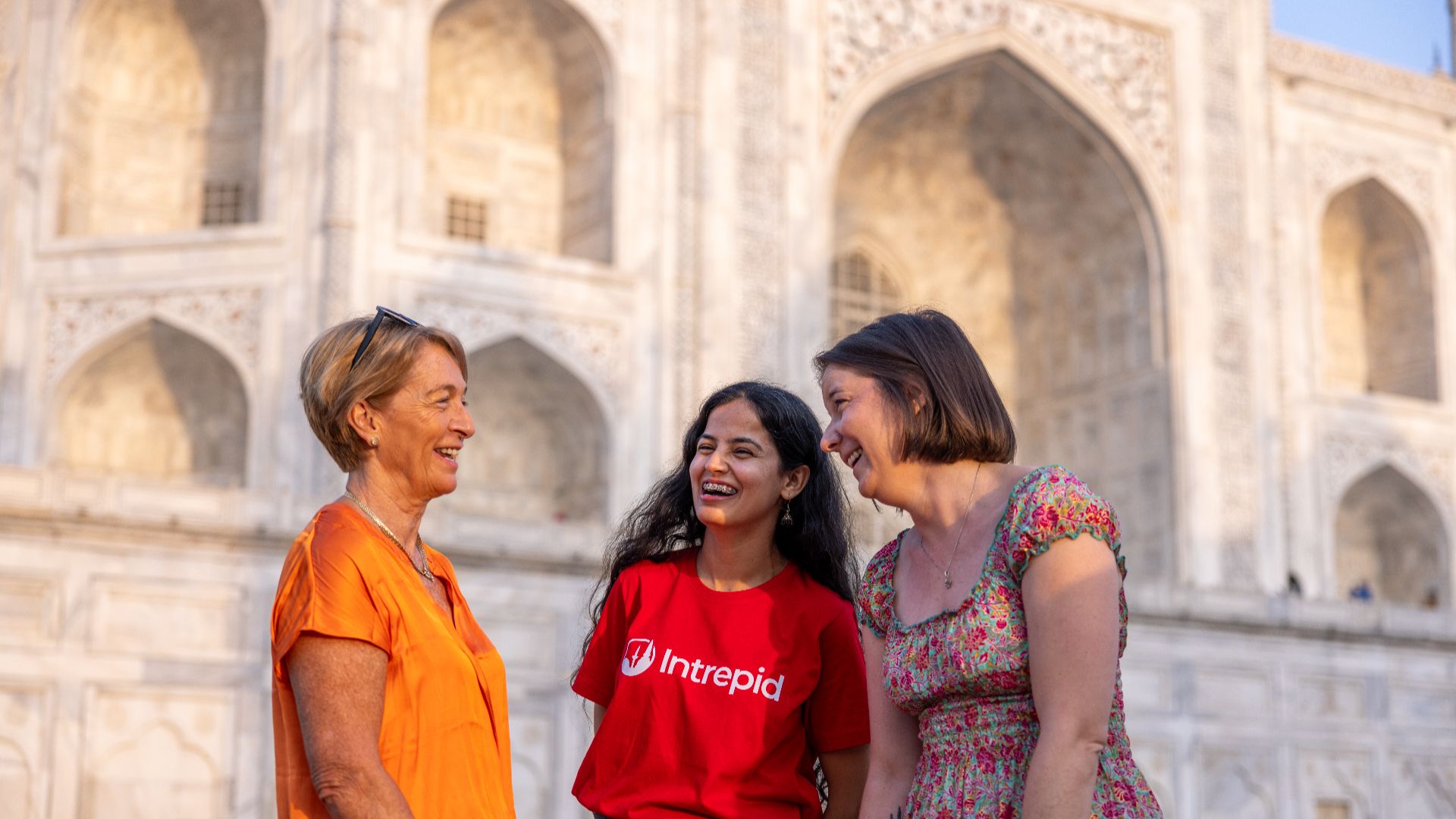
The staring was probably the biggest adjustment and if you’re an obviously foreign woman, you will likely attract attention. Some people will stare openly, and others will ask for selfies.
At the Taj Mahal, I got a glimpse into what it must feel like to be an A-list celebrity. Cameras were pointed at me from every angle. It felt like hundreds of strangers were asking for photos. At first, it was overwhelming, but I quickly learned it was interest and not hostility.
Having Parul explain cultural context in real time made an enormous difference. Her advice was to ignore it, but if anyone was crossing boundaries, we could alert a security guard or a local woman for help. She told us photo requests are mostly out of genuine curiosity, but there’s always an option to say no and keep walking. This helped me realise being polite didn’t mean ignoring my boundaries.
Read more: Authentic cultural experiences across India


I didn’t know how much time you could really spend in India
I massively underestimated how diverse India is. In a little over two weeks, we travelled by train, 4WD and rickshaw through Rajasthan, and even then, we barely scratched the surface. You could spend years exploring different regions, languages, cuisines and traditions and still feel like a beginner.
One morning, I’d be weaving through traffic in Delhi wondering if crossing the street counts as an extreme sport and a few days later, I’d be in the countryside doing yoga at a heritage property. Then one night, I lay under an open sky in the Thar Desert with nine new friends, wrapped in thick blankets in comfy camp beds, with nothing between us and the stars while Parul lulled us to sleep with bedtime stories of ancient gods and goddesses.
As a city-living Seattle person, I didn’t expect open-air desert camping to become one of my favourite memories from the trip.
Experiences that aren’t on any tourist map
Of course we saw major sites like the Taj Mahal, but honestly, the moments I remember most are the ones I couldn’t have planned myself.
We watched a Bollywood movie in the cinema without subtitles. Afterwards, we collectively tried to figure out the plot late into the night. We made dinner with a local family in their home and then made our way to our host’s rooftop to watch Diwali fireworks exploding above Jaipur.
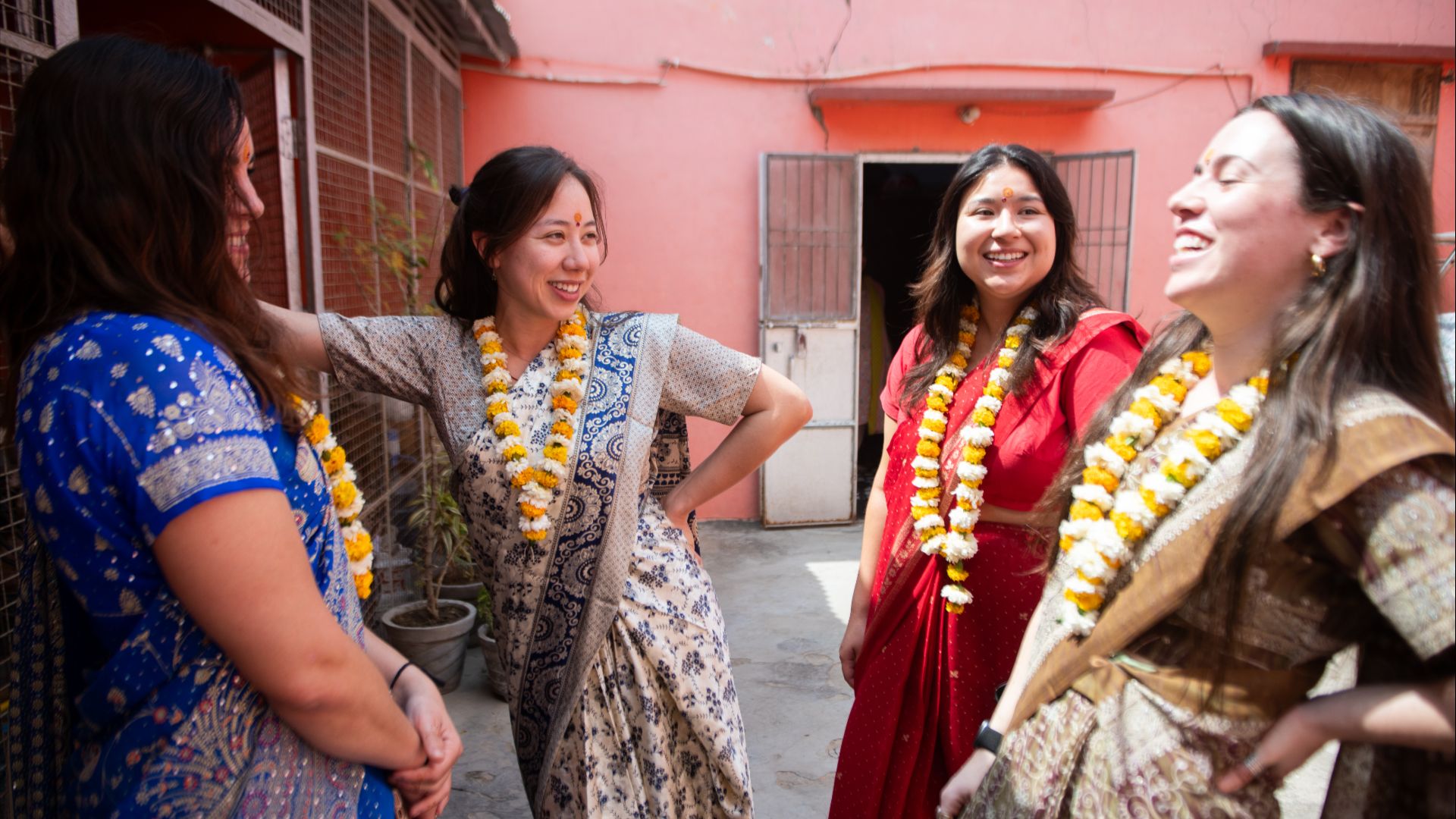
We joined a collective of women to make pakoras and roll bite-sized fritters like papadums. A local woman from a sari shop helped us drape our saris before visiting the Taj Mahal and we spent long train rides drinking chai and playing cards.
A lot of these experiences happened because we were travelling with someone local who genuinely wanted us to understand the country beyond the highlights reel. Like all of Intrepid’s local leaders, Parul’s love of her country was boundless. She naturally had this way of connecting everyday moments back to bigger conversations about family, religion, history or social expectations for women in India.
In one village, Parul pointed out some doors painted with Ganesha, explaining it usually means there’s been a wedding there recently, since the deity is associated with new beginnings. On another day, she broke down all the different forehead adornments we had been noticing, explaining how red kumkum powder is offered when entering a home or temple and how bindis can signal anything from marital status to spiritual beliefs or fashion preferences.
Read more: An expert’s guide to India for first timers


The time of year you visit India makes a big difference
If I went back, I’d probably plan around both weather and festivals more intentionally because they shape the experience so much. India’s weather seems to operate on extremes. I learned quickly why so many activities happen early in the morning before the heat properly kicks in.
I travelled in October during Diwali, which was incredible but also intense. The atmosphere felt celebratory everywhere, but it also meant heavier traffic because more people are out on streets.
Celebrations also meant schedule changes. I was very thankful to have a local leader through all of that because at times we had to change our activities because getting across the city would have taken hours.
I wish I’d known more local phrases beforehand
One of the nicest parts of travelling with a local leader was picking up small phrases. Parul says when an ‘international traveller speaks the language, locals really appreciate the effort.’
A simple greeting like ‘namaste’ goes a long way, but phrases like ‘chalo chalein’ (let’s go), ‘bahut acha’ (very good) and ‘dhanyawad’ (thank you) became part of our daily interactions.
Eating in India taught me more than any museum
Before visiting India, I thought I understood Indian food as a devotee to tikka masala and saag paneer. What I didn’t realise was that those dishes are just a small taste of India’s complex culinary traditions.
Travelling from city to city in Rajasthan, every meal told us something about the land, climate and trade routes that have shaped the region.
Some meals like the mirchi vada (whole deep-fried chillies) that we ate in Jodhpur cleared my sinuses. Some of our group loved the heat and others absolutely did not, but restaurants can adjust levels (or bring a side of cooling yoghurt).
Parul made a point of showing us microregional differences wherever we ate. On our first morning in Delhi, she brought us to a south Indian restaurant for breakfast, where we were introduced to dosas to help us understand the regional differences in food, especially between the north and south.
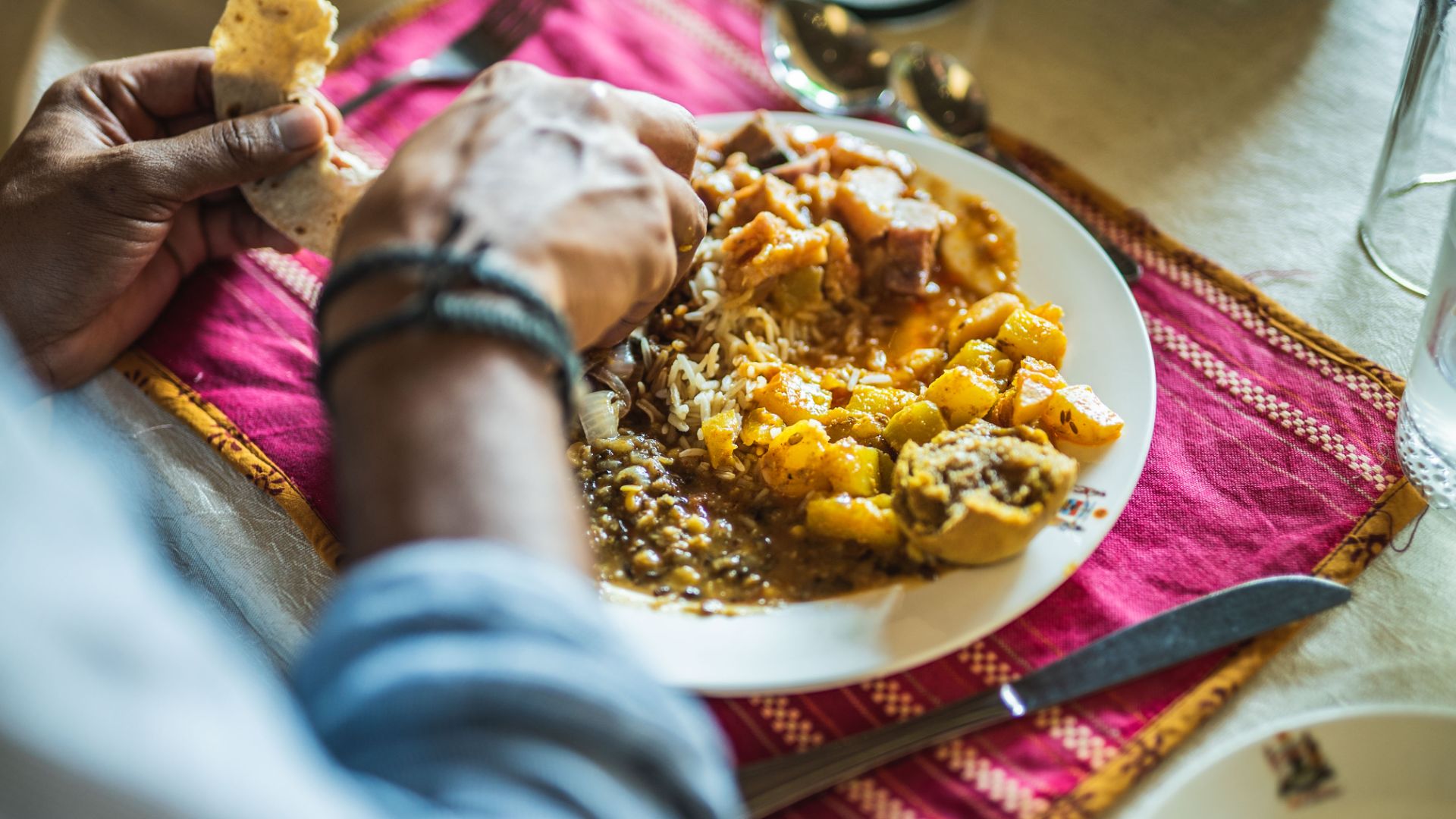
In the north, meals are often served with roti, naan and parathas, which reflect the wheat-growing region. We also found tandoor-cooked meats and dairy-rich dishes made with cream and ghee, shaped by Mughal influences. The Mughal empire also brought milk-based desserts, like my personal favourite, kulfi, or Indian ice cream.
Further south, the humid coastline and heavy rainfall ensure plenty of seafood, rice and coconuts. You’ll find fermented batters made with rice and lentils for dosas and idli rice cakes and coconut-milk sauces, tempered with curry leaves and mustard seeds.
Dining customs my local leader made sure I knew
There were also small pieces of etiquette I would never have known without guidance, like eating with your right hand (sorry, lefties) or understanding how meals are often shared communally.
Parul was amazing at giving us context without making us feel nervous about getting things wrong. Most people were incredibly gracious when we inevitably made mistakes.
I wish I’d known India is who you share it with
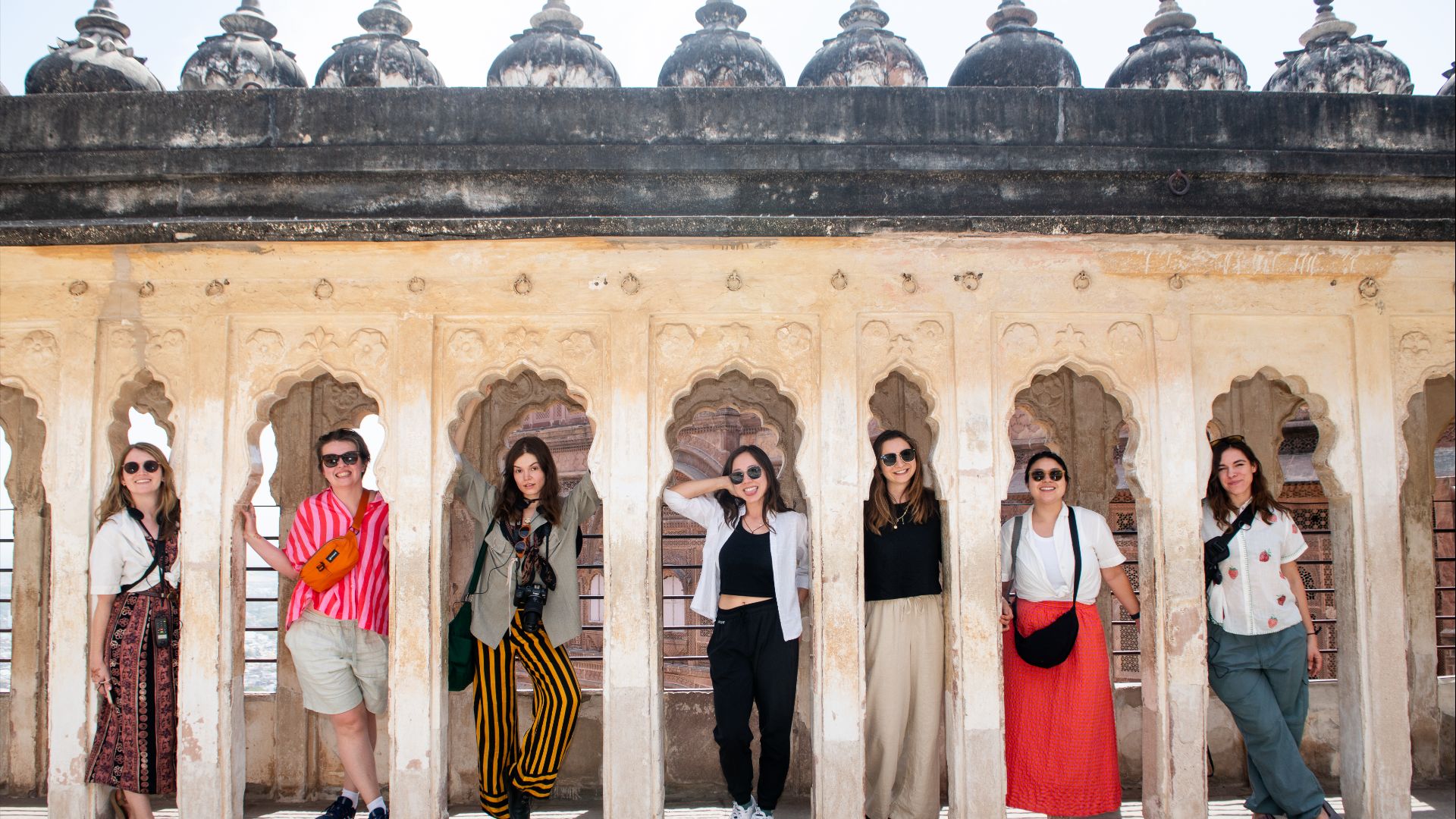
When I think about India now, I remember the people the most. There’s something really comforting about travelling with other women in a place that can feel overwhelming at times. Someone always had hand sanitiser, sunscreen, electrolytes, Band-Aids or hairspray. Someone was always checking if everyone made it across the street.
I remember train rides where we were packed in like sardines, three bunks high, sharing snacks and laughing for hours. I remember riding in women-only train carriages where locals asked us questions about our homes and what we thought of India. I remember celebrating a fellow traveller’s 60th birthday on a rooftop while Diwali fireworks exploded around us. And going splitsies at dinner because there were too many dishes to choose from, so we just ate family style.
I remember how quickly a group of strangers started feeling familiar.
Expand your horizons with one of Intrepid’s expert-led adventures in India.