Following a period of intense work, Diana Jarvis escapes for a summer break with a difference to the Swedish island of Vrango, gradually tuning into a slower pace of life.
A seagull glides above me and a gentle breeze brushes my face. I inhale deeply, my eyes closed against the golden-hour glow. There’s a salty tang in the air and the scent of seaweed and lilac. This might be the deepest breath I’ve taken in months. I’m a little giddy.
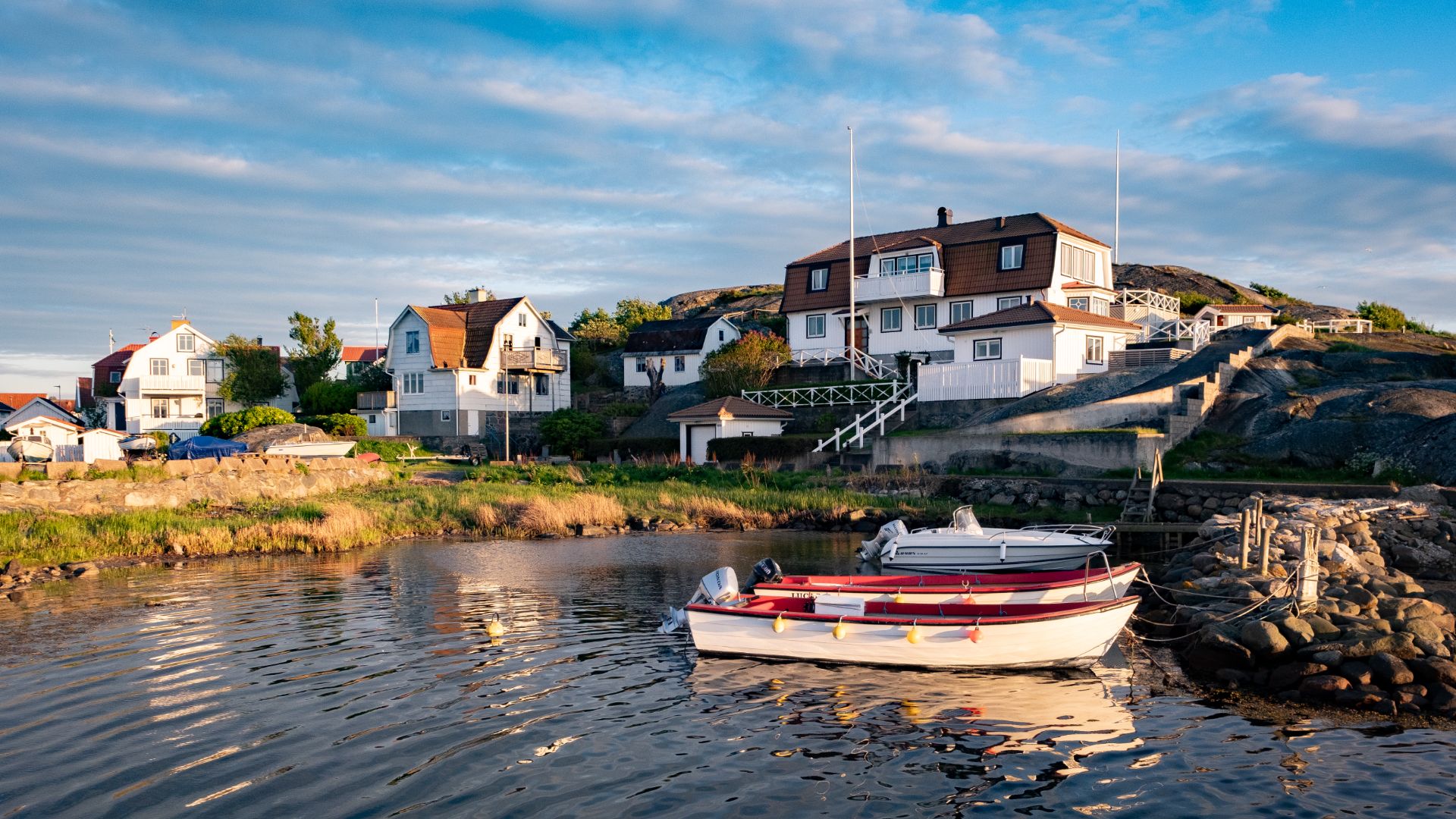
I’m sitting by the Pilot House, a tiny maroon hut at the highest point on the Swedish island of Vrango. I say highest, but it’s all of about 50 metres (164 feet) above sea level – the vantage point from where generations of pilots helped to safely guide boats ashore among the treacherous rocky outcrops in the bay below. A zigzag of port buildings edge the far side of the bay like a felt-tip scribble. Further inland, the cluster of whitewashed houses of the island’s only settlement look custard-topped in the last light of day.
Before I set out on this small-group trip, I’d been working hard for months on a deeply involved project. Day after day, I’d been chained to my desk, alone at home, with barely time for a walk, let alone chance to think.
But here I am, after several days bobbing among the islands of the Gothenburg archipelago, oxygen finally reaching dormant synapses at the furthest reaches of my brain, high on giant bellyfuls of pure, pollution-free air.


From the city to something slower
The journey had begun in Gothenburg. A laid-back city, by most standards. Yet, it still thrummed to the beat of commerce and modern social life. Once on the ferry into the archipelago, however, that pace changed. The thwack of the waves against the boat, along with the white noise of the engine, was like a meditative ellipsis transporting me to a dream-like state.
‘In winter, the seas used to freeze and islanders had to skate to the mainland,’ our local Intrepid leader, Karlijn, tells us. I ponder the impossibility of ice on a warm May day at the start of summer, as a pair of eider ducks glides from under the prow, one fluffy duckling in tow.
‘But it’s less cold now and hasn’t frozen for maybe 20 to 30 years. Fewer people live full time on the islands, anyway; they’re more of a popular weekend retreat for Gothenburg residents,’ Karlijn continues.
Read more: Alternative destinations for summer and beyond


We whizz between lumpen grey granite outcrops, some with diminutive colourful buildings, each with a flagpole making them look like micronations. ‘There are around 20 main islands in the Gothenburg archipelago, but it opens out to hundreds of islets and skerries,’ she says as I spy a cormorant basking on a rock, wings outstretched as if to declare sovereignty over her very own queendom.
The first thing I notice when we disembark on Vrango is the silence. There’s a bike rack and couple of electric golf buggies, but otherwise, this is a vehicle-free island – at three kilometres (just under two miles) long and 500 metres (0.3 miles) wide, there’s no real need for transport.


Fika – a quiet lesson in lingering
Harkan, our island host, guides us past neatly clipped lawns and clapboard houses to Kajkanten, his guesthouse on the other side of the island. We’ve arrived in time for afternoon fika and we’re welcomed with hot drinks and cinnamon buns.
A Swedish institution, fika is essentially a twice-daily coffee and cake break where co-workers, friends or neighbours down tools and converse. But to the Swedes, it goes beyond sugary treats; it’s a state of mind. Just as much a verb as a noun.
We’d stopped in Alingsas, the self-styled capital of fika, before boarding the ferry, where I’d indeed sampled many delicious cakes. We’d heard a great deal about the history of bakeries in the town, but the cultural ritual itself hadn’t quite landed in my psyche, until now.
It had sounded regimented and prescriptive. But perhaps I hadn’t tuned into my own natural rhythms and those of the group around me yet. However, after spending two days in each others’ company, we lolled in the afternoon sun, nibbling our cinnamon buns and seemed to take a collective sigh, as we pondered important questions like: how big actually is an islet or a skerry before it’s officially an island? The rest of our lives felt a world away and all that mattered in this moment was this moment. Finally, fika started to make sense.
Read more: How to get the most out of Italy this season


Searching for soul food in seaweed
Island time here is all about natural cadence – the rise and fall of the tides, the turn of the seasons. Karolina Martinson, seaweed diver and chef, knows this only too acutely.
‘The water temperature is getting warmer earlier in the season, I can see with my own eyes that it is changing,’ she tells us, as we gather on the rocky shoreline.
She’s been diving these waters and observing the changes for over 15 years. ‘The communities on these islands were here because of fishing. Now there are fewer fish close to the shores, it’s important to ask the question: what are we going to eat from the ocean in the future?’
Having originally trained as an artist, Karolina has now combined her creative curiosity with a reverence for nature. She is spearheading a sustainability movement on the islands, geared around eating the wide array of shoreline plants and, crucially, the vast selection of seaweeds found under the sea.
She welcomes us with a kombucha, topped with lilac flowers, and picks white sea-campion wildflowers (which taste like freshly podded peas) and sea pink blooms for us to sample, before introducing the main staples from beneath the waves: large sheets of sculptural sugar kelp, purple vein-like Irish moss and an acid-green wig of gutweed. Though inelegantly named, it’s delicious, as we discover when it reappears later, deep fried, encasing chunks of halloumi.


A more mindful way to dine
Karolina guides us through preparing our feast as I chop carrots, lettuce and chilli and add it to apple cider-softened sugar kelp, before it’s topped with rape seeds and coriander for a Thai-style salad.
Others in our group knead dried kelp into flatbreads which are baked on an open fire. For dessert, dulse is added to panna cotta for one of Karolina’s signature dishes ‘dulse de leche’.
Once the work is done, there’s 12 of us around a big communal table. We slowly feast together on the dishes we’re created, along with barbecued catfish and okonomiyaki. It’s a world away from my rapid TV dinners at home. With conversation and conviviality, there’s time to properly digest.
Seaweeds are exceptionally nutritious. With concentrated amounts of vitamins and minerals, they’re particularly high in iodine, potassium, calcium, magnesium and iron. I can almost feel my gut microbiome thanking me.
Read more: Where to go for sun lovers – a monthly guide


Reconnecting with my senses and self
But this isn’t the only way the sea restores me in Vrango. On the final night, Harkan opens up his ‘relaxation raft’ – a sauna, jacuzzi, kitchenette and changing rooms, which floats in the harbour.
We’re a month from mid-summer, but the days are already long. The last embers of the day’s light are still evident on the horizon when I emerge from the intense heat of the sauna and plunge into the refreshing sea. It catches my breath and I’m alive to all my senses. Underfoot, the rocks are silken with seaweed, which I note now with greater reverence for its restorative powers. A heron swoops in to land on the rocky shore nearby and seabirds make their last calls into the inky night.
I walk back to Kajkanten around the harbour with a warm glow that feels like a forcefield around my skin. We’re so often caught up in deadlines and the dutiful business of modern life. But in these last few days, I’ve simply lived in the way my human body is designed to: breathing fresh pollution-free air, eating seasonal plants, connecting with my fellow humans and tuning into a shared, collective rhythm. Each of us, our own little island nation, in the archipelago of humanity.
Head to Vrango island on Intrepid’s small-group Taste of Scandinavia adventure, which visits Sweden, Denmark and Norway.
Images: Shot on location in Vrango with Intrepid by writer and photographer Diana Jarvis.