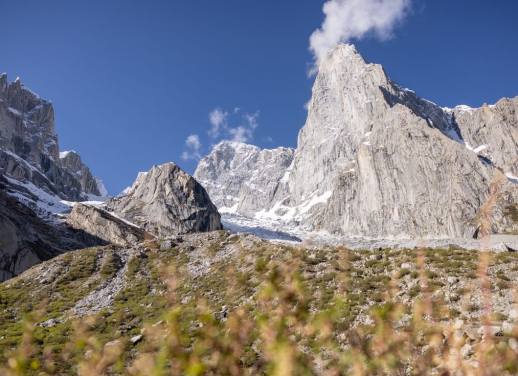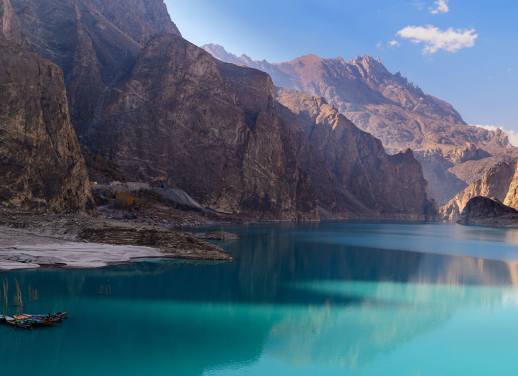
In Pakistan’s Karakoram mountains, a new hiking route is helping to break down barriers and promote sustainable livelihoods.
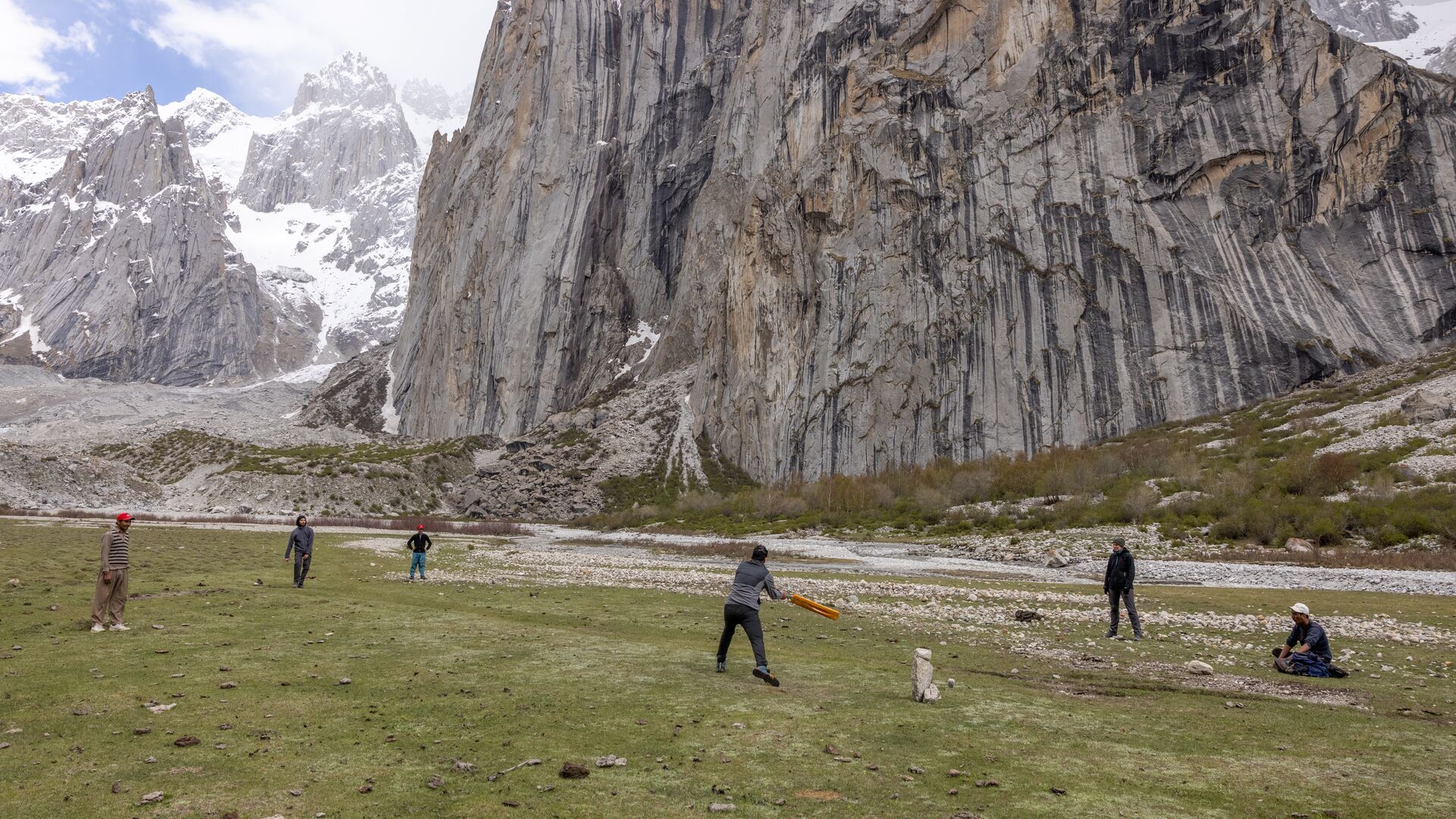
It’s been a while since I’ve picked up a cricket bat. But I’m high up in the snow-capped mountains of northern Pakistan, with no phone reception or other distractions aside from the surreal panorama of rugged peaks and oozing glaciers surrounding us in the Nangma Valley, giving me no excuse not to join our porters for a high-altitude hit. The grassy meadow at the top of the valley we’ve spent the last two days hiking up makes a good enough cricket pitch, and the porters have come prepared with bats and balls, ready to seize the opportunity to indulge in the national obsession.
Few of the porters speak English, but the universal language of sport allows our international hiking group to connect on a different level quite literally, at 4000 metres (13,000 feet) above sea level. To my sweet relief, my limited cricket skills and energy after the day’s hike prove to be a non-issue as the game kicks off on a chilly afternoon.
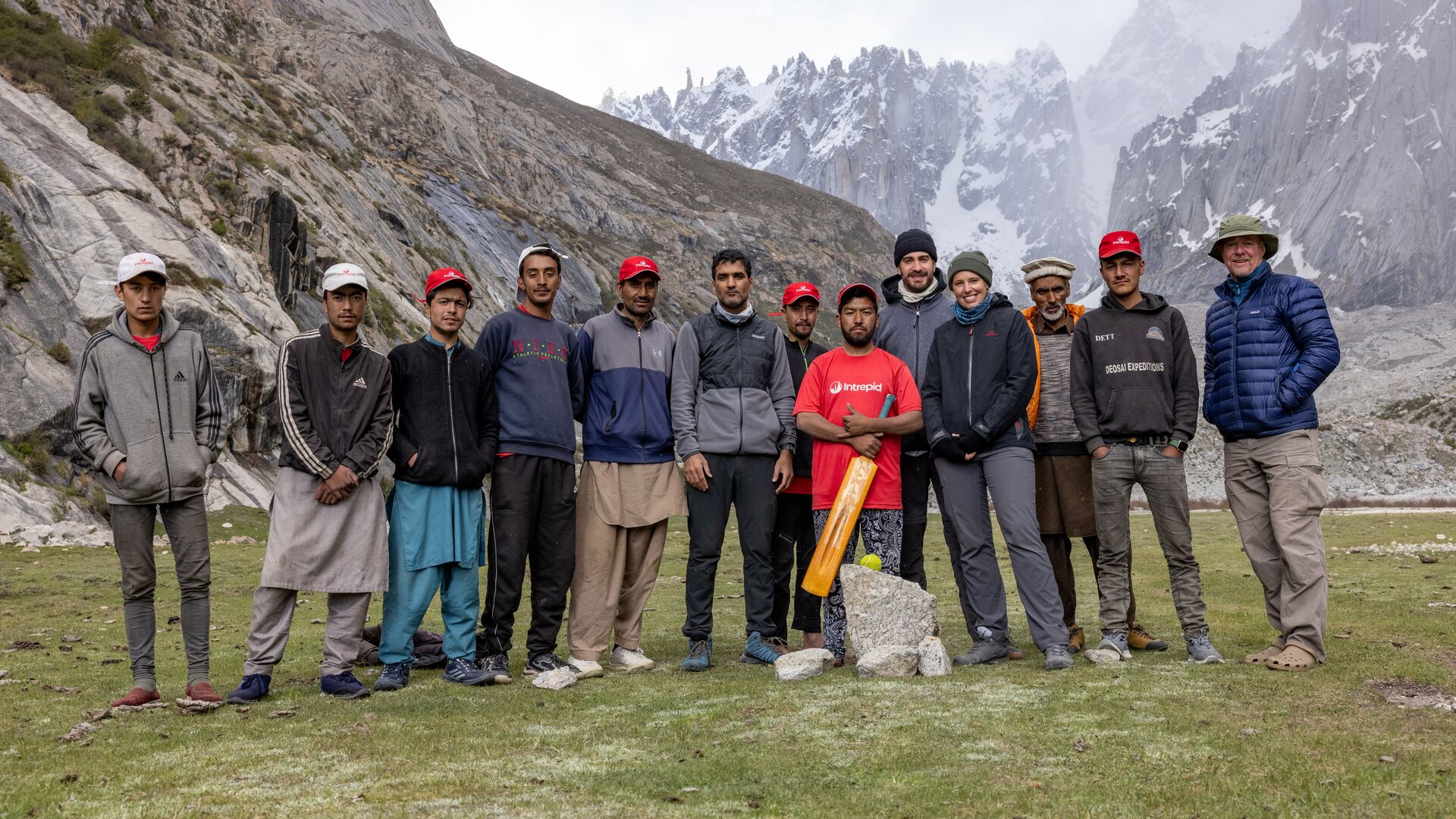
While the Pakistani bowlers take no prisoners when their fellow porters step up to bat, they go easy on me when my turn rolls around. One kindly porter, better acclimatised to the reduced oxygen levels at our elevation, even offers to run for me when I hit the ball so I can bat for longer. These small acts of kindness – a classic example of Pakistan’s deeply rooted culture of hospitality – contribute to making our cricket game one of my favourite memories from Intrepid’s Trek Pakistan’s Nangma Valley and Karakoram Mountains trip.
Taking us from the busy streets of the capital Islamabad to the magnificent Karakoram mountains in the administrative territory of Gilgit-Baltistan – which featured on Intrepid’s 2025 Not Hot List and was subsequently profiled in the New York Times and TIME Magazine – my Intrepid journey offers a humbling taste of one of the world’s most misunderstood nations. It also offers an opportunity to play a small but meaningful role in the sustainable development of one of Pakistan’s poorest regions.
Read more: Hear stories that are helping write the next chapter for Maasai girls and women


Work that hits close to home
Working as a porter is a physically and mentally gruelling profession. Porters frequently endure inadequate pay, poor gear and a lack of proper insurance, making them highly vulnerable in the world’s harshest environments. Lahore-based hiking enthusiast Umer Latif, founder of guided hiking tour company Beyond the Valley, was committed to addressing these issues, among others, when he pioneered hiking tours in the remote and then largely unknown Nangma Valley in 2023.
‘When we started this new trekking route, we also set a new standard for porter care,’ says Umer. All porters and support staff contracted by Beyond the Valley – Intrepid’s local partner – receive adequate food, shelter and insurance as well as payment above the government-mandated minimum wage of approximately PKR 1700 or about USD 6.10 per day. These might seem like basic human rights, but in Pakistan, providing them is not the norm. Fortunately, that’s changing.


‘Our guides provide regular awareness sessions and training during trekking expeditions, and these efforts have helped porters better understand their rights and welfare standards,’ says Umer. This has created a knock-on effect, Umer adds, with porters now advocating for higher welfare standards in Nangma and other trekking regions in Gilgit-Baltistan, home to five of the world’s 14 mountains over 8000 metres.
The Nangma Valley trek has also created opportunities for local porters to work more regularly, closer to home and in ‘easy’ conditions. Before trekking tourism began here, most local porters made the long journey to Askole, which can take two days, to find work on the long and challenging trek to K2 base camp during the main June-to-September trekking season.
‘I am happy that tourism is starting here because it’s an easy job – just a few days,’ explains Nangma Valley porter Munir Kotakpa Kanday, who aspires to be a guide like Muneer Alam, our tireless and ever-smiling Intrepid trip leader. The risk of injury or illness is also lower on ‘soft’ hikes like the Nangma Valley, which only takes the porters a few hours each day. This leaves them with extra time and energy to have a bit of fun on the job, with cricket games simultaneously creating a relaxed opportunity for cultural exchange with travellers.
Read more: On a rickshaw ride in India that puts women in the driver’s seat


A good innings for everyone
Sharing Umer’s passion for sustainable tourism, Muneer is Beyond the Valley’s head guide and sustainability lead. After three seasons leading tours in the Nangma Valley, the experienced guide from Gilgit-Baltistan’s Hunza Valley has closely observed how responsible tourism isn’t only having a positive impact on local porters and their families, but also on the village of Kanday at the base of the valley and surrounding mountain communities.
Businesses that directly benefit, he says, include transport providers, restaurants, hotels, host families and other small businesses tour groups visit. ‘Farmers also gain income as we prioritise local purchasing wherever possible,’ he adds.
A number of other hiking companies are now operating Nangma Valley treks alongside Intrepid and Beyond the Valley, which has created more employment opportunities for locals.


‘When I founded Beyond the Valley in 2022, there wasn’t a single hiking group in Nangma that year,’ says Umer. ‘Last year there was over 50.’ Beyond the Valley has also expanded its staff, with women making up 50% of employees (excluding seasonal contractors such as porters). Its gender balance sets an important example in Pakistan, ranked the lowest of 148 nations in the World Economic Forum’s Gender Gap Index 2025.
Part of Muneer’s role involves conducting awareness sessions on sustainable tourism for office and operational staff, suppliers and school and university students across the region, empowering locals to futureproof their emerging tourism industries and diversify from a traditional reliance on agriculture amid increasing climate-related pressures.
‘Conservation committees have now been established in Kanday village and several other areas,’ says Muneer. ‘These communities have also introduced nominal trekking fees, developed their own guidelines for travellers and porters and actively monitor compliance.’
Many schools, Muneer adds, now observe World Environment Day, Mountain Day and other global environmental initiatives. They also conduct clean-up drives and awareness activities, reflecting a growing understanding of environmental responsibility and sustainable tourism principles.
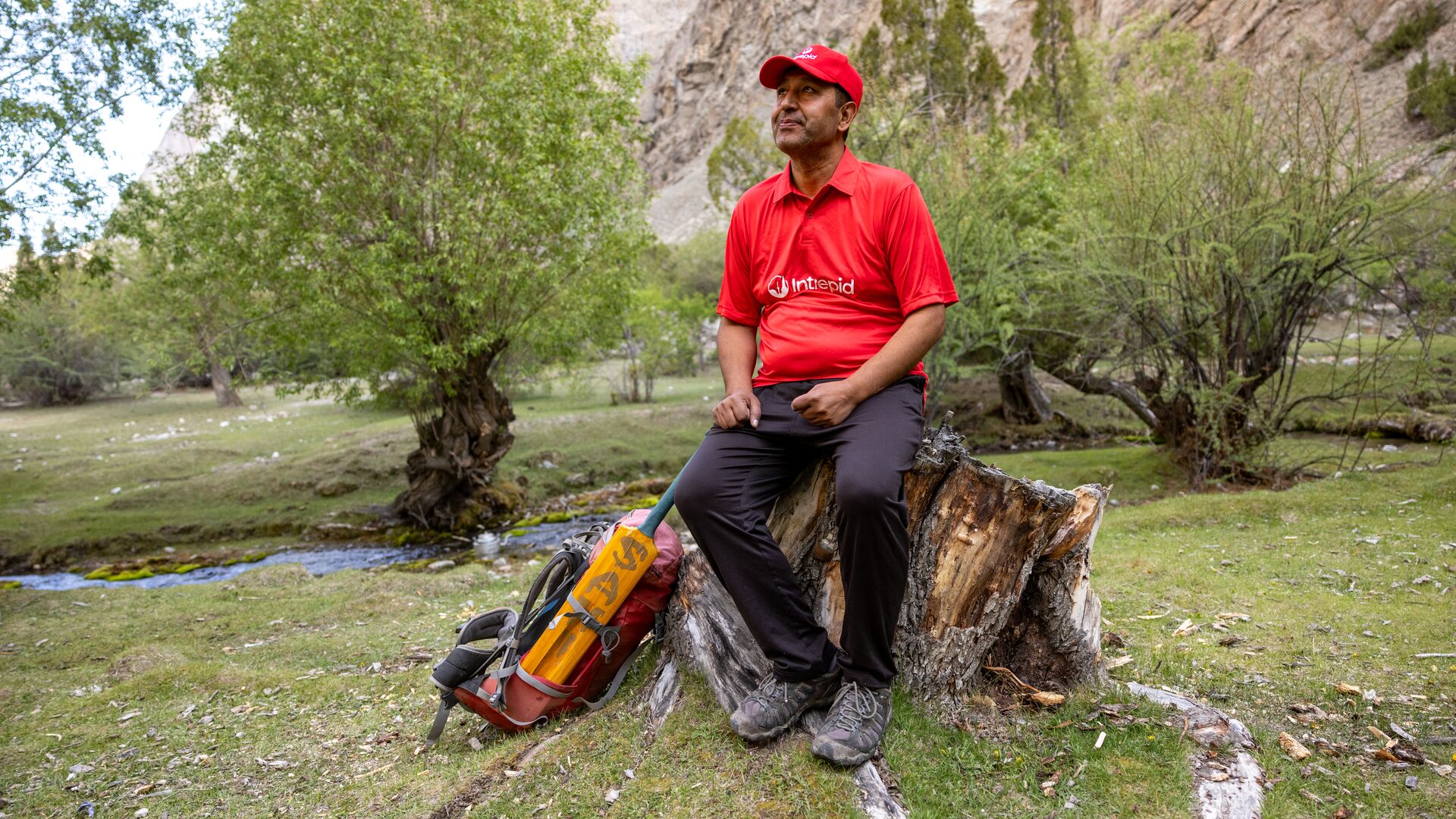
‘It is truly encouraging to witness this progress,’ says Muneer, who was a competitive cricket player – a fast-bowler, at that – before beginning his career in tourism.
Muneer joins in for a few cricket games as the glaciers framing the pitch shimmer in the fading afternoon sunlight, and some healthy rivalry ensues between the Pakistanis and the more competitive visiting players from Australia and the UK. But it’s an amateur Canadian who emerges as the surprise player of the match after sending a few balls sailing over the heads of the fielding team and into the alpine abyss, leaving a few bewildered looks on the porters’ faces. Not that anyone was keeping score. It was just a casual game of cricket, but it was also a powerful example of how everyday travel choices can have life-changing impacts.

Find out how your travels can create real change with The Intrepid Effect. You too can trek into Pakistan’s Nangma Valley on Intrepid’s Trek Pakistan’s Nangma Valley and Karakoram Mountains trip.