
Yalamber has been working in tourism in Nepal for over 15 years. Eleven years ago he experienced a 7.8-magnitude earthquake firsthand as a tour guide. Since late last month, he’s been leading the Intrepid Nepal team through its response to the flash floods that devastated regions around the Nepal-Tibet border. This is what he wants travellers to know.
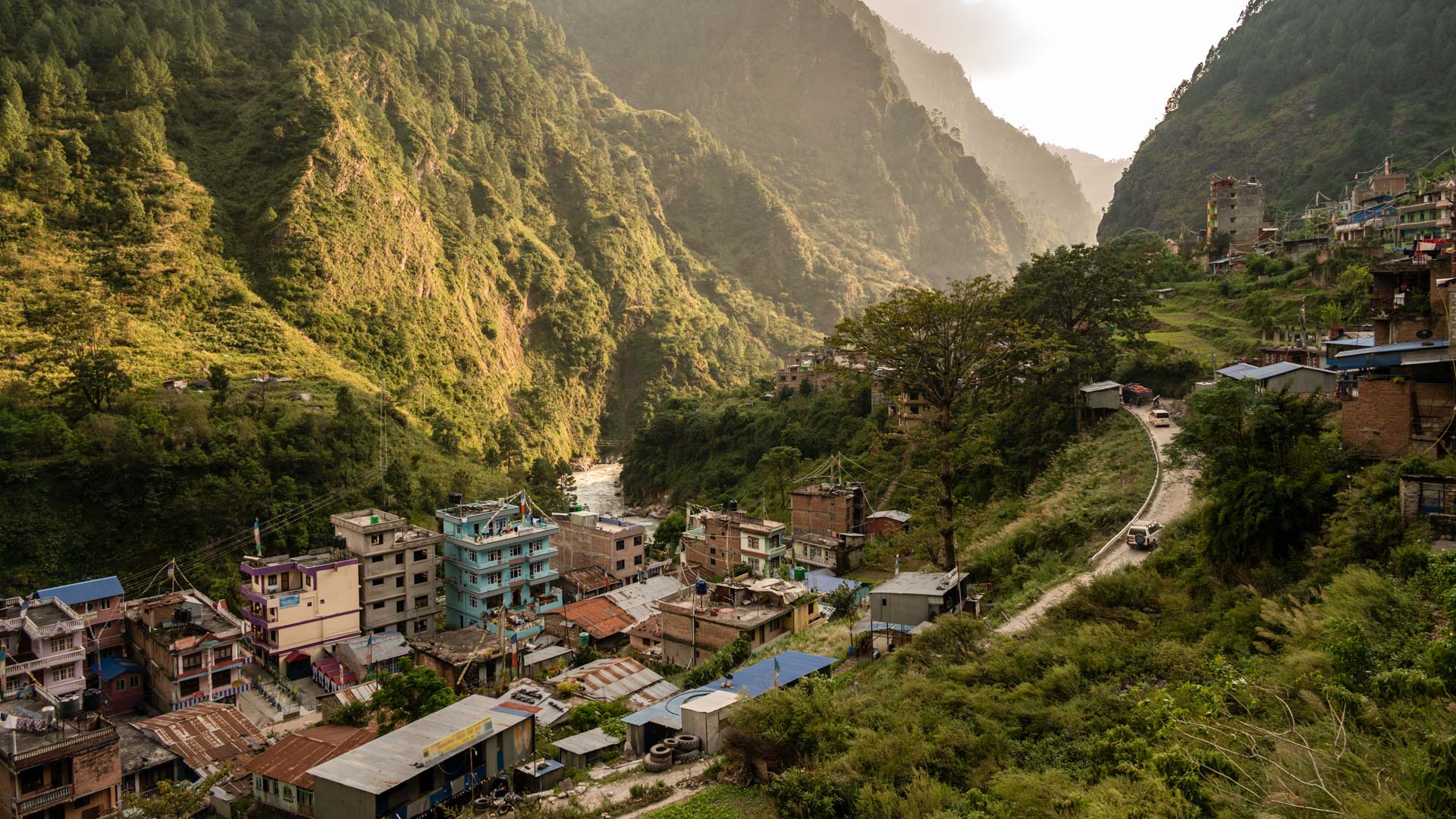
If you were to receive a postcard from Syabrubesi, Nepal, you might see a small mountain town tucked into a valley between steep green peaks, the narrow Bhote Koshi river curling below through the valley floor. Squint and you’d spot guesthouses, teahouses and shops lining the road, a herd of mules passing by to carry supplies to the surrounding villages and trekking routes. About 120 km north of Kathmandu, the village is a gateway to the Langtang region, popular for trekking and access through the Nepal-Tibet border.
Past travellers on Intrepid’s Tamang Heritage & Langtang Valley Trek will remember Syabrubesi as their Day 2 stop, after a seven-hour off-road drive from Kathmandu.
They stayed at the Old Namaste Guesthouse, run by a woman who gave guests a warm welcome, a hot meal and a place to rest before they headed off on a multi-day trek into the Tamang hinterlands the next morning. At the guesthouse, trekkers met their local crew – the guides and porters who would accompany the group on its trek – before being lulled to sleep by the sound of the river outside their windows.
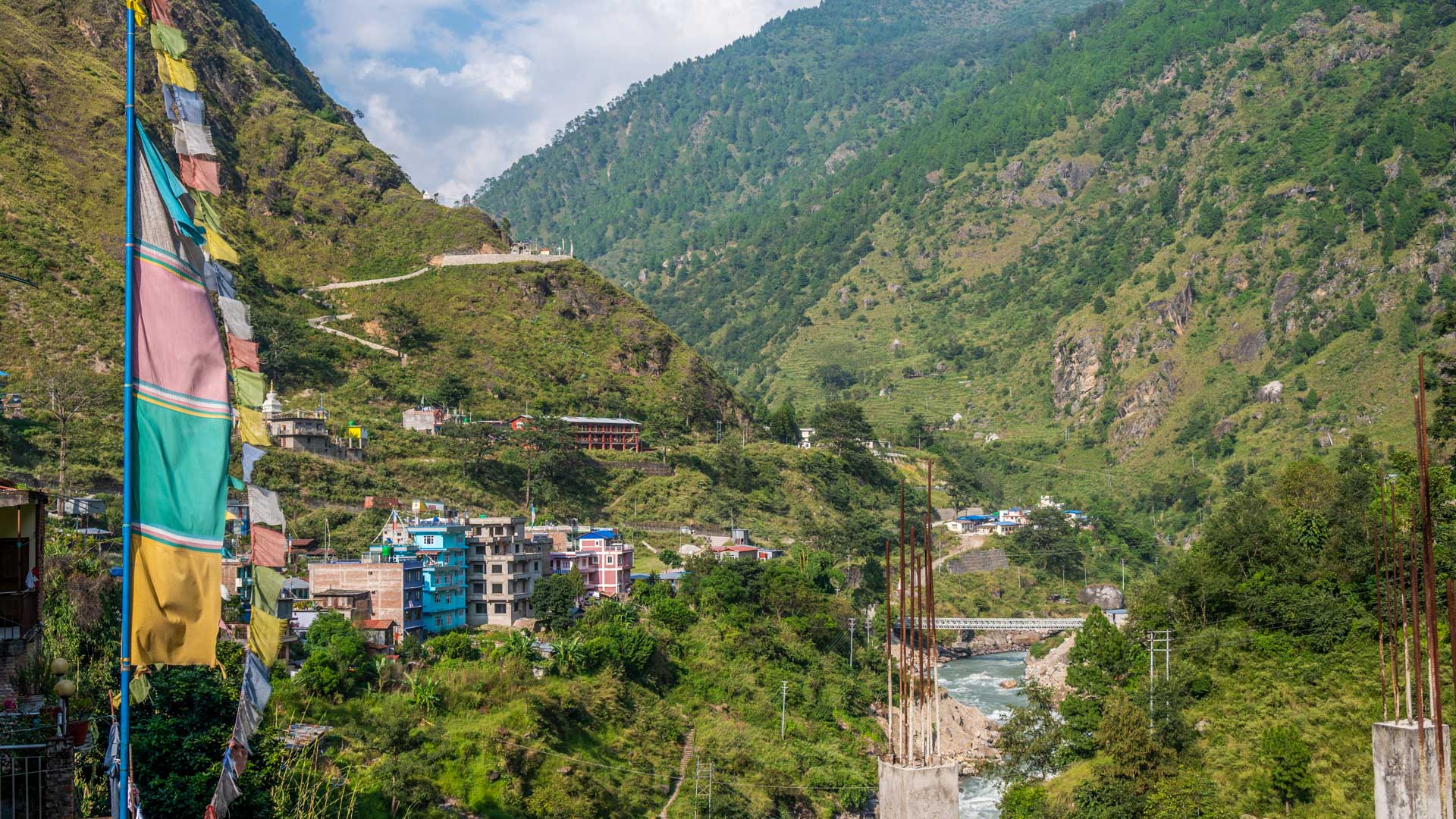
I met the owner of the guesthouse in August 2023 on a visit to the town to assess that trip itinerary, which was part of my job at the time as operations manager for Intrepid in Nepal. She was warm and welcoming, and I remember her telling me how much she values visits like mine, because it helps guesthouse owners understand the importance of maintaining standards and providing better service. We talked about our families, too. While she managed the guesthouse, her husband worked seasonally in France to support the family.
On the morning of 26 August, a flash flood swept through the village and devastated the town. The guesthouse was swept away in the surge, and its owner has been missing ever since. I have been checking in regularly with her brother-in-law in a nearby village and, sadly, he let me know the family has begun their religious ceremonies.
Disaster comes without warning
That Wednesday started for me like any other. I joined an early morning meeting at home and then made my way into the Intrepid office in Kathmandu. At that point, I had no idea what was happening 120 kilometres away.
Flooding is quite common in Nepal during the monsoon season from June to September, so when I reached the office around 9:30 am and heard the team talking about flooding, I honestly thought it was another minor seasonal flood.
It was only when videos and information started coming through that I realised this was something completely different. The scale of the destruction was far beyond what I had imagined.
That response was incredibly powerful. It reminded me how many people around the world genuinely care about Nepal and its people.
Everything switched gears quickly. The entire team immediately started checking in on our leaders, guides, porters and suppliers, trying to understand what was actually happening on the ground. We didn’t have any trips running in the area at the time, so we knew all our travellers in the country at the time were safe. Information was changing by the hour, and communications were down in some areas, so our immediate focus was making sure people were safe.
I connected with The Intrepid Foundation team in Melbourne, Australia, that night and within 24 hours of the floods, the Nepal Flood Appeal was accepting donations, which came in from all over the world. Within its first 24 hours, over AUD 200,000 was raised to support relief efforts. That response was incredibly powerful. It reminded me how many people around the world genuinely care about Nepal and its people.
Amid all of this, I learned about the guesthouse in Syabrubesi and its owner. When you know the people involved, it’s impossible to look at this only as an operational incident. I personally know many people who are still missing. And while life is mostly carrying on in Kathmandu, there’s a real sense of grief and uncertainty underneath it. Everyone knows someone who has been affected, or knows someone who knows someone who is missing. The images and stories are everywhere, and many families are still waiting for news.


Memories of the year Nepal shook
Seeing what happened in Bhote Koshi–Trishuli river corridor brought back memories of the earthquake that struck Nepal in 2015. I wasn’t working for Intrepid then, but I was working in tourism and guiding seven travellers in Bhaktapur that day, one of the areas badly affected.
We were on the first floor of an old traditional house taking part in a Thangka painting session when we felt the first few jolts. I got everyone to a nearby public square, where we watched several old monuments and buildings collapse around us.
Once my group was safe, my next concern was my own family. The mobile networks were down, and I couldn’t reach anyone. Eventually, I got the group back to the hotel and made my way home. Thankfully, my family was safe.
I still remember the fear and uncertainty of that day very vividly. Experiencing such a disaster was incredibly frightening, but it also showed me how quickly people come together and look after one another in a crisis.
A familiar spirit shines through
I’m seeing that same spirit today. I’ve been struck by how quickly ordinary people have stepped forward to help people they don’t even know – donating money, food, clothes and essential supplies, travelling to affected areas and helping with relief and rescue efforts.
I’m seeing it within our own Intrepid community, too. Some of our leaders have volunteered to pack relief materials, and travellers from around the world have donated to the Nepal Flood Appeal.
When I look at the donations that have already been made to the appeal, I see all kinds of comments from travellers who visited us here in the past, some decades ago. The connections they formed with the places they visited and the people they met carved something in them that calls on them when those people and places are in need.
Read more: Find out why this traveller keeps donating to causes in the countries she’s visited
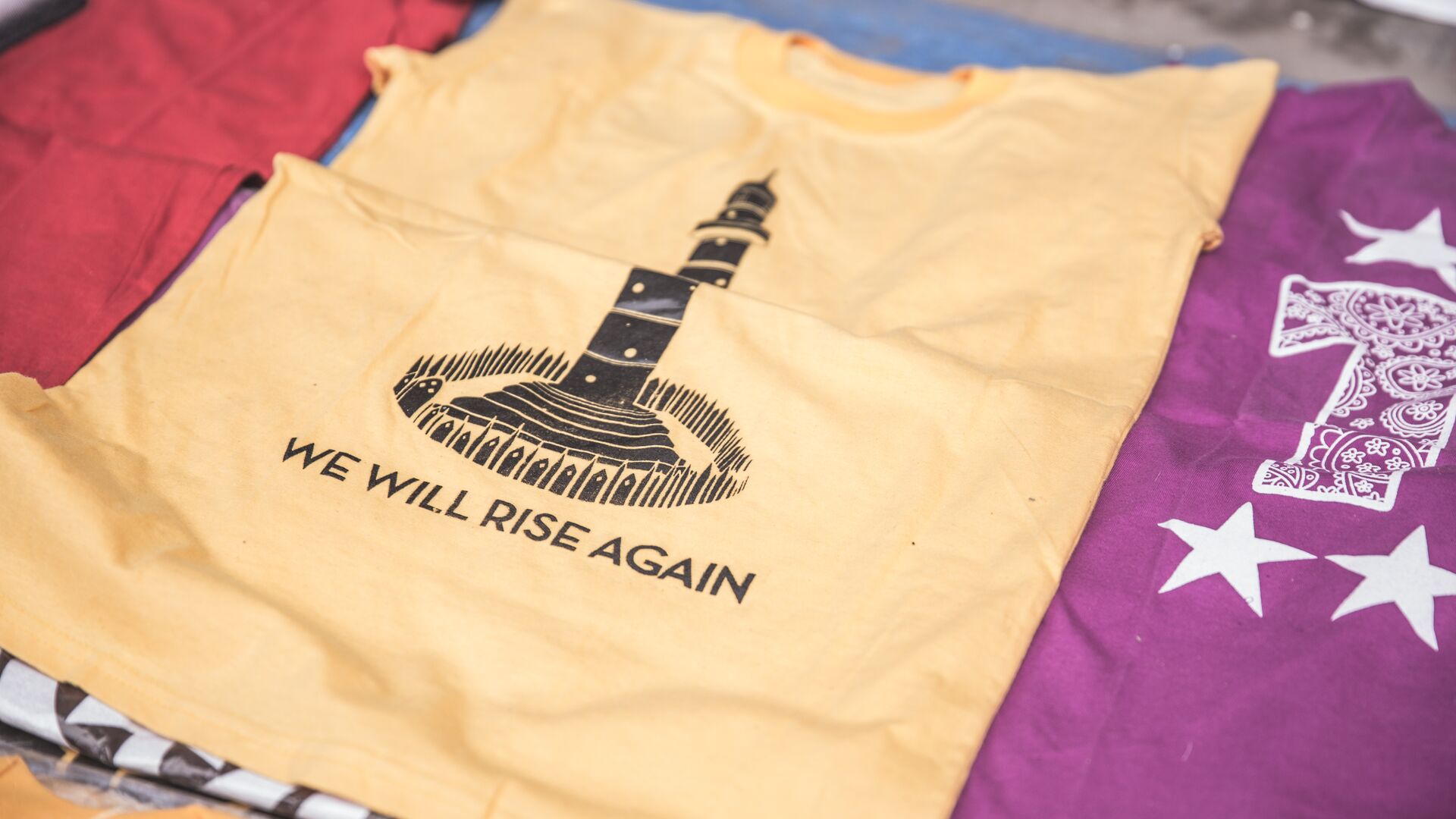
Recovery takes time and takes different forms
That kind of support is meaningful, to say the least. The funds raised in the appeal (now well over AUD 500,000, including an AUD 200,000 contribution from Intrepid) are being directed through Australian Red Cross to Nepal Red Cross Society’s on-ground humanitarian response. Donations are helping to fund emergency shelter support, water and health services and damage assessment. It’s vital work, but as we learned after the earthquake, recovery takes a long time.
Once the media coverage moves on, families still have to rebuild their lives. In addition to losing loved ones, people have lost homes, businesses, farmland, equipment and, in some cases, the primary income earners in their families. Many small businesses may never reopen, and there is a real risk that people will have to leave their communities if they can no longer earn a living there.
It is equally important that the impact of this disaster doesn’t spread unnecessarily to communities that haven’t been physically affected.
That makes protecting livelihoods part of recovery, too. While the funds raised will continue to provide vital support to affected communities into the future, this is where tourism has a role to play, too. It isn’t a replacement for disaster relief, but it can help keep the wider tourism economy resilient during a very difficult time.
In Nepal, tourism represents around 8% of the country’s GDP and supports millions of people directly and indirectly through accommodation, transport, food, trekking, guiding, retail and other services.
Travelling to Everest Base Camp, Annapurna or other unaffected destinations will not directly rebuild places like Syabrubesi. The communities that have been devastated need targeted humanitarian support, reconstruction of infrastructure and long-term help to rebuild their livelihoods. But it is equally important that the impact of this disaster doesn’t spread unnecessarily to communities that haven’t been physically affected.
Read more: How can travel help after a disaster?
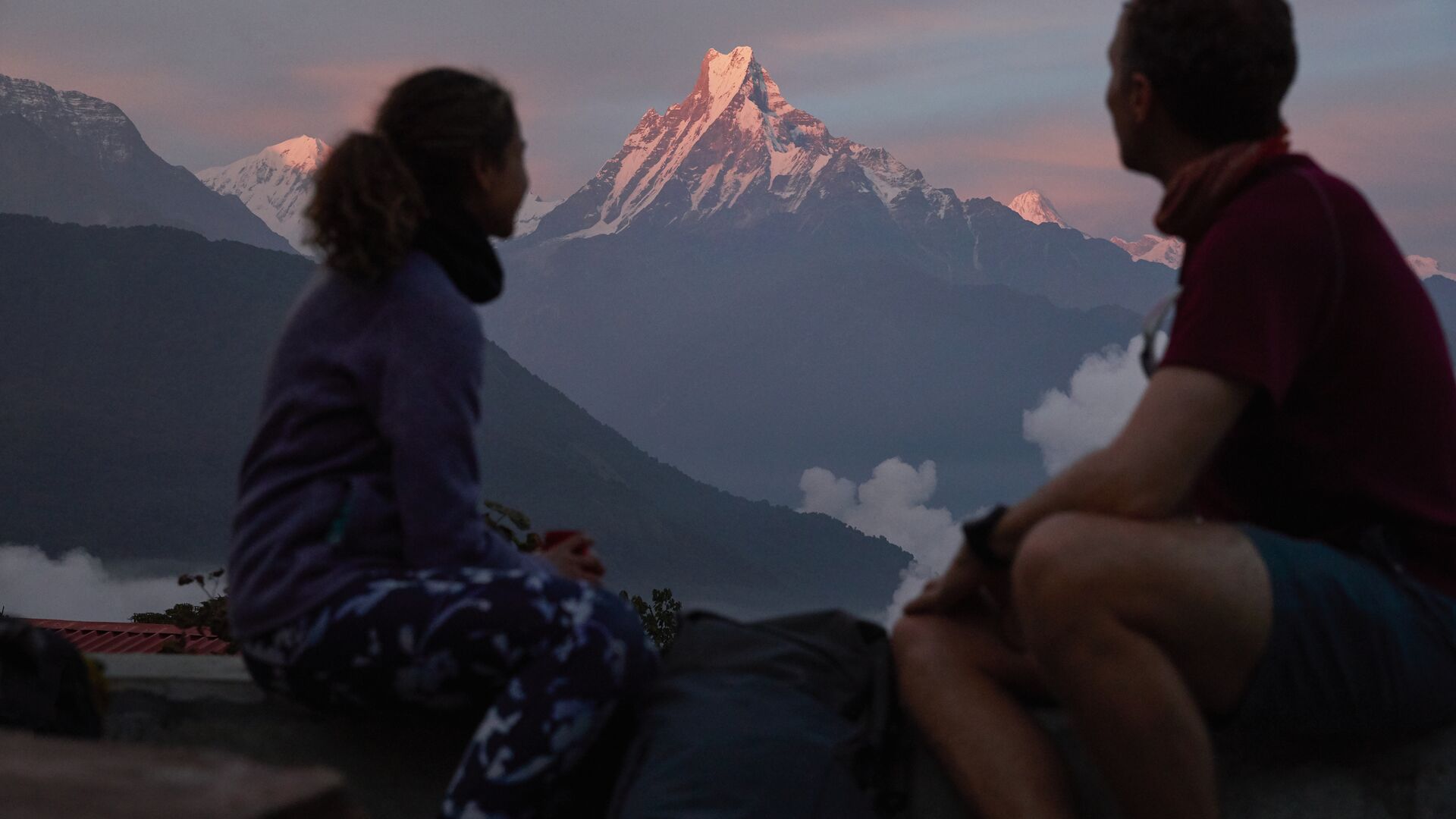
How travel can play a role in recovery
Long-term recovery will mean more than replacing roads, bridges and buildings. It will mean people being able to earn a living again, families feeling secure and communities deciding what their future looks like.
The majority of Intrepid trips in Nepal are running as usual, some with a few minor tweaks, but sadly, the Tamang Heritage & Langtang Valley Trek has been cancelled for the foreseeable future.
It will take families time to rebuild their lives, and the grief will never go away. That needs to be respected. Our decision around when Intrepid returns to Syabrubesi and the wider Langtang region will be guided by when people in those communities feel ready to welcome travellers again, not simply because the infrastructure has been rebuilt.
When the time is right, we’ll work closely with local communities, our leaders, suppliers and relevant authorities before returning.
And when we get back there, I hope to see a community that has rebuilt itself and healed the parts of it that have been lost, while keeping the character that made it special.
I hope to see safe roads and bridges, homes and businesses rebuilt, guesthouses and teahouses operating again and local people able to earn a living in their own community. But beyond the infrastructure, I hope people have regained a sense of security and confidence about their future.
And I hope that one day travellers like you can return with us to Syabrubesi, sit down for a meal in a local guesthouse, hear the river outside and make the kind of connections with people and places that stay with you for years to come.
If you’re able, please support the Nepal Flood Appeal. Stay tuned to Intrepid’s Travel Alerts for the latest information on the status of trips in Nepal and Tibet.