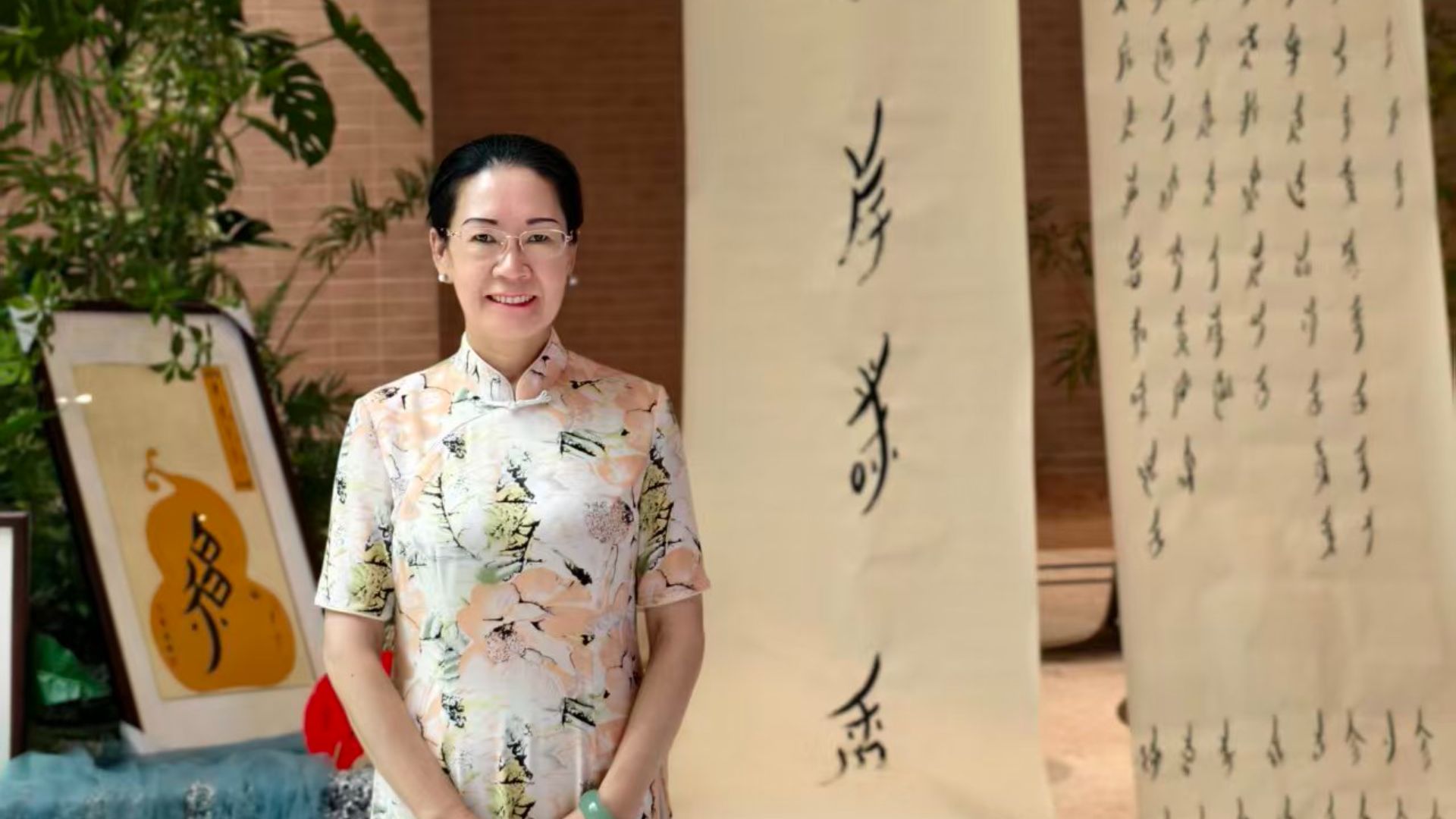
Writer Megan Eaves talks to a Nushu expert in the city of Changsha for a lesson in scripted solidarity, ahead of a new Intrepid experience in 2026.
When Li Ailian was a child growing up in a remote part of southern China, she often watched the women in her family sewing and writing. They embroidered with blue, white and red threads in the doorframes and wrote on coarse cloth using stick-like pens dipped in black soot. They were using a special script that slanted upwards and looked nothing like the modern Mandarin language. Those mysterious, sideways characters planted a seed of deep curiosity in her young mind.
At the time, Li didn’t yet know that the marks painted by her relatives were Nushu (pronounced nyoo-shoo) – the only known script in the world created exclusively by women, for women. Those stitches and inked symbols were part of a centuries-old tradition that quietly preserved women’s voices in a society that otherwise silenced them.
What is Nushu?
The Nushu script developed in Li’s home region of Jiangyong: a rural, mountainous county in Hunan province in the south of China. Though women had colloquially spoken the local dialect, Jiangyong Tuhua, for generations, they were denied access to formal education or writing.
Due to these historical barriers, Nushu script is thought to have evolved as a simplification of historical Chinese characters as early as the 13th century, though its roots may stretch as far back as the Qin dynasty (221–206 BCE).
Unlike standard Chinese writing (Hanzi), which is logographic (where a symbol represents an entire word or meaningful unit of language), Nushu is phonetic, with each slender, rhomboid character representing a syllable.
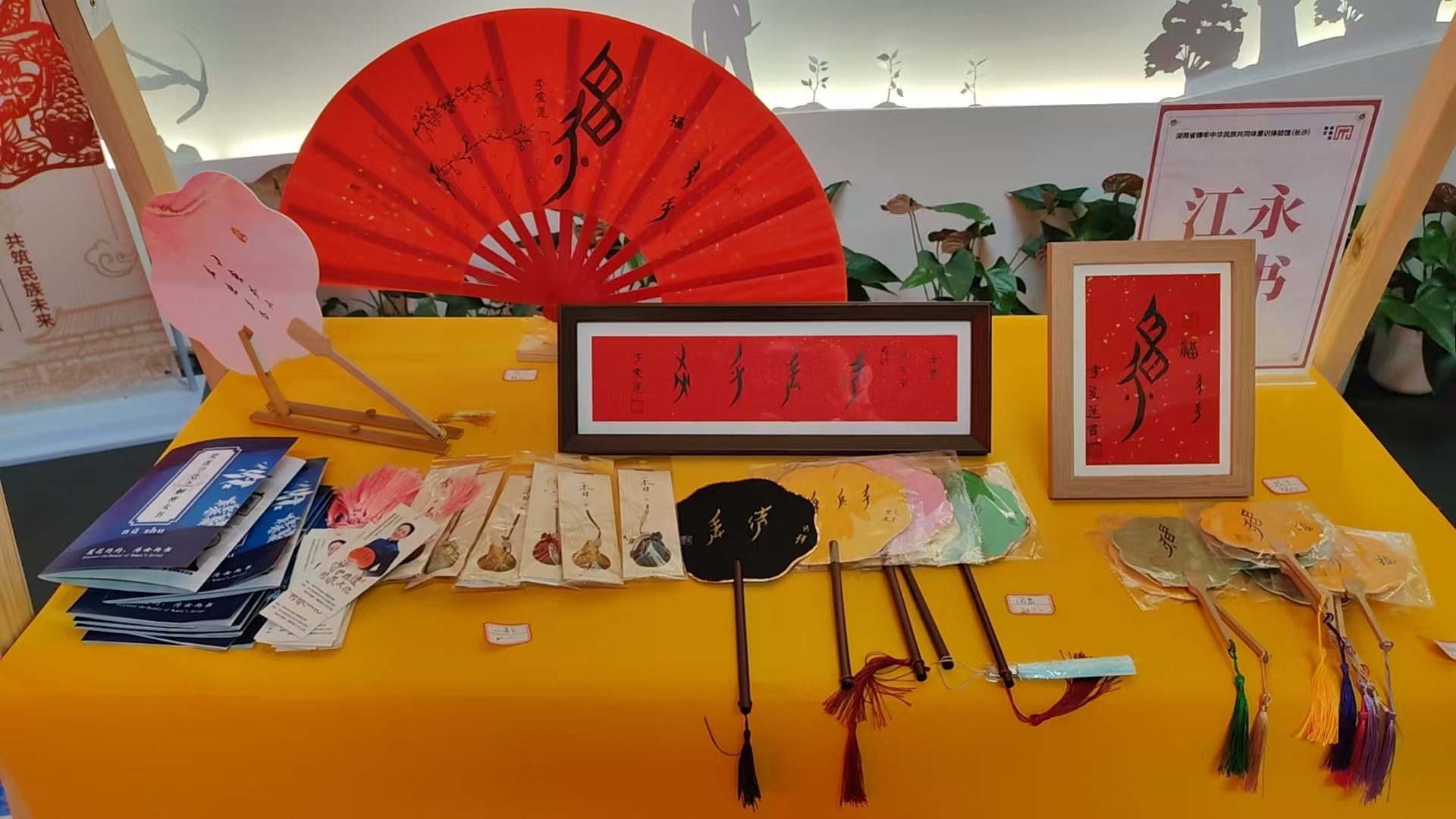
It was written from top to bottom and right to left, most often on paper or cloth, but also, as Li first experienced as a child, it was sometimes embroidered onto handkerchiefs, fans and belts. The name ‘Nushu’ is a Mandarin word that literally translates as ‘women’s writing’.
Because it was developed secretly, as an act of defiance, and men couldn’t read it, Nushu became a private language of feminine friendship and emotion. Women exchanged letters, poems and songs expressing love, grief and solidarity.
‘It was a coded medium of communication among women – a tool to confide their innermost feelings and express their emotions,’ Li explains. In her words, it functions like an ‘encyclopedia of women’s lives… documenting their emotional experiences and carrying their hopes and dreams.’
Read more: 26 totally new Intrepid trips and experiences
Finding her calling
Li’s fascination with the intersection between female empowerment and traditional Chinese culture deepened as she grew up. ‘When I was accepted into university, my father offered me a gift [of my choosing],’ she recalls. She asked for a cheongsam (traditional Chinese dress) inspired by the Soong sisters, three influential women who played important roles in 20th-century Chinese politics through their marriages to the powerful leaders, H. H. Kung, Sun Yat-sen and Chiang Kai-shek.
‘It was a very expensive item costing 100 yuan, which was more than my father’s monthly salary at the time,’ says Li. ‘He ultimately granted my wish.’
After graduating, Li spent more than a decade working in cultural journalism, learning to tell the stories behind China’s heritage. But Nushu continued to speak to her. Years later, living in the city of Changsha, parenthood served as a catalyst for Li to reevaluate her life.
A turning point came when she met He Jinghua, a guardian of Nushu and an officially designated national inheritor under China’s Intangible Cultural Heritage programme. That’s when she decided to follow her heart and dedicate her life to women’s culture.
‘He’s profound dedication and passion for Nushu deeply moved me,’ Li says. ‘I formally became her apprentice and began several years of systematic study in Nushu calligraphy.’
Under He’s guidance, she progressed from practising basic strokes to writing full compositions, and learned the history of Nushu, understanding its deeper cultural significance. Through this training, Li Ailian became one of only a handful of living practitioners who can fluently write Nushu script today.
Read more: 10 new cultural craft experiences


Nushu’s modern revival
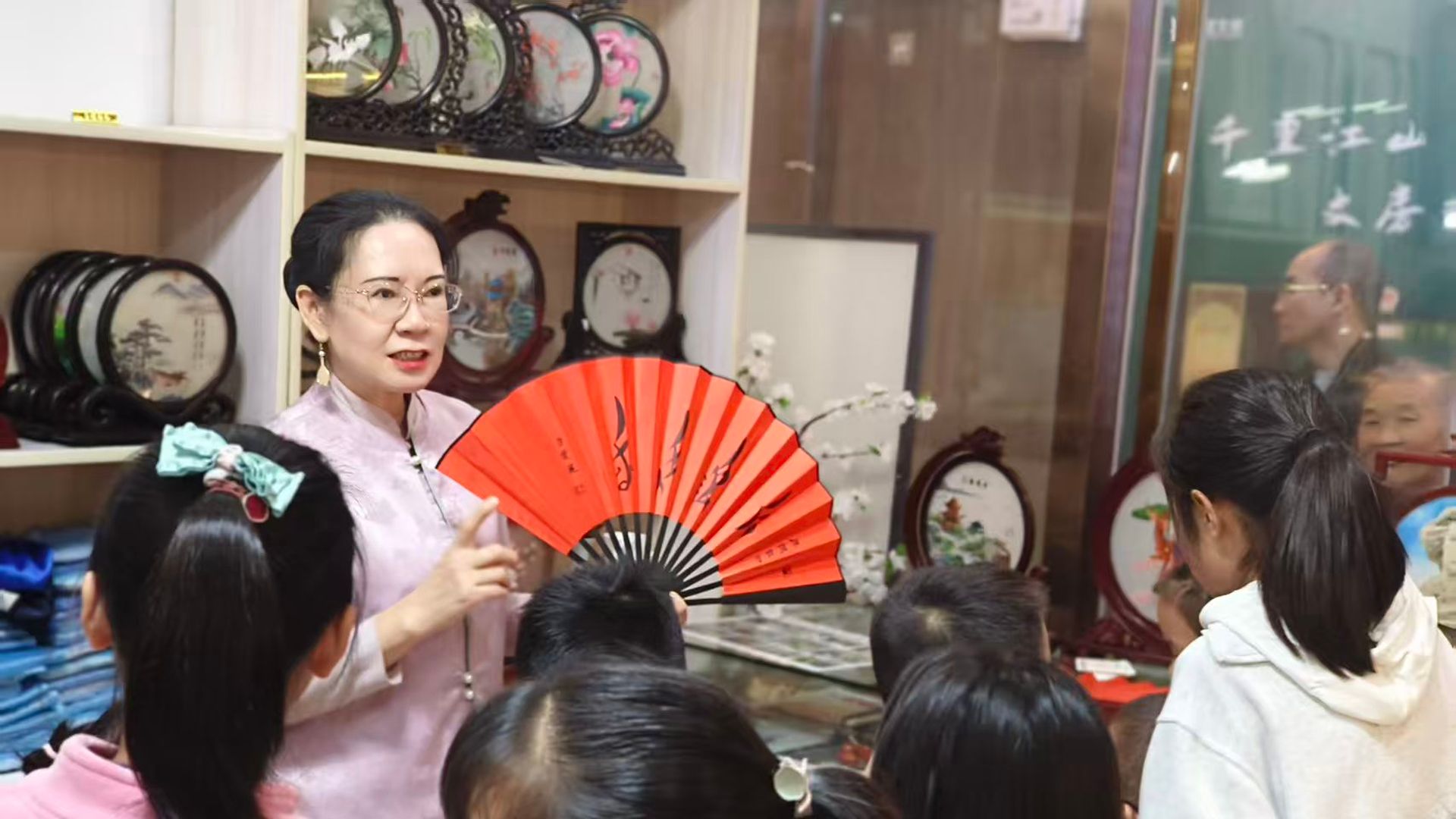
Nushu was recognised as part of China’s National Intangible Cultural Heritage in 2006. Preservation programmes in Jiangyong now include museums, university courses and digital archives. According to Li, ‘We are actively promoting the integration of Nushu into modern life through publishing books, organising exhibitions, and developing cultural and creative products.’
Still, fewer than a hundred people can read and write it fluently. But more learners are developing an interest, Li says, especially younger women and a few men in universities, cultural institutions and heritage programmes.
Historically, Nushu was a women’s domain alone, but Li believes its lessons are universal: ‘The power of Nushu lies in its role in shaping the female spirit,’ she explains. ‘It teaches women self-respect, self-confidence and self-reliance.’
From a contemporary viewpoint, she feels that the language carries quiet feminist significance. ‘While it was not a feminist movement in the modern sense, its essence lay in women constructing identity and emotional-support networks within limited social spaces… a form of quiet resistance and solidarity.’
Read more: 14 new trips and experiences in Asia


Carrying the thread forward
Li’s favourite Nushu works capture both tenderness and defiance; she is particularly fond of works known as ‘Third Day Letters’. These are traditionally cloth-bound booklets written by a bride’s female friends and relatives, given to her on the third day after her wedding. This is a core part of the Nushu literary tradition, which Li says embodies the deep bond and care among women.
Li also cites the Song of Nushu as a classic work that expresses women’s resistance against fate and their profound yearning for freedom. Less than 300 characters long, this poem-song is a woman’s lament of her circumstances and her era, reading: ‘Who says women are useless? Women have always held up half the sky.’
On Intrepid’s new Southern China Highlights: Hong Kong to Shanghai tour, travellers have a chance to visit the Nushu cultural heritage centre in the city of Changsha, where you’ll meet the living master, Li Ailian, learn about the language and even try your hand at writing the script yourself.
‘Nushu is far more than a writing system; it is a vital vessel for women’s culture and spirit,’ says Li. Preserving it is essential for honouring the historical voices of women and ensuring their legacy continues.’ Travellers on this itinerary become part of that by learning firsthand about the script’s importance and carrying that legacy back home with them.
Li’s hope is that the script will not only be preserved as cultural heritage but also be integrated into modern life, serving as a bridge that connects past and future. Each stroke of ink or stitch of thread is imbued with centuries of women’s resilience, and a language once written and embroidered privately has begun to speak proudly to the world.
Master the art of Nushu on Intrepid’s Southern China Highlights: Hong Kong to Shanghai trip and find out what else is new for 2026 with The Goods – a collection of new trips and experiences to inspire a year of adventure.
Image credits: photos in Nushu’s modern revival gallery by Jessie Yingying Gong.