Technicolour hot springs or massive granite monoliths? Here’s how to choose between Yellowstone or Yosemite.
Both listed by UNESCO and lauded by travellers, Yellowstone and Yosemite are two of the USA’s most beloved national parks. While both parks boast an abundance of natural beauty and outdoor activities, you may be more drawn to one depending on what you’re hoping to see and do. So, we’ve compiled the main differences between Yellowstone and Yosemite to help you decide which park to visit.
Which park is better for landscapes?
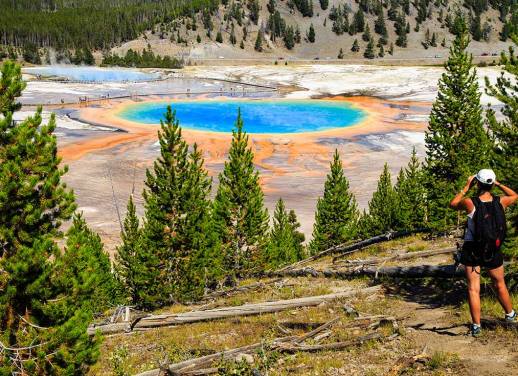
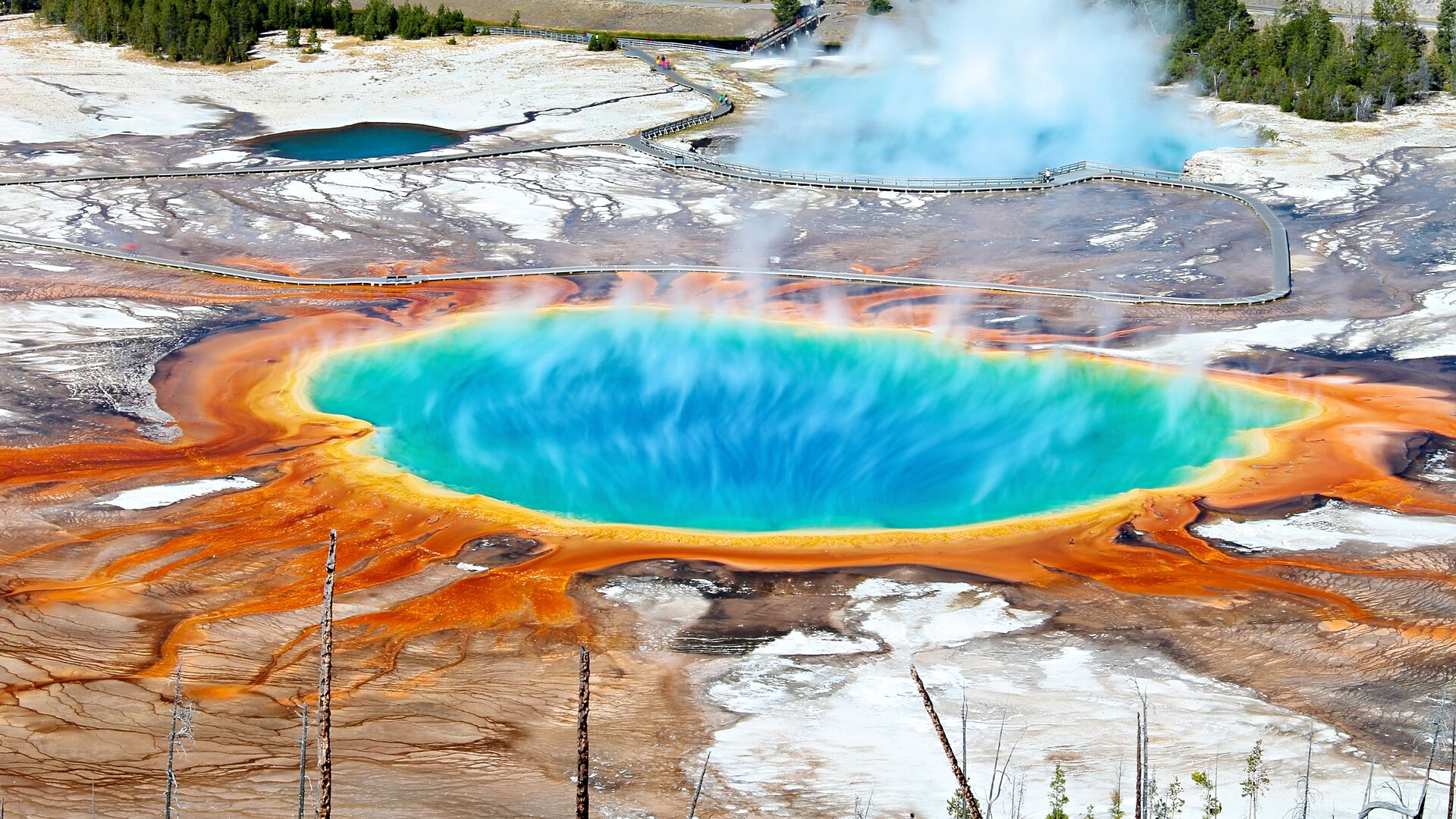
Yellowstone is home to 10,000 thermal features, including bubbling mud pots, steaming fumaroles and technicolour hot springs. Its geothermal landscapes, simmer with hot springs and spout with geysers – one of the most impressive being Old Faithful, a huge cone geyser that shoots 14,000 litres of hot water in the air. This spectacle happens about 20 times daily and can last from two to five minutes. While these natural wonders are what most visitors come to see, the park’s canyons and forests are just as captivating. It’s also home to 290 waterfalls which flow all year thanks to the park’s cool temperate climate.
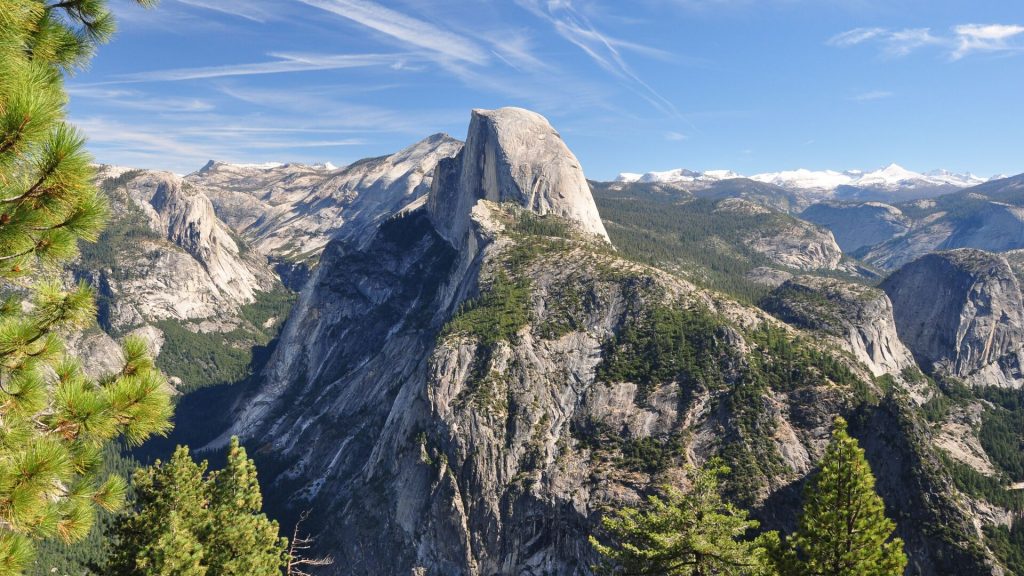
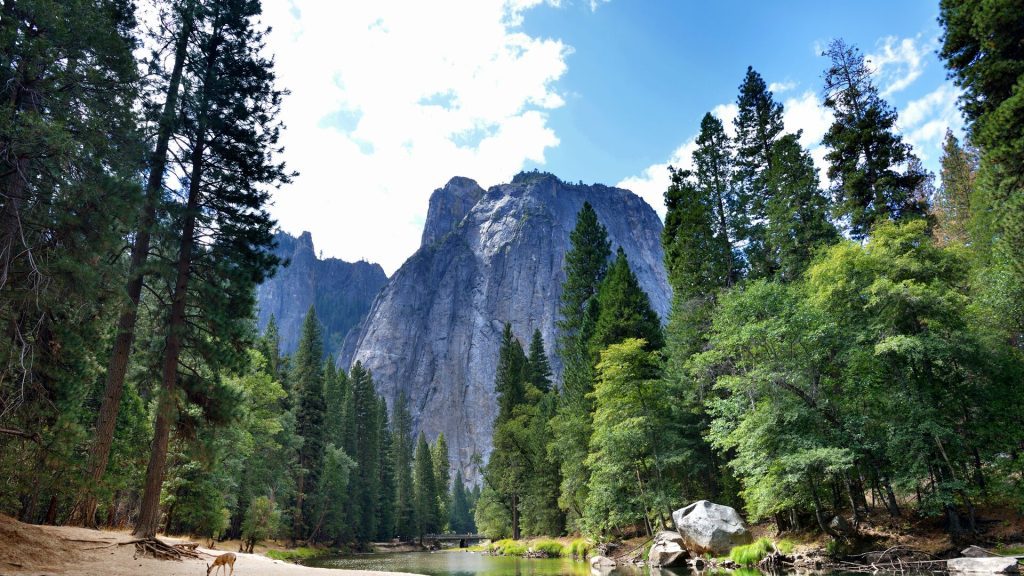
Meanwhile, Yosemite may not have the geysers and fumaroles, but it does have spellbinding subalpine scenery with wide open meadows, giant sequoia redwoods (one of the oldest trees on earth) and lakes so clear they reflect the surrounding peaks. Its glacially carved granite monoliths are some of the largest in the world, including the famous El Capitan and Half Dome – both of which attract hikers and climbers from near and far.
The park also boasts North America’s tallest waterfall, Yosemite Falls, which drops 739 metres over three tiers and will instil awe even in the most seasoned waterfall chasers, especially during the spring runoff.
The verdict
We’re not trying to be diplomatic, but both parks are spectacular in their own right. Yellowstone wins if you’re keen to see geothermal activity, while Yosemite takes the cake for postcard-perfect peaks and waterfalls.
Which park is better for wildlife?
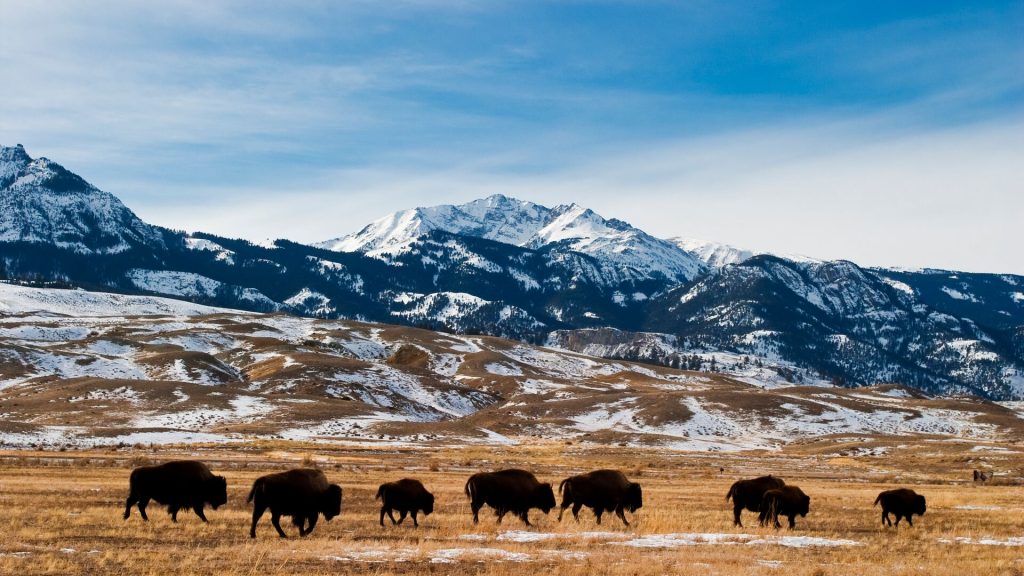
Yellowstone is teeming with wildlife thanks to its remote location. It’s home to the largest concentration of mammals in the lower 48 states including elk, bison, moose, deer, grizzly bears, black bears and bighorn sheep.
Lamar Valley, dubbed the ‘Serengeti of North America’, is a great place to spot Yellowstone’s resident creatures. You’re almost guaranteed to see large herds of bison on the road, bald eagles soaring overhead and bears grazing in the meadows. If you’re lucky, you may even spot a wolf. For a better chance of seeing this elusive animal, you could join a wolf tracker for the day.
Over in California, Yosemite’s rich habitat is home to a wide range of wildlife including black bears, bighorn sheep, bobcats, mule deer and coyotes. However, it’s nowhere near as diverse as Yellowstone. As a smaller and busier park, animals can also be trickier to spot as they retreat from crowds.
That said, birdwatchers will be in their element with over 300 bird species thanks to the park’s high elevation. Keep your eyes peeled for Steller’s jay, sooty grouse, dark-eyed junco, osprey, eagles and sandhill cranes.
The verdict
If you’re a keen wildlife enthusiast, you’ll probably enjoy Yellowstone more. It’s a larger park with less foot traffic, so you’ll likely encounter a wide range of animals on your journey.
Which park is better for hiking?
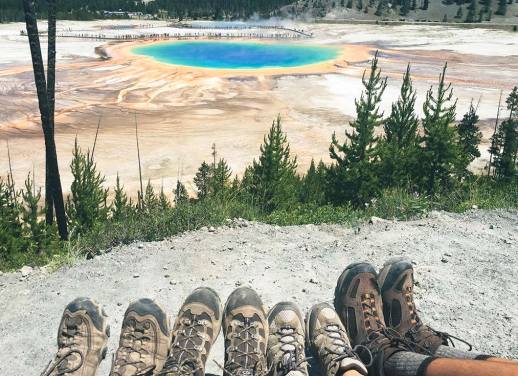
Hiking in Yellowstone is one of the best ways to experience its unique geothermal features. There are over 2600 kilometres of trails to explore, and while the peaks aren’t as high as Yosemite’s, they boast dramatic snapshots over the Rockies. The trails are also quieter, so you may be more likely to encounter a four-legged creature than a fellow trekker.
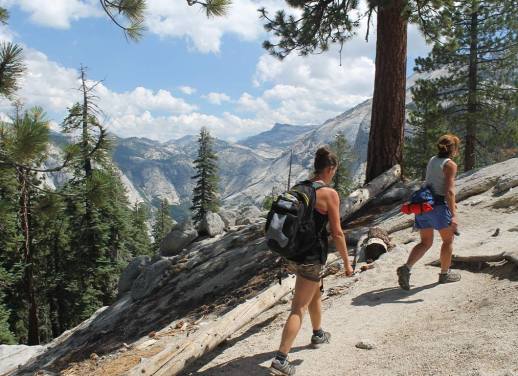
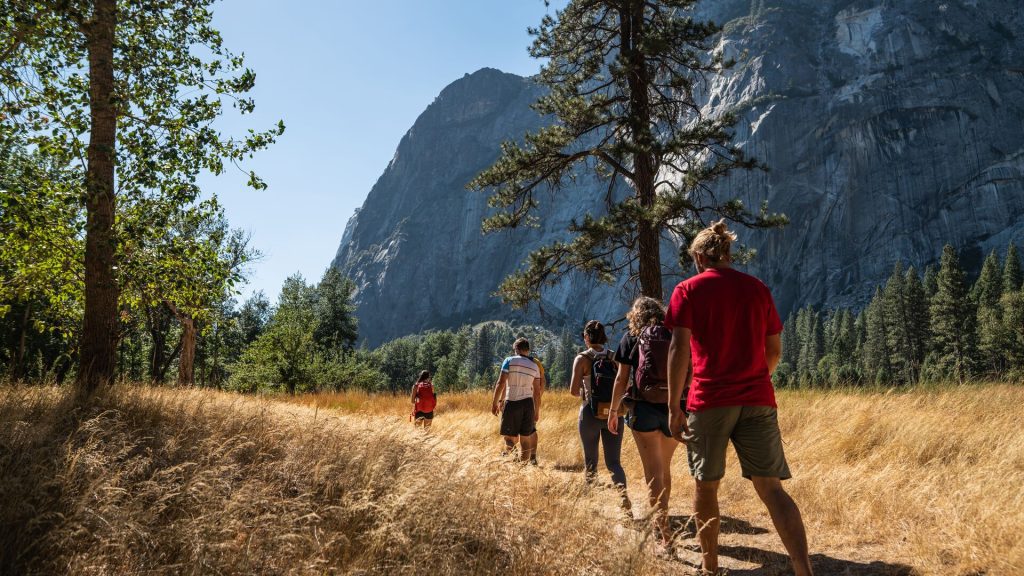
Yosemite is one of the USA’s top hiking destinations with over 1280 kilometres of trails. Shaped by millions of years of glacial activity, hiking will take you around and up soaring monoliths, through open meadows and along the banks of pristine lakes. Keen to put your stamina to the test? Summit the iconic Half Dome or El Capitan, stroll around the Mariposa Grove of giant sequoias or smell the wildflowers in Yosemite Valley.
The verdict
While both parks are a playground for hikers, Yosemite has more world-renowned trails and spellbinding summits. The only downside is that it’s usually more crowded, so if you prefer hiking in solitude, you might prefer Yellowstone. However, visiting the park with a local leader may help to steer you away from the crowds to lesser-known but just-as-beautiful trails.
Read more: 8 of the best hikes in Yellowstone National Park
Which park is more accessible?
The majority of Yellowstone is in northwest Wyoming (with smaller sections spilling over into Montana and Idaho). There are five entrances, all of which are super spread out, so planning is important. There’s no public transport to or within the park, so you must drive or join a tour. If you’re travelling from further afield, the closest airports are West Yellowstone (west entrance – summer only), Jackson Hole (south entrance), Bozeman (north and west entrance) and Montana Logan (northeast and east entrance).
Most of Yellowstone’s visitor centres and major attractions are wheelchair accessible, including sections of the Grand Canyon, Mammoth Springs and Old Faithful. Campgrounds also have at least one wheelchair-accessible campsite (excluding Slough Creek, Tower Fall, Fishing Bridge and Pebble Creek).
Yosemite is in the heart of the Sierra Nevada range in California. Most visitors drive to the park, but there are public buses from major cities in California. Amtrak also provides a combination of train and bus services to Yosemite Valley. Once in the park, you can take the free Yosemite Valley shuttle around Yosemite Valley. It’s well-connected with major airports, with the closest being Merced (two hours), Fresno and Mammoth-Yosemite (2.5 hours), Oakland (three hours) and San Francisco (four hours).
Yosemite has wheelchair-accessible lodges, campsites and visitor centres. It has more than 19 kilometres of paved trails along the Lower Yosemite Falls area where you can see the main attractions.
The verdict
Many areas of Yellowstone and Yosemite are accessible for travellers with disabilities with accessible trails, facilities and wheelchair-friendly accommodation. The National Park Service (NPS) also offers an Interagency Access Pass to U.S. citizens and permanent residents which provides free lifetime access to US national parks for those who are blind or have permanent disabilities. Visit the official NPS app for up-to-date accessibility information for facilities and trails.
If you’re on a budget or pushed for time, Yosemite may be a better option as there are more public transport options. But if you’re worried about the logistics, joining a small-group trip is the best bet so you can just focus on the adventure rather than worry about logistics and the details.
So, which national park is best for you?
If you have limited time and want huge peaks and wow-worthy views, Yosemite may be for you. If you’re looking for wildlife and wilderness, Yellowstone won’t disappoint. Regardless of which park you visit, the possibilities for adventure are endless.
Discover Yosemite or Yellowstone on a small-group adventure with Intrepid.