
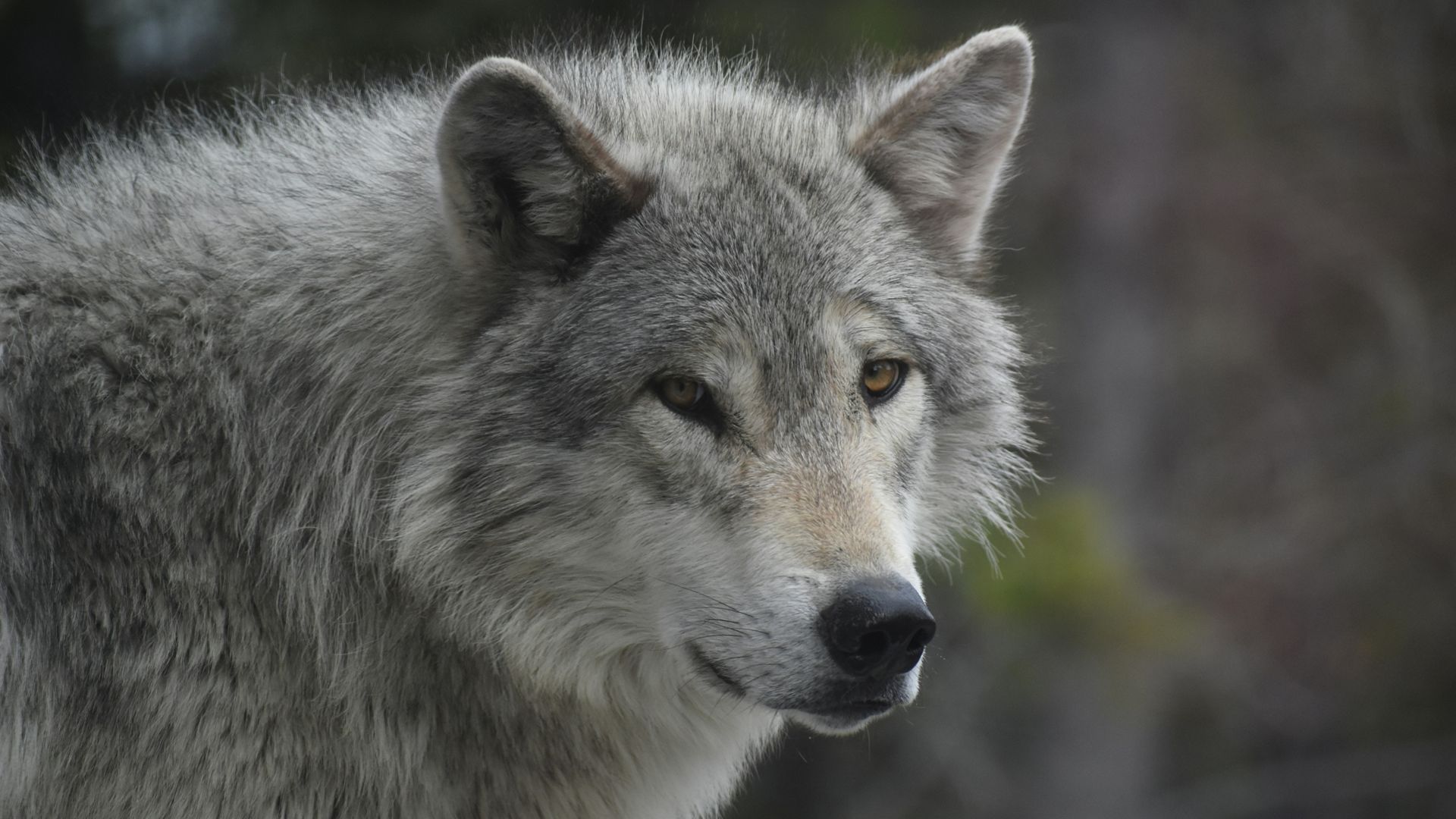
For nature-lovers, the chance to spot Yellowstone’s once extinct, now reintroduced grey wolves is a conservation success story worth travelling for.
Yellowstone National Park is a pretty special place to visit. Covering almost 9,000 square kilometres, it spans over dense woodland, technicolour lakes and some very dramatic geysers. Impressive – and that’s even before you get to the wildlife. Namely, the 100 or so wolves living within it, who were rendered extinct in 1926, but later successfully reintroduced in 1995.
We’re taught from a young age to fear wolves: they’ll impersonate your sick gran and eat you; or they’ll huff and they’ll puff and blow your house down (and, yes, eat you). But this negative reputation is largely unfounded: wolves – having been hunted almost to extinction – can’t stand humans, and will do just about anything to remain hidden from view.
Yellowstone is one of the best places in the world to spot wolves, and lovers of all things lupine/fairy tale/Duran Duran have the opportunity to do this on a wolf-tracking excursion in the national park on several of Intrepid’s North America trips, including the Yellowstone and Grand Tetons Adventure and the South Dakota to Yellowstone Parks Explorer.
But what exactly is wolf tracking? Here we dive into what a wolf-tracking excursion is all about – and what travellers can expect.


What actually is wolf tracking?
Wolf tracking is more like a safari or game drive, where the aim of the game is spotting a wolf. You’ll go out into the park with a guide, whose expert knowledge of Yellowstone and its 100-plus wolves (along with the radio they use to communicate with other guides and rangers), will increase your chances of seeing a wolf in the wild.
What happens on a wolf-tracking tour in Yellowstone?
Wolves are most active around dawn and dusk, so be prepared for an early start (like, ahem, 4-5am). After meeting your expert wolf-tracking guide, you’ll head out into the park with your group in search of the elusive creatures and other interesting wildlife.
When your guide thinks they have the spot, optic scopes are set up to try to get the best view of the animal. You may need to hike a little way for the best vantage spot. Patience is most definitely required, as there can be a lot of waiting around. Your guide will also provide you with insights into the park’s history, geology, flora and fauna throughout the day.
Read more: Intrepid adventures where nature leads the way


How many wolves are you likely to see in Yellowstone?
Even with an experienced tracker, spotting wolves can be tricky. But as they’re pack animals, if you see one, you may be lucky enough to see multiple wolves all at once, playing together, eating or looking after the young cubs. At the last count in 2025, there were 108 wolves living within park. Hopefully those numbers will only continue to grow.
When is the best time to see wolves in Yellowstone?
The wolves stay relatively hidden during summer and are at their most active during the colder winter months.
What other animals will you see in Yellowstone?
Yellowstone is full of incredible creatures, so if you don’t spot a wolf it’s highly likely you’ll see something else. Grizzly and black bear, moose, elk, bison, pronghorn antelope, red fox, coyotes, rocky mountain goats, bighorn sheep, river otters, mountain lions (although rare) and a large variety of birdlife live within Yellowstone National Park.
Read more: A Premium hiking trip in Yellowstone and more ways to explore the US


Could you skip the guide and head out into the park on your own?
You could, but your chances of spotting a wolf without a guide are very unlikely. Yellowstone is larger than the entire metropolitan area surrounding London, and is heavily forested, covered in mountains and largely inaccessible by vehicle. Wolves are also very savvy when it comes to avoiding humans, and they’ll smell you long before you have a hope of glimpsing them.
The guides and rangers in Yellowstone all work together, so if one group has a lucky encounter, they’ll share their location with everyone else. Plus, the spotting scopes the guides use are prohibitively expensive; something the average wildlife lover probably doesn’t have in their backpack.
What is it like seeing a wolf in the wild in Yellowstone?
Seeing a wolf in the wild is like looking through a window into the past, before civilisation had tamed the majority of the North American continent. There’s no animal that embodies the spirit of the American wilderness more than a grey wolf. Wolves were the apex predator that civilisation replaced across North America and Europe; they were almost driven to extinction in the USA in the early 1900s, and have only recently started recovering their numbers. Wolves were reintroduced into Yellowstone in the mid-90s, which has led not only to the resurgence of wolf populations in the park, but an increase in beaver colonies as well.
Join a wolf-tracking excursion on Intrepid’s Yellowstone or South Dakota adventures.
