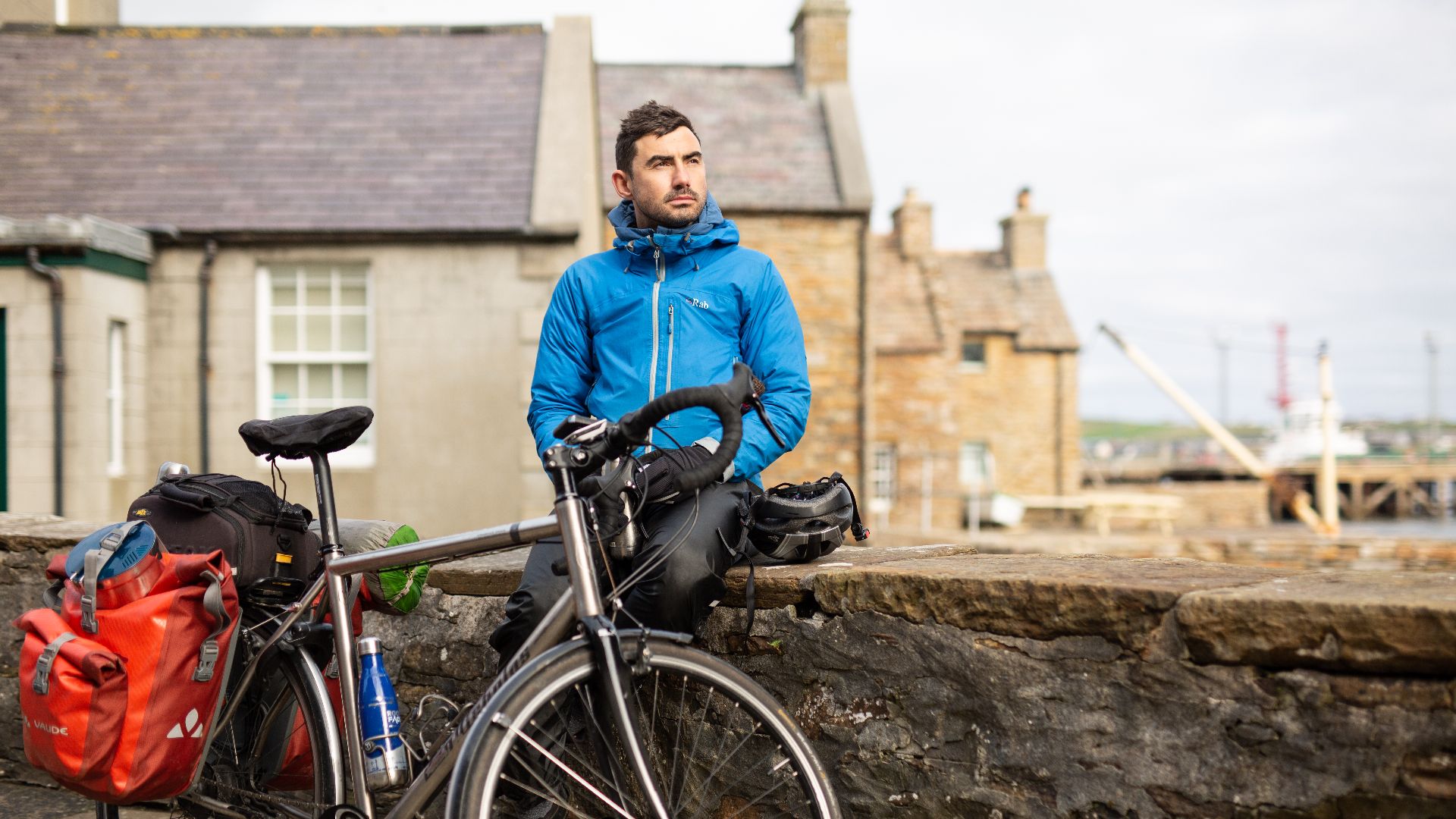
Writer and long-distance cyclist Simon Parker has travelled solo to more than 100 countries. He talks to fellow male solo travellers about why more men don’t do the same.
‘Hey, you’re not that guy we just saw on the freeway, are you?’ asked a smiling woman sat at a table of friends, as I stumbled into a rain-lashed diner, searching for coffee, bacon and pancakes. I’d just crossed America’s Rocky Mountains, alone, on a bicycle, in a storm. I felt cold, anxious and exhausted.
‘Yep, that was me!’ I replied with a sigh, as a puddle of grimy water pooled at my feet.
‘Oh, you poor thing! Well, please join us. We’re buying you breakfast.’ At which point, a coffee was swiftly poured, a stack of fluffy buttermilk was fetched, and despite my initial hesitation, we quickly transformed from strangers to friends.
An hour later, I left that diner feeling not just drier but warmer inside.


Taking the plunge with solo travel
Twenty years spent travelling mostly solo have taught me to say yes to offers like these. I’ve been invited to parties by people I’d only just met. Been fed meals by those who could see I was hungry. And offered spare rooms and couches when I clearly needed to rest.
I’ve learnt good things happen when I embrace the unexpected. However, a range of different studies suggest that men are less likely to travel this way. With some research finding that just 15% of solo travellers are male. So, what gives?
‘I think there’s a certain social stigma associated with men travelling solo,’ says James Johnston, a 46-year-old accountant for a medical company, who lives near Cambridge, UK. ‘Men have an image of being macho. Maybe it’s a societal thing. Or even a social media thing.’
Previously, as a single man in his twenties, James admits to being held back by the idea that holidays needed to be taken with friends and family. But while most people he knew wanted to relax next to a pool for a week or two, he wanted to take on more adventurous trips.
‘I got fed up of waiting for other people to want to go and do things. So, one day I just took the plunge and went for it. I realised that life is short and you never know what’s in the future.’
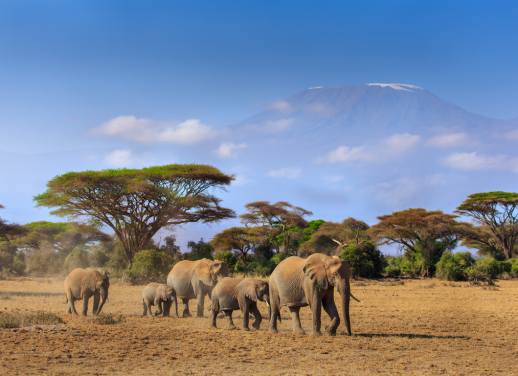
Since turning 30, he has been on ten Intrepid trips, including to places such as Everest Base Camp, Egypt and Costa Rica. One trip, however, stands out above all others: a hike up Kilimanjaro in Tanzania. Not for its epic views or mountainside campsites, but for the sense of camaraderie he experienced. To such an extent, the strangers he shared that trip with became lifelong friends.
‘Despite all living in different places around the UK, we all still meet up in central locations like the Peak District. Probably about every three or four months. Since Kilimanjaro, we’ve also all done the Inca Trail together in Peru and we probably talk on our WhatsApp group every day.’


Solo-travel skeptics: Do men travel differently?
Why are men opting out of these opportunities to make connections through solo travel then, when in recent decades, it’s been discovered they are more likely to experience a ‘friendship recession’ as they approach middle age? A report by the Survey Centre on American Life found that just 27% of men had at least six close friends when it was carried out in 2021, compared to 55% back in 1990.
Some psychologists put this down to the nature of male friendships. Men are more likely to base their relationships around sports and activities. But over time, as work and family commitments take greater priority, socialising this way becomes more difficult.
‘I didn’t travel a lot on my own through a sense of guilt at spending money on myself,’ says Richard Watson, a solo-curious filmmaker from Zimbabwe, who has travelled widely with work and family, but seldom taken an independent trip. ‘I didn’t have the confidence but I also wanted to get my head down and focus on work. There’s a part of me that is always trying to be productive and purpose driven.’


Richard admits to feeling wary of being alone with his ‘internal dialogue’ and prefers travelling with friends. Often, however, those trips must have a clear goal or destination to aim at. Which is a sentiment that sounds familiar. I’m not cut out for a sun lounger.
‘I’d rather go on a mission and have a shared experience,’ says Richard. ‘I enjoy being active on holidays. Like fishing or camping or hiking. It’s a lot more engaging.’
Nevertheless, he is eager to explore the edge of his comfort zone in the years to come and give solo travel a try. So, he recently booked a week in Thailand by himself to test the waters, knowing that he’d be meeting up with a friend at the end. ‘I leant into my photography, which was nice,’ says Richard, who needed a creative focus of some sorts. ‘But I found it was more fun when I was with a mate.’


Solo travel doesn’t have to be lonely
Which is what makes small-group travel so special. For many, who join solo but then slot into the comfort and camaraderie of a group, it’s the ideal antidote to travelling completely alone.
It’s proof that solo travel doesn’t have to feel lonely, which of all the questions I receive about the hundreds of trips I’ve been on, is the one I get asked most is. Do I get lonely? My answer: Sometimes. But rarely, in truth.
For me, it’s actually the biggest misconception about solo travel; that you’re doing it alone. In reality, whether you go completely solo or join a group, you’re often just in the company of people you haven’t said hi to yet. The biggest challenge is being open to new conversations and experiences. Knowing that, even if they can feel a little awkward at first, things will change. Because all friendships start somewhere, right?
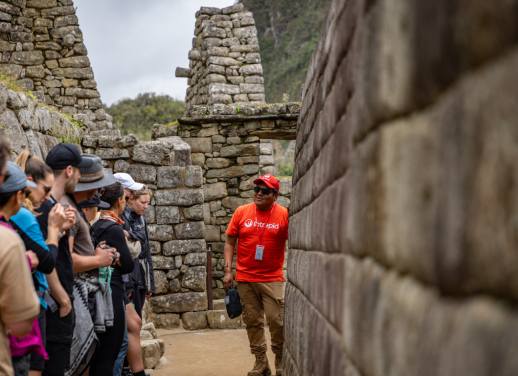
As a result of striking up nascent connections, I’ve been on hikes to Machu Picchu in Peru, up Mount Toubkal in Morocco and across Europe on a bicycle – all with strangers that became lifelong friends. A shared challenge or goal, like a climb, trek, tour or ride, has a remarkable ability to bring people together.
And I’m not alone in seeing the social benefits of solo travel. Some studies suggest that 90% of solo travellers join group tours, some or all of the time.


Patrick Murphy, a software engineer from Ireland, is a keen advocate. ‘Once you do it, you realise how much easier it is. I’m an introvert normally, which I always thought was a negative thing. But it turns out that I’m perfectly suited to group travel. Because it requires you to get out of your comfort zone.’
Patrick has visited 76 countries and has no plans on stopping. Because travelling solo in a group setting makes him feel like a different version of himself. A Patrick 2.0, who is more confident and open to spontaneity.
While on a group trip in Guatemala, he and his fellow adventurers went out for a few drinks to wrap up the day and ended up having the night of their lives.
‘We got invited to a house party and had a great night. Nothing planned, just random. Some of us gave a bad exhibition of Irish dancing. It brings out a whole different side of me. I’m a lot more open to speaking to people.’
And that’s exactly why I travel solo, too. Being away from home, without my friends and family for company, I become more outgoing, more talkative. And more open to offers that might otherwise feel strange.
But behaving that way takes effort; it takes practise. Because sometimes, I admit, it can be easier to cocoon myself in my own little orbit. To scroll on my phone or read a book. To forget that there is a wonderful world out there waiting – always swirling around me.
When I push myself, though, to take the first step, good things happen. Just like when I met those friendly folk in the Rocky Mountains. They provided warmth when I needed it the most and despite only spending an hour together, we still stay in contact today.
Embark on your own solo-travel adventure by joining a small-group trip with Intrepid.