On Intrepid’s new hiking trip through Mexico’s mountains, writer Meghan Morrison goes in search of guelaguetza – the Zapotec principle of mutual help and reciprocity.
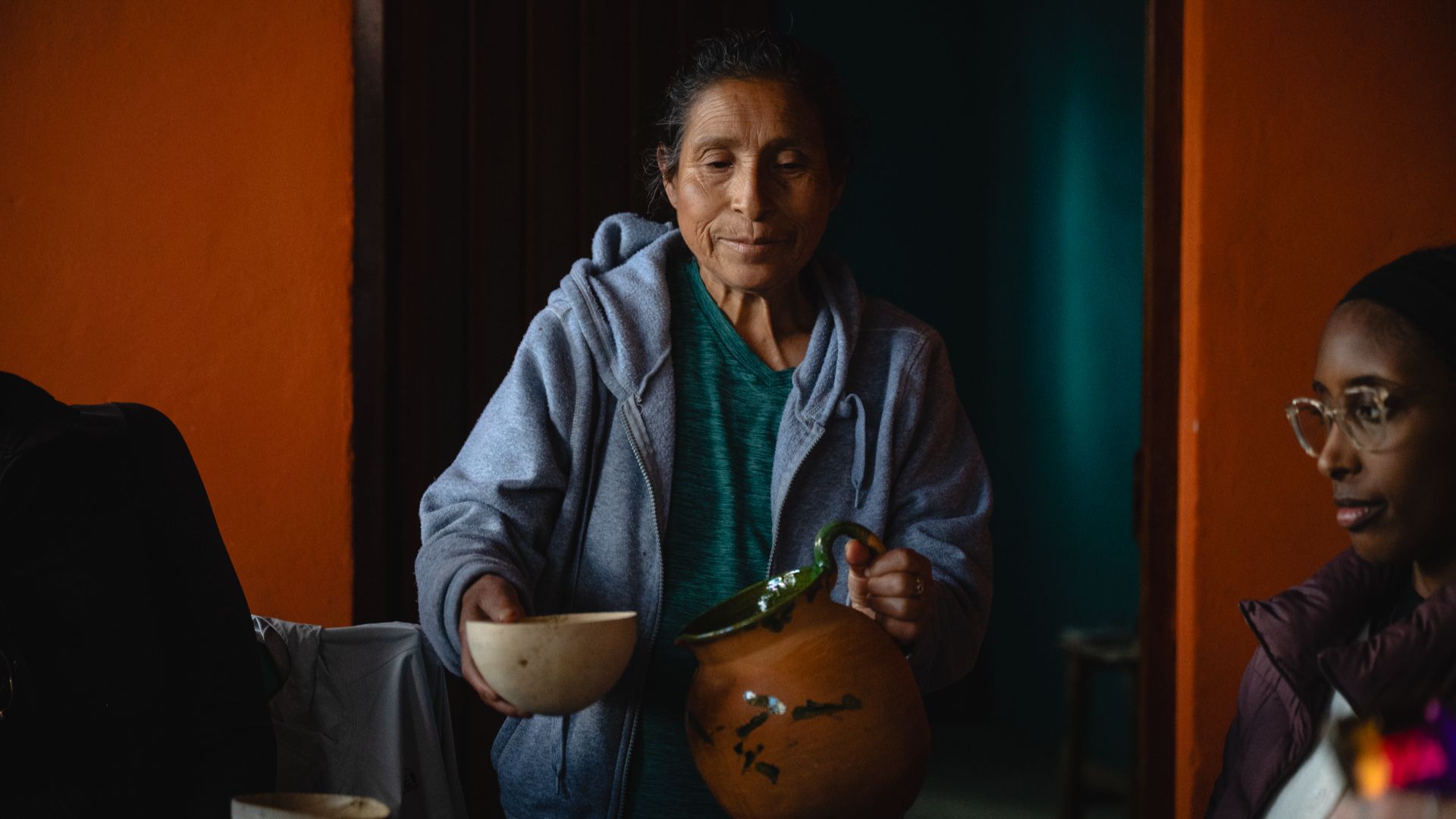
I’m standing in an old kitchen in a Zapotec village in the Sierra Norte mountains of Mexico, watching a mother from Oaxaca’s age-old Indigenous group make tortillas from ears of corn grown on the surrounding land.
Violetta’s hands mould the dough, working in time-honoured rhythm. Her hands are strong, the lines like maps leading to past generations who have made this recipe before her.
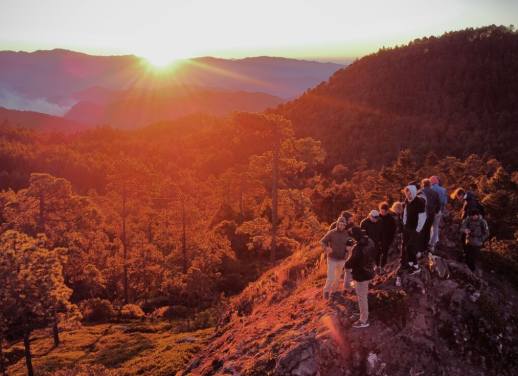
It’s day two on Intrepid’s five-day Hiking in Mexico: Oaxaca’s Indigenous Highlands trip and our small group is hiking village to village, learning how this community lives today.
The dirt floor crunches beneath my feet in Violetta’s home. The smell of earth and wood smoke fills the air. A single light hangs from the rafters, casting a glow on her hands as she works. This traditional single-room home may seem simple. But here in Mexico’s mountains, wealth isn’t measured by what’s owned, but what endures – skill, sustenance and connection.
Read more: 10 new Short Breaks that go big on adventure


Strength in interdependence
Our adventure through the mountains is led by Jonatan, a Zapotec guide, who shares stories and Indigenous knowledge as we go. Rather than walking through the landscape, we walk with it, learning about the plants used for medicinal purposes, the ones the Zapotec eat and how the land is cultivated.
‘We share work, happiness and sadness. We share everything.’ Jonatan tells us over a cup of early morning coffee, before we head out on the next hike. ‘We take care of each other.’
The communities operate as one. Not only do they have a reciprocal relationship with the land, but also with each other. Simply put, their community operates with an ‘I help you, you help me’ mentality. Collectivism is a simple concept, but for me, coming from the individualistic United States, it’s profound.
Jonatan explains how sharing work looks something like this: ‘if you need to plant corn and I need to plant corn, I’ll come help in your fields first, then you’ll come help with mine.’ Joy and sorrow belong to the whole community – when someone marries, everyone contributes. When someone passes away, everyone shows up, bringing beans, sugar, coffee or a chicken to the mourning family.
Their wealth grows from the ground up, from the corn, the beans, the squash, the wild greens that fill the fields. Jonatan said in two hours of walking, you could find everything you need to eat, and their medicine grows along with their food. The land provides.
These are the Zapotec’s roots. They rely on the land and on each other, proof that interdependence is strength, not weakness.
Read more: 10 new ways to connect with Indigenous culture


The soul of the sierra
When travellers visit this area of Mexico, they often stay in the city of Oaxaca. It’s easier to just stick to the guidebooks. But few tell you about these remote villages hidden away in the mountains. We were with these communities as part of an ecotourism project: the Pueblos Mancomunados.
There’s no direct translation to English, but it essentially means the ‘Commonwealth of Villages’, composed of eight remote villages protected under one project. These communities have been thriving together for more than 400 years, but it was in 1998 they started bringing travellers along these trails and welcoming them into their homes, allowing them to show the world how they live and why.
We’re fortunate to have Jonatan with us every step of the way. I ask him one morning about the Pueblos Mancomunados and what they hope travellers will take away from this experience. His answer is simple: ‘the soul of this place.’


Community as currency
In some parts of the world, wealth often looks like accumulation – more money, more possessions, more efficiency. But in these mountains, wealth is rooted not in ownership, but relationships.
The soul of this place is reciprocity and community. Walking through the pine forests, across the fields and next to the massive agave plants, while learning about the role it all plays in Zapotec people’s lives, I slowly start to realise the importance of these shared connections.
The mushrooms he plucks, the power the plants have, the healing properties of the trees… The land isn’t just something for us to take from, but to learn from.
‘In the city, your land ends here’, Jonatan says, holding his hands in front of him showing the hypothetical boundary. ‘My land ends as far as the eye can see,’ he continues, winging his arms out wide as we turn our heads to follow to all the fields and forests carpeting the distant mountainside.
After a morning of hiking, we stop by one of the community member’s homes for lunch. When we get to the house, our host, Mr Eli, says it best: ‘this is our home, it’s not much. But what we do have, is big is in our hearts.’
Sitting around his table eating a meal furnished from their harvest, I understand what he means. Here, there is a kind of wealth that doesn’t translate across currencies. It’s of mutual success and the good fortune of time. The freedom to wake with the sun and rest when it sets. The abundance of having everything you need within reach – food, water, medicine and community.
Read more: 11 new adventures in Mexico and Central America


The wealth of time
The rain batters against Mr Eli’s roof, but we remain dry, content and warm, huddled together over corn-silk elote tea at his table. His smile reaches his eyes as he tells us to take our time, there’s no rush to leave. I listen to the rain echoing off the house, smell the fresh air flowing through the open door and watch the family sitting together on the couch, moving slowly and boiling tea on the stove. Time moves differently here.
At home in the US, we’re time poor – trapped by clocks, schedules and the endless chase for more. We schedule vacations to escape from the speed of our own lives.
Here, the Zapotec are time rich. They have the freedom we seem to spend our lives chasing. Not the freedom to consume endlessly, but the freedom to live deliberately.
Freedom, I realise, is about only needing what you have and having enough time to plant, to break bread, to share, to simply be. To wake with the sun, walk through fields that provide food and prioritise people over possessions.


Rooted in reciprocity
Jonatan’s stories echo what we see in every home we enter – a life built not around speed or accumulation, but around care. Each person’s work is tied to another’s, with every hand, crop and meal part of a collective rhythm.
As we hike to one village, Jonatan tells us about guelaguetza: the Zapotec principle of mutual help or reciprocity.
On our first morning together, he had laughed as we grew frustrated about leaving the city without being able to find an open cafe for a cup of coffee. Later, walking along the trail, he had turned to tell us he had a surprise. Looking around at the vast landscape with not much around except homes and open fields, we couldn’t imagine what it could be. ‘Another five kilometres?’ one of us joked.
As if by magic, he surprised us with coffee – not from a cafe, but from a home. Smoke rose from the chimney, the scent of fresh bread and sweet coffee filling the air. We walked through a small arched door into a stone home filled with people: Jonatan’s family.
His uncle, Nelson, had been baking bread all morning, as he does every Friday, in an oven built by his grandfather. Jonatan’s aunt poured the coffee – water, cinnamon, molasses and sugarcane – and we broke bread together. When you need something here, someone provides and when they need something in return, you reciprocate.
This way of life seems obvious when you see it in action – this is how humans are supposed to live. Rather than fend for ourselves, we need to lean on each other, respect the environment that provides for us and work as a collective, rather than as individuals.
I expected to come to the Sierra Norte and learn about agriculture and ancient traditions. I didn’t anticipate leaving with a new outlook on life.
Walking through the fields with Jonatan, watching Violetta’s slow, steady hands at work and breaking bread with Mr Eli showed me we have so much to learn from the land – and from each other. We just need to slow down and take the time to listen. Asking the right questions over a cup of coffee is just the start.
Connect with the Zapotec on Intrepid’s Hiking in Mexico: Oaxaca’s Indigenous Highlands trip and find out what else is new for 2026 with The Goods – a collection of new trips and experiences to inspire a year of adventure.