Travel writer Wendy Watta rides the rails in Kenya as part of a new Intrepid experience for 2026 to see how Taita Hills Wildlife Sanctuary is championing conservation, one tree and one traveller at a time.
‘Mummy! Mummy! Is that a red elephant?’ The child seated across from me shouts animatedly, yanking me out of a nap. I let my gaze follow the boy’s tiny, pointed finger out of the train window, and, sure enough, a herd of four elephants is bathing in a cloud of red dust.
We’re snaking our way through one of Kenya’s oldest national parks, Tsavo, which is split in two by the railway line. The elephants here are known for their reddish hue. They love to wallow in the deep ochre-coloured soil and so it clings to their skin like paint.
The landscape here is nothing like Nairobi, which we left behind some four hours ago. Verdant highlands have faded into semi-arid terrain that stretches into the distant hills. There’s something about Tsavo that feels wild and untameable, even from the safety of an air-conditioned train.


A wild train ride
The railway’s history is wild too. In 1898, British colonisers commissioned Indian labourers to build the region’s first ever railway line. During the construction project, over the course of many months, a pair of man-eating lions stalked the camps. They dragged workers from their tents at night, mauling up to 135 people by the time the lions were shot. I remember watching The Ghost and the Darkness – a movie based on this story – as a child and swearing that I would never go on safari. (I’ve since been on over 100.)
Since to build it was lunacy and to ride it a thrilling adventure, that now-defunct railway was dubbed ‘The Lunatic Express’. It opened up Kenya’s interior to swaggering aristocrats who came on trophy-hunting sprees, drawn by the Big Five. Among them was former US president Theodore Roosevelt, who came determined to shoot one of everything. He certainly put in a substantial effort, travelling with so many bags, porters and comforts in tow that he shaped spacious safari accommodations as we know them, including Taita Hills Resort & Spa, where I’m heading on part of Intrepid’s new Kenya by Rail trip.
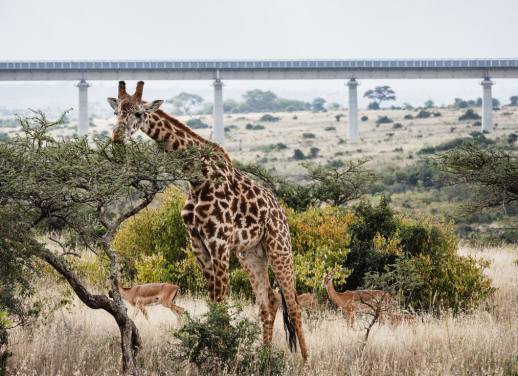
Today, the Standard Gauge Railway (SGR) follows a similar route from Nairobi to Mombasa on the Kenyan coast, a journey that takes about six hours. There’s no scent of gunpowder in the carriages these days – just the chatter of girlfriends heading to the beach, tourists snapping photos of giraffes and antelopes through the window, the little boy across from me pointing out every animal to his mother and a train attendant pushing her food cart down the aisle, softly asking, ‘Sandwich? Biscuits? Water?’
Read more: 8 new trips and experiences in Africa for 2026


Next stop: Taita Hills Wildlife Sanctuary
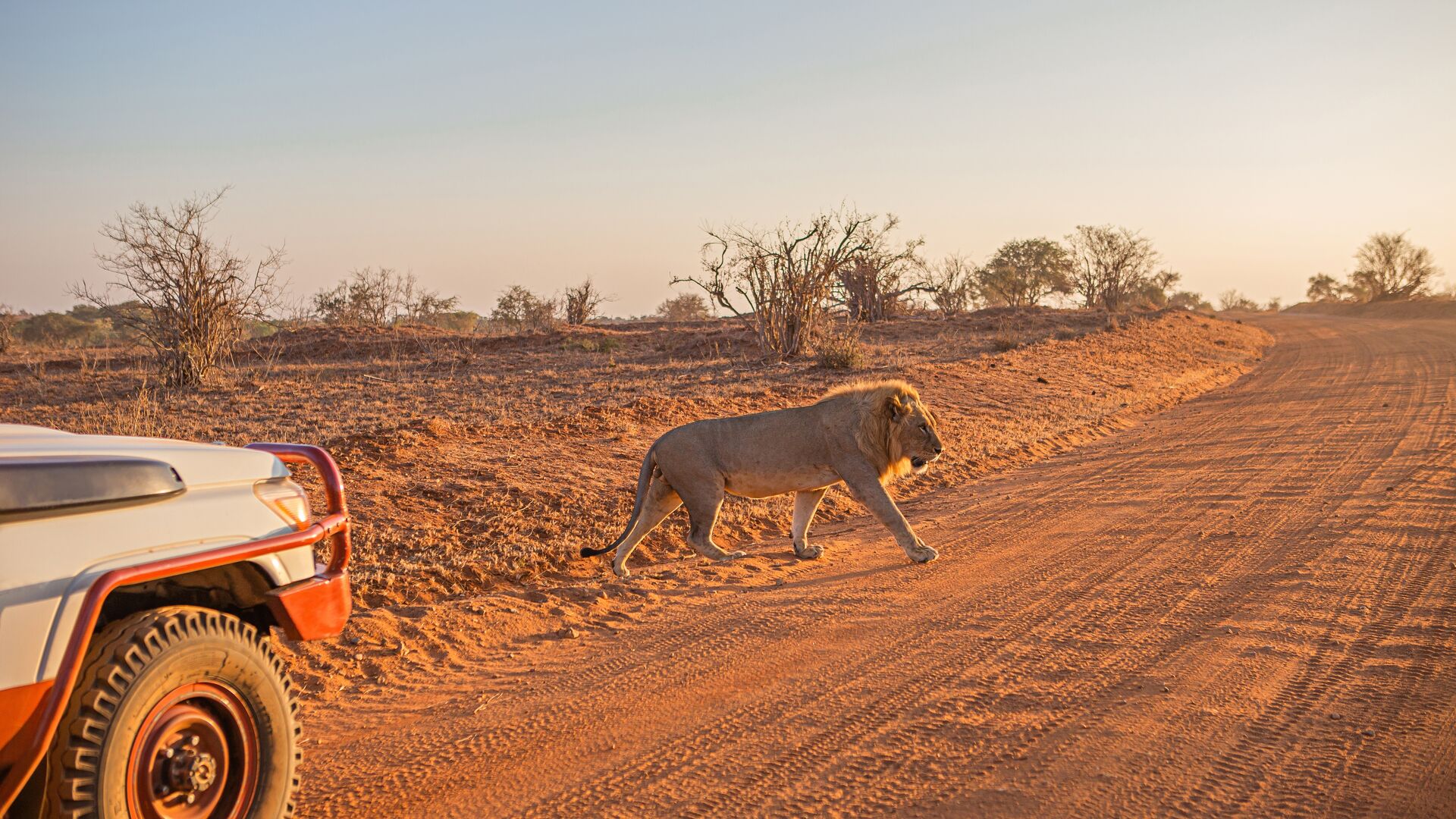
I disembark at Voi to spend the night at Taita Hills Resort & Spa, which sits on the edge of Taita Hills Wildlife Sanctuary. At six the next morning, my Intrepid leader, Caroline, and I clamber half-asleep into the back of a 4WD Land Cruiser. I tightly wrap the provided blanket around me, breath misting in the cold. The 28,000-acre sanctuary sprawls out before me, and I’m itching to explore.
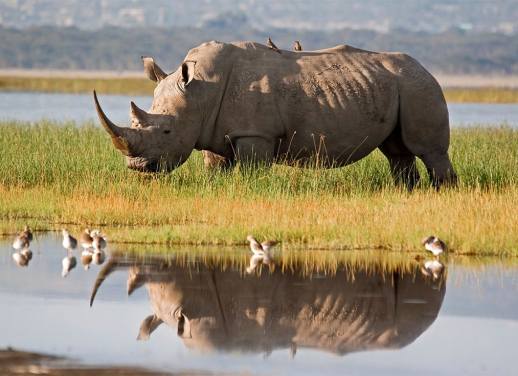
This private sanctuary forms a crucial wildlife migration corridor between Tsavo East and West, where elephants, lions, buffalo and the occasional leopard roam freely between the two parks. With 50 species of large mammals, over 300 recorded types of birds and rich biodiversity that shifts from grasslands to forest, the vastness of this place makes me feel like a tiny part of the universe, almost like my problems don’t really matter. Not today anyway.
As we drive, shy dik-dik antelopes dart between bushes on needle-thin legs that look like they could snap in the wind. Zebras, spotting our vehicle, pause to assess for danger before taking off in the opposite direction. It becomes a running joke that I’m only managing to capture zebra butts on camera. A tower of giraffes gracefully glides through the acacias as though on the runway for Taita Hills’ Next Top Model. An elephant rubs against a tree trunk, as though to scratch an itch, nearly toppling it with its weight. Then, suddenly, time freezes.
A lioness emerges, passing close enough that it feels as though if I leaned out of the vehicle just far enough, I could touch her long, lean frame. She pads past us without a sound, climbs onto a rock and scans the horizon, before disappearing into the tall grass. Caroline says that her cubs are somewhere in the vicinity.
Read more: 15 new adventures for nature lovers
Conservation and community
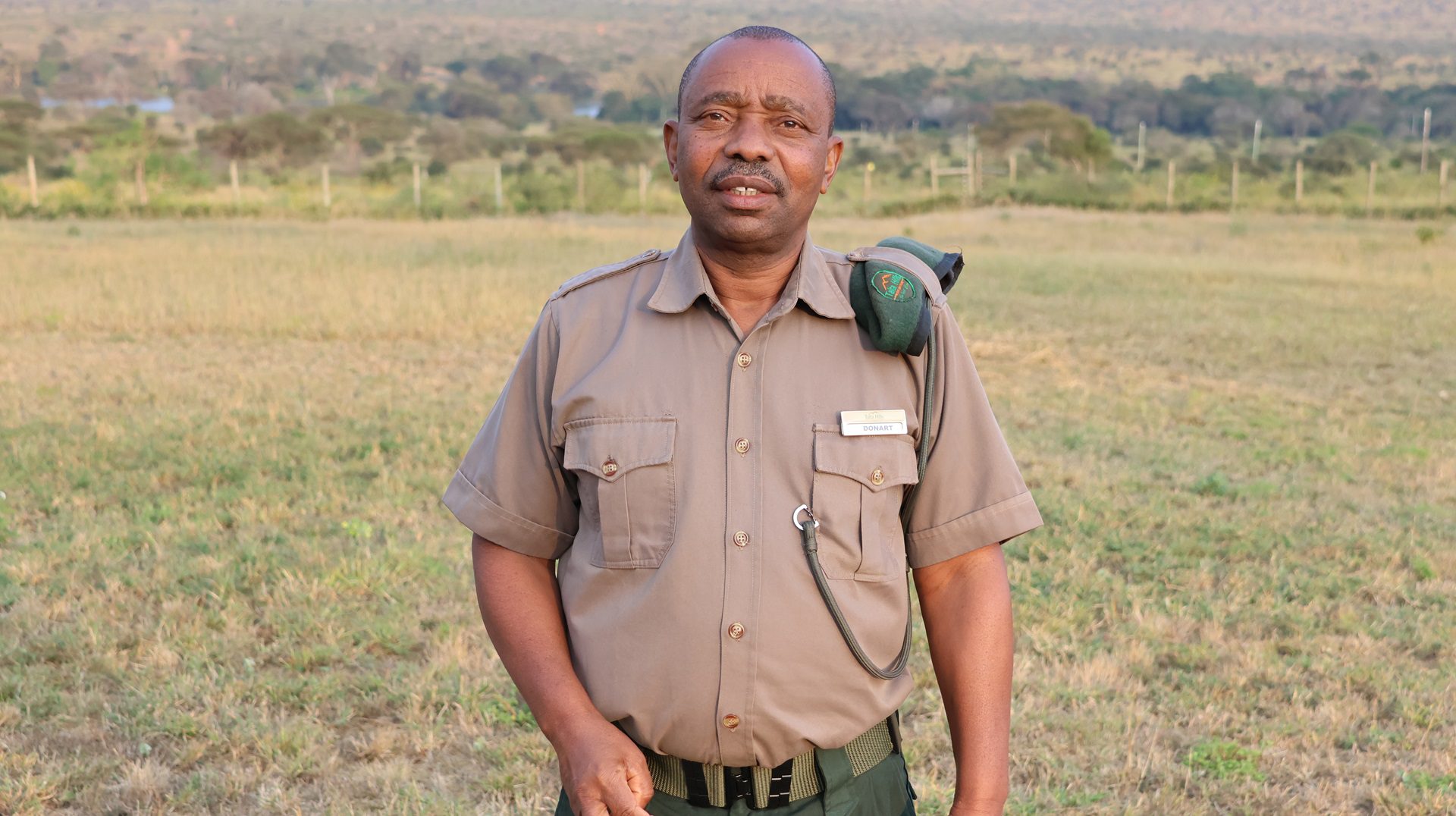
Afterwards, we pick up Donart Mwakio, who’s been a warden at the sanctuary for almost 30 years. He explains that this used to be a hunting block where sportsmen came to shoot the Big Five and locals hunted for food. ‘The goal now,’ he says, ‘is conservation’. I wonder what the wildlife population would look like today if this sanctuary hadn’t been started in 1970.
Donart leads a team of 30 rangers who patrol these lands daily, recording animal sightings and mapping movements to understand their patterns. ‘It’s never the same day twice,’ he tells me. ‘One morning I’m with guests, the next I’m rescuing a lost elephant calf.’
Beyond conservation, the sanctuary is deeply tied to the local community, he tells me. Eighty per cent of staff are from the surrounding area and the organisation also sponsors bright high-school students, refurbishes classrooms in local schools and drills boreholes to improve water supply in nearby villages. ‘Conservation isn’t just about wildlife,’ Donart says. ‘If the people around you don’t see value in it, it won’t last.’


From small seeds grow mighty trees
We head to a reforestation site which was started in 2010 after years of wildfires, overgrazing and drought stripped the earth bare; visitors are invited to contribute by planting a tree. Today, well over 10,000 have taken root, and as a result, dik-diks have returned, followed by lesser kudu, reedbuck and even the leopards that had vanished when their prey disappeared. It’s interesting to learn how everything is interconnected in this ecosystem.
A gardener brings me a small acacia seedling. ‘Grab this,’ Donart says, handing me a shovel. It’s my first time ever planting a tree, or digging a hole for that matter. The earth gives way surprisingly easily as I toil away under his supervision. Careful not to destroy the roots, I lower in the seedling, fill the hole back up with soil and water it.
When we’re done, he ties a small tag with my name to the stem. I can track its progress online later; the sanctuary’s Plant a Tree program lets guests follow their saplings long after they’ve returned home. ‘Every tree makes a difference,’ Donart says. ‘You’ll come back one day and find this one taller than you!’


Stargazing in the wild
Night falls over Taita Hills as we head out on a game drive, and thanks to our remote location, elevation and low light pollution, the Milky Way stretches above us with a clarity most cities lost long ago. Stars twinkle in full glory, like tiny diamonds strewn across the cosmos. This is one of nature’s greatest exhibitions.
Our guide Moses turns off the headlights and for a beat, we’re engulfed in total blackness. Howling predators, laughing hyenas and chirping crickets remind us that we’re certainly not in the city anymore. As he sets up the telescope, I trace invisible lines between the stars to distract from my now ice-cold fingers.
Looking through the viewfinder, I spot Mars first, glowing like a fiery red ball. I’ve always been fascinated by the small distinction between planets and stars in the sky; the former don’t flicker in the same way and yet they look so similar from Earth.
Next, using a stargazing app, Moses shows me a dragon-shaped constellation called Draco. ‘See it?’ he asks, pointing from the screen to the sky. I peer at the stars above, then back at the diagram, puzzled. ‘You need imagination,’ he says with a chuckle. ‘The Greeks had plenty.’
I feel like a kid again as we spend the next hour connecting invisible dots, from Orion to the Southern Cross, then start inventing our own constellations when we run out of names. ‘That’s a crow,’ I suggest. ‘That’s a wine glass,’ adds Caroline. ‘The sky is big enough for everyone’s imagination,’ Moses says.
As we drive back to the hotel for the night, I marvel at the moon, hanging low and orange in the night sky. I spot a red cluster twinkling among the stars. Without thinking, I point it out in wonder, just like that little boy on the train who spotted the red elephants.
After this trip, I understand that conservation doesn’t happen in one grand gesture; it’s a constellation of small but meaningful actions, tied together by invisible strings. It’s wardens like Donart patrolling these lands at dawn. It’s the sapling I planted taking root until one day it’s part of a thick forest. It’s travellers choosing to get around by public transport. And it’s Intrepid curating adventures that channel money back into local community projects. If you use your imagination, the possibilities for positive change are as infinite as the stars above.
Experience the Taita Hills Wildlife Sanctuary sanctuary on Intrepid’s new Kenya by Rail adventure and find out what else is new for 2026 with The Goods – a collection of new trips and experiences to inspire a year of adventure.