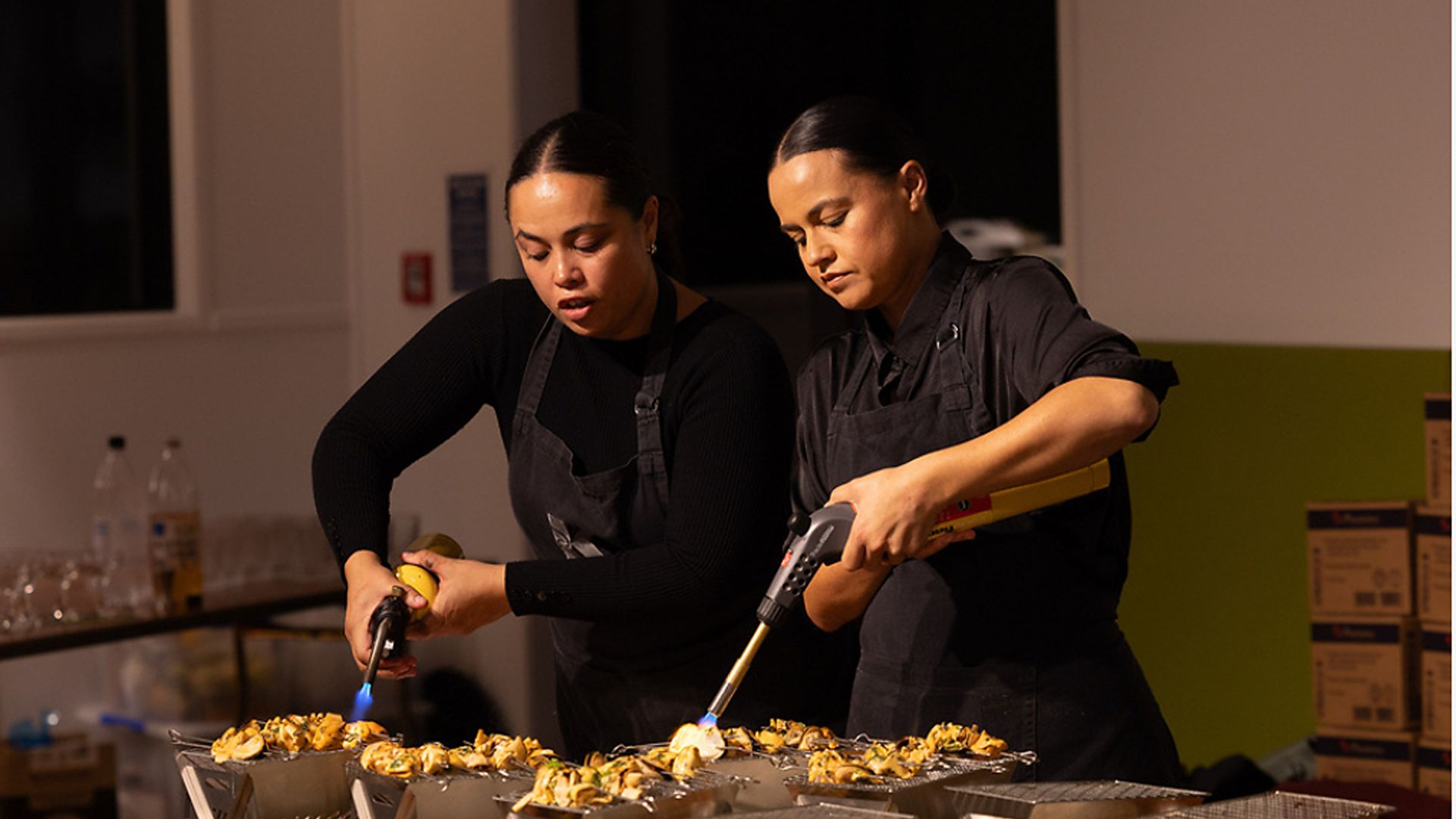
Karena and Kasey Bird have won cooking competitions, written books and hosted TV shows. But today, they’re focusing on the small Maori community where they grew up.
You’d be forgiven for assuming Karena and Kasey Bird – sisters, chefs and winners of 2014 MasterChef New Zealand – remember the extravagant meals the most: the famous restaurants, the elaborate tasting menus, the once-in-a-lifetime reservations…
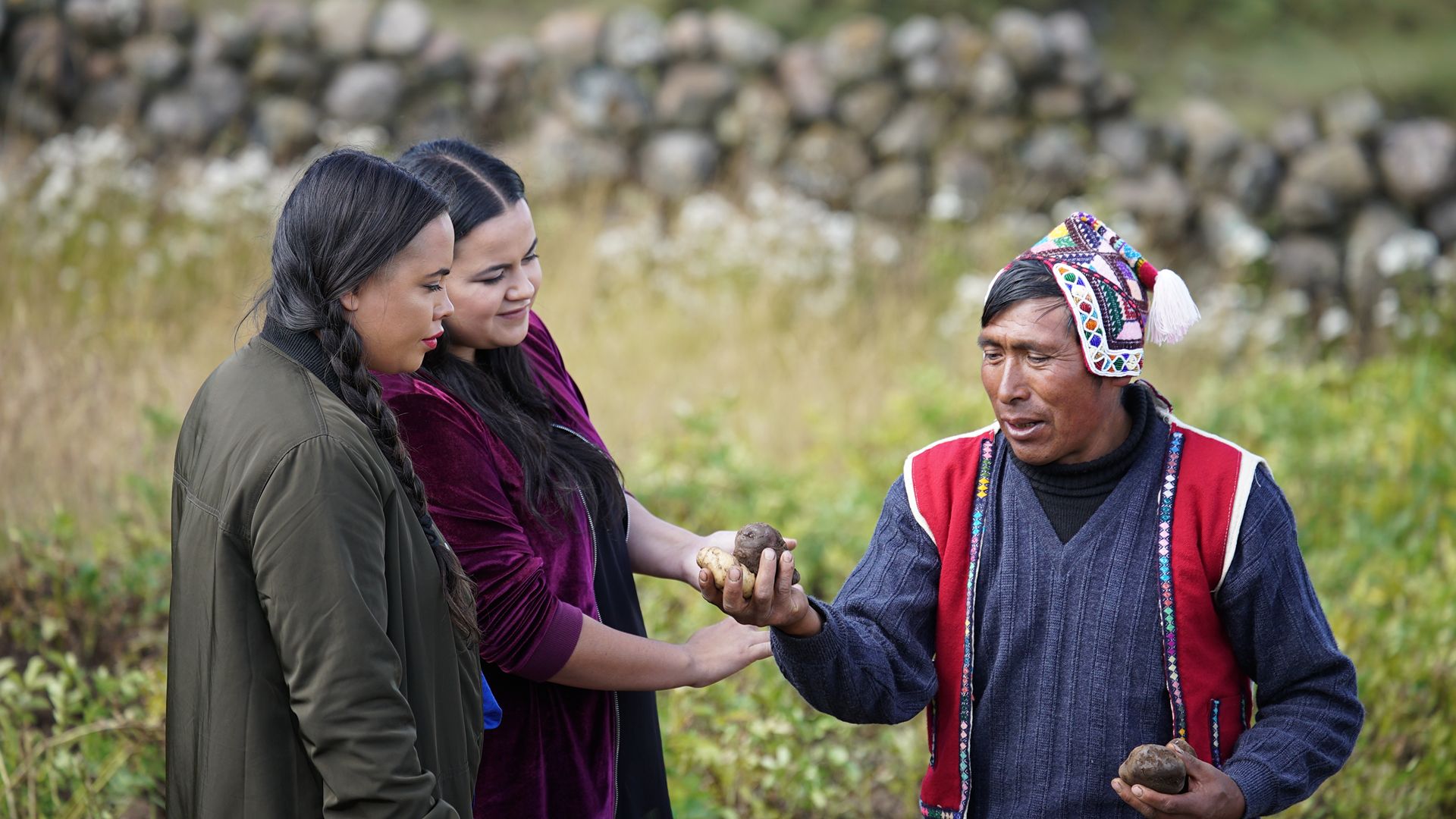
Turns out, one of their favourite meals was a potato cooked on burning donkey dung as they sat on a Peruvian hillside.
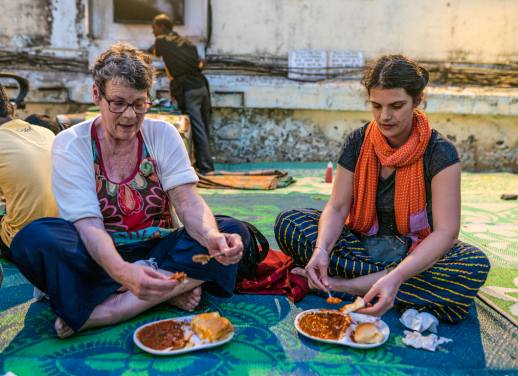
‘The farmers dug up the potatoes and peeled the skin off,’ Karena explains. ‘They had fresh cheese from the goats that grazed on the hill and a herb sauce made from foraged greens. We were sitting on this hill, eating potatoes with cheese and sauce, and I remember thinking: this is unrepeatable.’
‘We could sit there and touch everything that was part of this meal,’ adds Kasey. ‘Everything was so simple, but the memory is so vibrant. When you eat stuff close to the source, it tastes better – and it’s better for you.’
‘It was amazing,’ Karena agrees. ‘And it was just their everyday lunch.’
An idea takes root
The Peruvian potato was more than an unforgettable lunch. Experiences like this, repeated across the world, were what prompted the Maori sisters from New Zealand to look at their own cultural practices through fresh eyes.
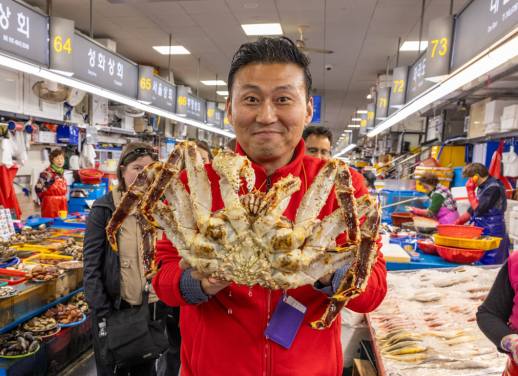
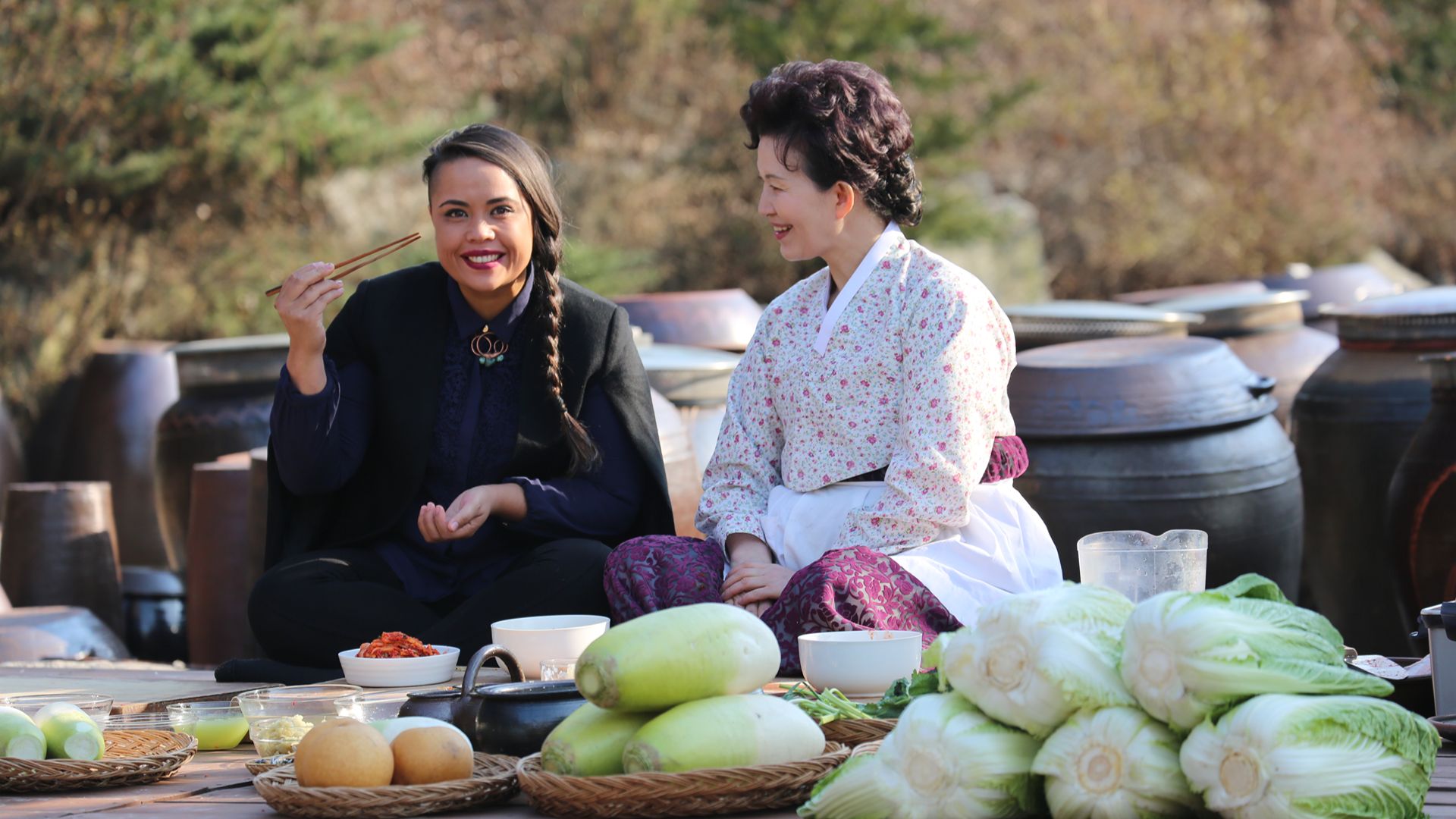
‘Every time we travel, we realise we’ve got a lot to learn,’ says Karena. ‘I remember going to South Korea and I was with this 80-year-old nanna making kimchi. When I was eating it, I had an epiphany. I’d come all the way to Korea to learn about fermented cabbage and I didn’t even know about the fermentation practices in my own culture.’
‘Korea was the catalyst,’ agrees Kasey. ‘We’d been travelling around learning all these things from other people but feeling like we had so much more to learn in terms of our own cultural practices and native language.’
Read more: Intrepid’s unmissable food and drink experiences
Reconnecting with Maori culture
Karena and Kasey would eventually take a break from travelling to study te reo Maori (the indigenous and an official language of New Zealand) full time. Their careers were flourishing, but becoming fluent in their native language was a piece they felt they needed to be more authentically themselves. Their next cookbook – the third overall – is written entirely in te reo Maori, a project they say has really elevated their connection to culture.
While studying, they continued living in Maketu, the predominantly Maori community on the North Island’s Bay of Plenty where they grew up. Childhood memories revolved around neighbours dropping off bags of mussels and freshly smoked kahawai (a salmon-like South Pacific fish) or collecting shellfish after school and cooking them over a fire.
As teenagers, they’d save their pocket money and drive three hours to Auckland to tick off their list of the best restaurants. ‘We were these 16, 17 year olds, from a small rural village,’ says Kasey. ‘We would have so many people being like, “Who are these young girls?”’
‘I think we took for granted how connected we actually were,’ says Karena, reflecting on their childhood. This is true of both their culture and their food sources. They spent a lot of time at their marae (Maori meeting place) and homes would often have a basket of freshly harvested tomatoes on the table. At one stage, it seemed everyone in the village was growing garlic. They’d argue over who had the best garlic until Karena and Kasey’s auntie won a competition and put the question to bed. It wasn’t until the sisters moved away – to the city, specifically – that they realised this wasn’t the norm for everyone.
Read more: The First Nations foods you need to try in Down Under


Digging deep into hangi feasts
They also grew up having communal meals and doing hangis – the traditional Maori method of cooking food underground using heated rocks buried in a pit oven, which Intrepid travellers can experience while visiting New Zealand. These community feasts are prepared in the spirit of manaakitanga (hospitality), often for celebrations and formal events, and begin long before anyone eats.
First, a pit is dug in the earth and a fire built over stones. Once the stones have absorbed the heat, hunks of pork, beef and lamb are lowered onto the rocks, along with vegetables like sweet potatoes. Everything is covered with damp cloths and sacks – or flax leaves, traditionally – then buried to seal in the heat. The food is cooked for hours before being dug up, resulting in soft, tender meat and veggies infused with earthy flavours.
‘We’ve realised we’re really accustomed to cooking underground,’ says Karena. ‘It’s something we do often. In other countries, it might only be done for big occasions, but we could do a hangi ourselves this afternoon if we felt like it.’
Read more: Authentic ways to connect with Indigenous culture


A new chapter in culinary storytelling
While filming their award-winning travel-cooking show, Karena and Kasey’s Kitchen Diplomacy, they visited a number of other countries with similar underground cooking methods. It inspired them to host an event called ‘Beneath the Surface We’re All Connected’, for which they cooked different dishes and flavours from each of the countries they’d been to.
‘We found they even had an underground cooking method in Chile, but they would put seafood and chorizo and all these different things in,’ says Kasey. ‘So, we experimented with putting chorizo and New Zealand’s green-lip mussels in our hangi, and with different techniques, like in New Caledonia, where they add fresh coconut milk, so it’s almost a stew.’
Their events became even more ambitious. After visiting one restaurant in China, they were inspired to experiment with how audiovisuals might be used to tell a story about the dishes being served. From this, they realised they too had some amazing historical stories they could be telling and representing on a plate.
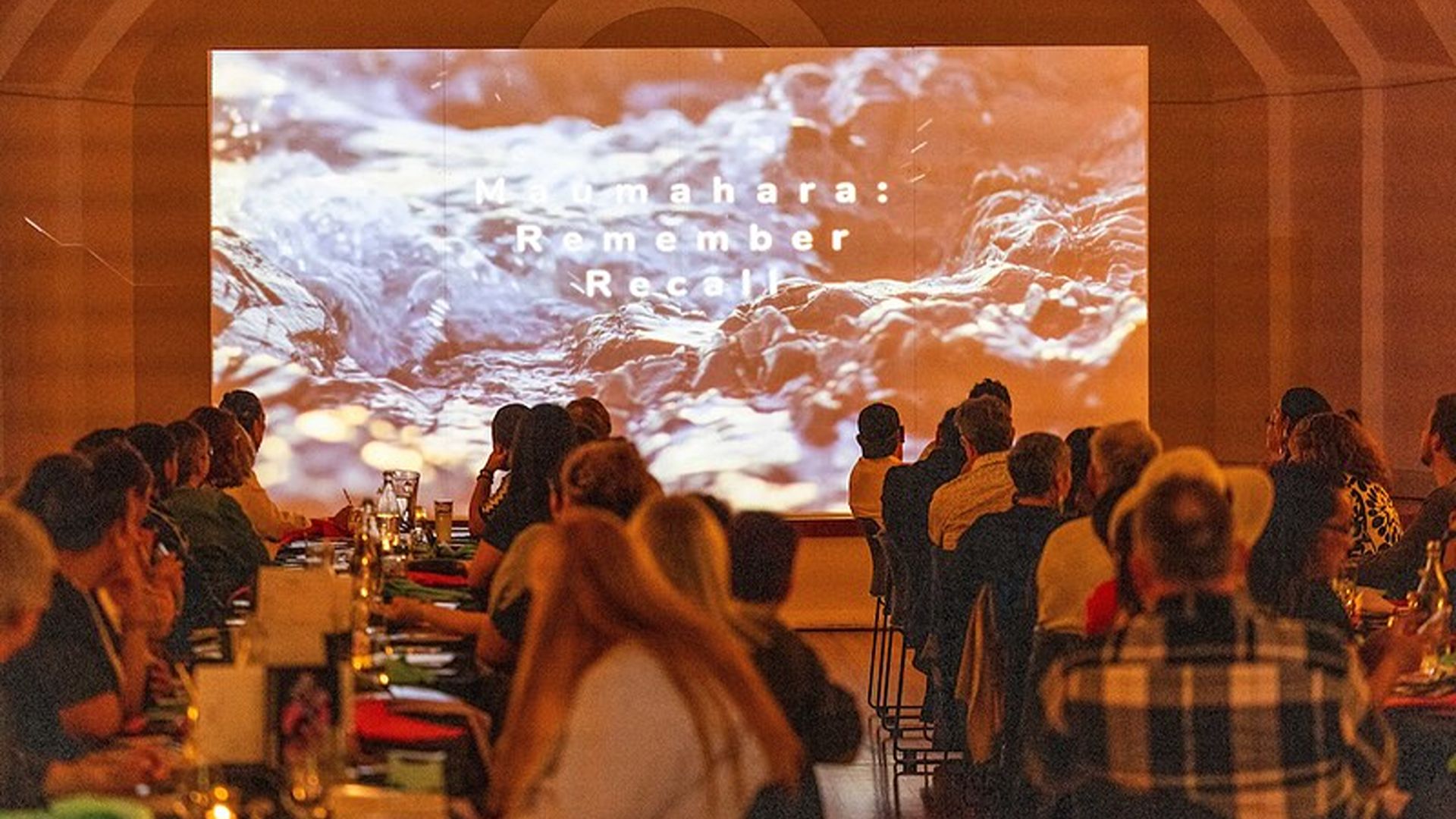
Their first immersive dining experience, ‘The Creation Dinner’, celebrated Maori deities and the creation story, while their most recent ‘Maumahara’ – which means ‘to remember’ in Maori – was themed around nostalgia, exploring what it means to grow up in Aotearoa, the flavours that shaped their tastebuds and the way Te Ao Maori (the Maori worldview) influenced their lives.
‘We had a dish based on the Maori language reclamation movement,’ Kasey explains. ‘Our mum spoke about getting strapped for speaking our language and having her mouth washed out with soap, so we created a dish that looked like soap to be served as a palate cleanser.’
Hearing stories like this might be confronting for diners, or leave them feeling uncomfortable, but Karena and Kasey had expressed a desire to move from palatable to political and have spoken about how empowering the shift has been.
‘Our travels have given us the confidence to tell our stories in a way where we can speak our truth,’ says Kasey. ‘We can show who we are through our food.’
It all goes back to taste
For Karena, the event was political commentary in food form, a reflection of past struggles and the issues still facing New Zealand. But taste remained the top priority.
‘I think that ideas are sometimes stronger than actual deliciousness,’ she says. ‘I’m really conscious of that. A lot of Maori have never experienced degustation (tasting menus), they’re quite intimidated to go into these formal dining spaces, so I want to make the dishes approachable and inventive. There are certain ingredients, like watercress, that will always give a Maori flavour.’
Both Kasey and Karena see food as a pathway to meaningfully connect with Indigenous cultures, including their own. Whenever they travel, they’ll seek out local cooking classes that give back to the community and spend time learning what’s culturally appropriate, believing that’s how you respectfully become part of a place.
They say a plate of food reveals the history of a land and tells the story of its people. Years ago, in Peru, they were deeply moved by a meal rooted in place; now, they’re creating that same feeling back home.
Connect with Maori culture on Intrepid’s small-group adventures in New Zealand.