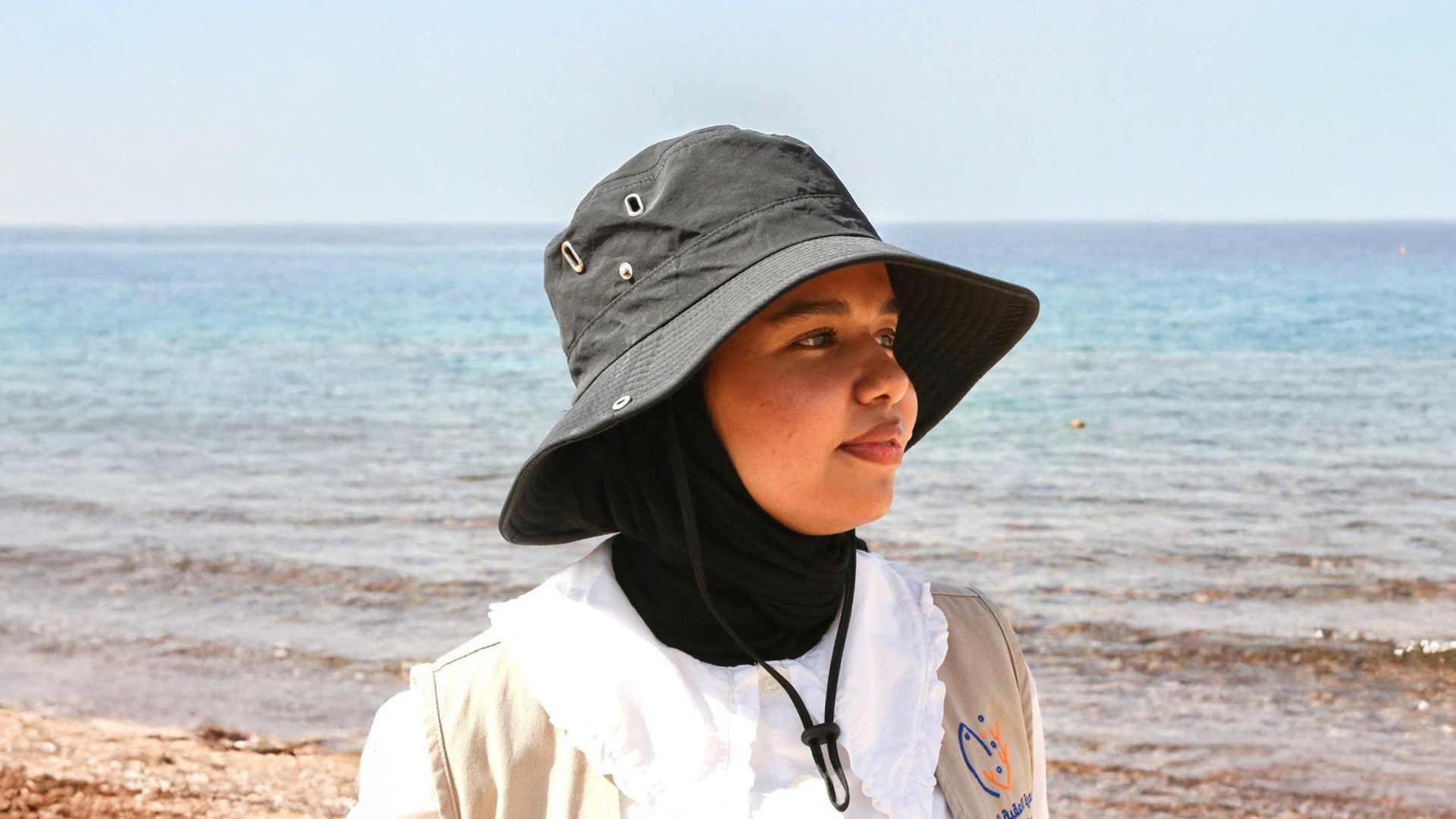
Childhood swims along Jordan’s short Red Sea coast led B’dour Abu Bader to a lifelong love of the ocean. As part of a new Intrepid experience for 2026, travellers will get to share in her passion to protect it.
‘I think I belong to the sea more than the land,’ B’dour Abu Bader says, as if it’s something she’s always known. ‘Sometimes I feel like I’m a mermaid,’ she says, laughing at the sentiment, even though it feels entirely sincere.
Jordan is almost entirely landlocked, except for Aqaba, a lively port city in the south where a stretch of coastline with terracotta-coloured sand traces the Red Sea. This is also where B’dour was born and raised. She has always lived here with her family, visiting the beach every weekend.
Her love for the sea really began at five years old, when she learned to swim and snorkel. ‘It was like being in a friendship with the [waves]… I had early experiences of [connection] between me and the sea.’
Aqaba: The key to saving the world’s coral reefs?
In late 2022, B’dour joined the marine ranger team at the Aqaba Marine Reserve, working alongside scientists, researchers and educators to safeguard one of the most unique coral reef systems in the world.
From 2026, Intrepid travellers on the Explore Jordan trip will meet B’dour in person to hear her story and learn about the conservation work happening along Aqaba’s coast.
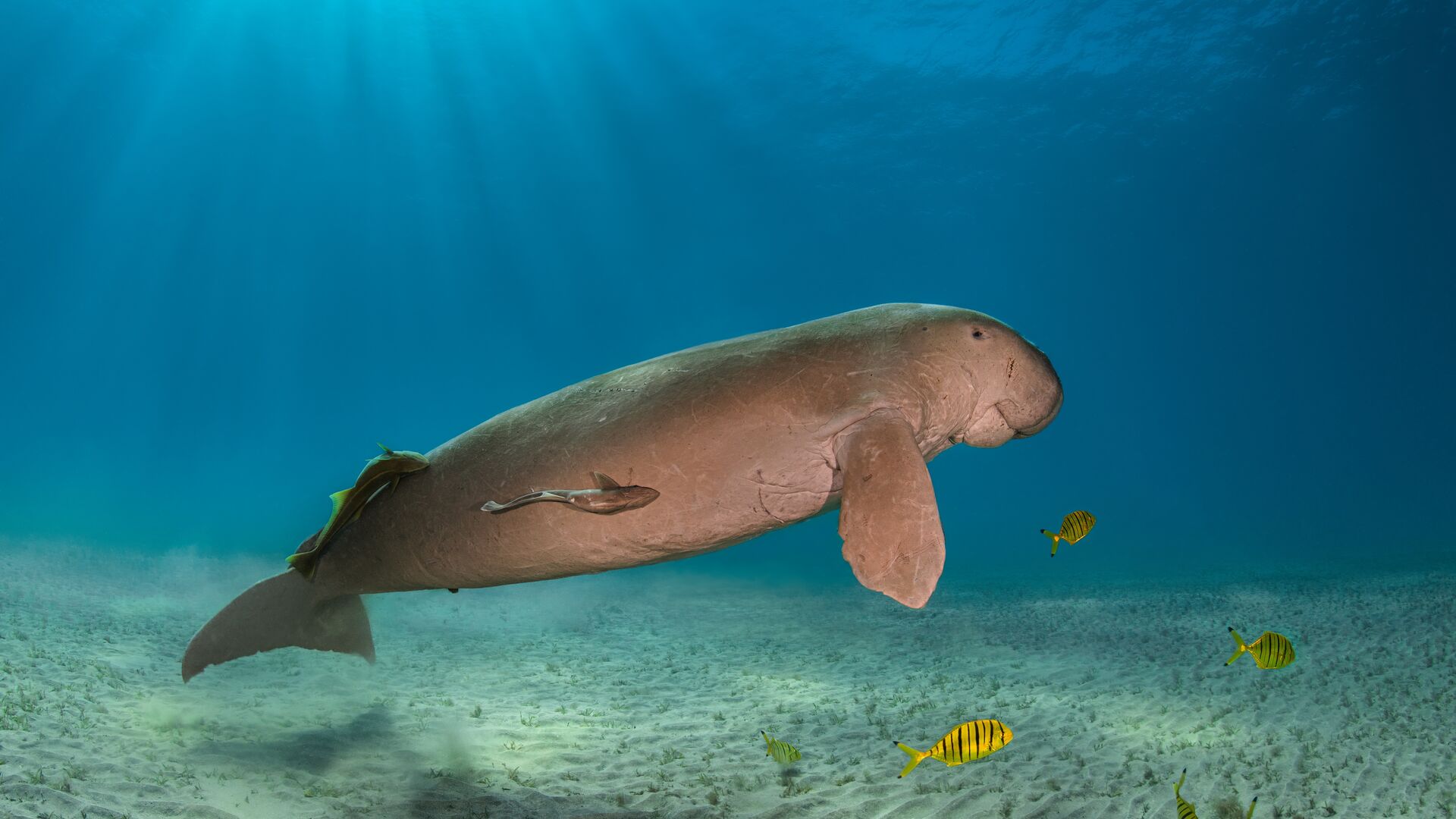
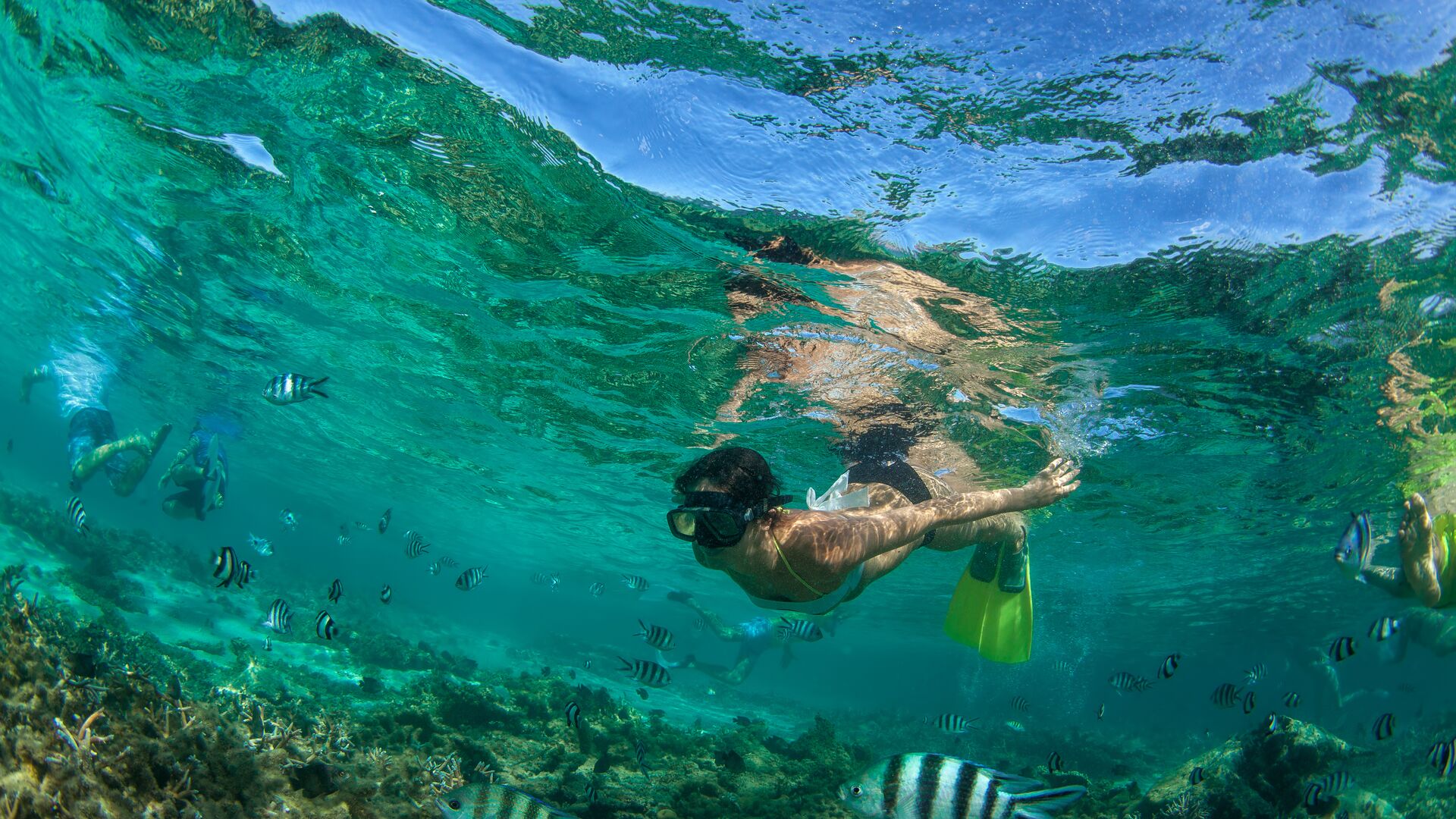
Aqaba Marine Reserve, located at the tip of the Gulf of Aqaba, is cut off from other seas by narrow straits, creating a kind of natural sanctuary. It’s home to rare and endangered species such as dugongs, four species of sea turtles and even whale sharks. More than 150 species of reef-building corals, 500 species of fish and seemingly countless molluscs and marine creatures thrive there, making it globally significant for research and conservation.
Scientific research suggests that the coral found in the Gulf of Aqaba has adapted over millennia to withstand higher ocean temperatures. Therefore these reefs are not just a national treasure for Jordan, but a living blueprint for the future of our oceans and an important gene bank for coral restoration.
‘When we talk about the coral gene bank, we mean a living genetic library, a refuge that preserves the diversity of coral reefs that might otherwise be lost to bleaching or disease,’ B’dour explains. ‘Protecting it is critical because it holds the key to the future resilience of reefs. One day, it could help restore the coral that’s already been damaged around the world.’
Scientists have long warned that coral reefs, some of the most fragile ecosystems on our planet, are disappearing faster than we can save them. The United Nations reports that that our oceans absorb more than 90 per cent of excess climate heat, causing record-high sea temperatures and triggering marine heatwaves that are bleaching and devastating coral reefs worldwide. Surveys between 2009 and 2018 found that 14 per cent of the world’s live coral cover has disappeared.
The latest global coral bleaching event, the fourth ever recorded, was confirmed in April 2024 by the US National Oceanic and Atmospheric Administration and the International Coral Reef Initiative. It began in January 2023 and is still ongoing, now considered the largest and most severe on record, affecting around 84 per cent of the world’s coral reefs.
From rolling waves to role model
The way we treat our oceans has weighed on B’dour’s mind since she was a young girl, sitting in school and learning about how climate change impacts the world under water. ‘When I realised how fragile the ocean was, I felt fear,’ she says. ‘You love something so deeply, then you learn it could disappear. From that moment, I wanted to protect it.’
That feeling stayed with B’dour, quietly shaping her choices. She originally studied chemical engineering and spent three years working in the field, but never felt fulfilled. ‘I didn’t find myself there,’ she admits. ‘In December of 2022, I was scrolling on Facebook and saw that the United Nations Development Programme was looking for marine rangers for the Aqaba Marine Reserve. I thought, why not? All my life I’d wanted a job beside the sea.’
B’dour didn’t know that by pursuing this dream, she would be making history as Jordan’s first female marine ranger. ‘I was very surprised when they told me I was the first woman to work in the Aqaba Marine Reserve,’ she says. ‘It was very weird at first, but I think we adapted very well… [My team and I] built good relationships and a positive work environment.’
‘I’m happy to have grown up in Aqaba. The community here is so supportive; they understand that supporting women and girls is important. I got encouragement from day one from my family and the people around me.’
B’dour says that she often runs into local girls on the beach and tells them her story. ‘I tell them if you believe in what you love and in your dream, you’ll reach it, maybe not now, but you will.’
Read more: 9 new ways to champion local women


B’dour’s passion is a shore thing
From B’dour’s first day on the job, she knew that being a marine ranger was her true calling. ‘It’s not just work that you do, finish and go home,’ she shares, eyes lit up. ‘I’m happy with what I do every day.’
Most days, B’dour’s out by the shore, greeting visitors to the reserve – school groups, divers, local families and sometimes curious tourists. ‘The main part of my job is meeting new people,’ she says. ‘My role is really about education, helping people understand why it’s so important to protect and preserve our marine ecosystems.’
She explains how small actions, like avoiding single-use plastics or choosing reef-safe sunscreen and resisting the urge to touch coral or marine life when snorkelling, can make a big difference. ‘Everything under the water is alive,’ she reminds us. ‘Leave it as you found it.’
When she’s not guiding visitors or leading beach clean-ups, she works with her team to monitor conditions along Aqaba’s coast, keeping an eye on the coral’s health and ensuring that everyone who visits the beach respects it. Occasionally, when the opportunity arises, she joins reserve divers to check the reef below, a chance to reconnect with the world she’s dedicated to protecting.
Through her work and unwavering love for the sea, B’dour wants people to understand that safeguarding the ocean isn’t down to a few, but humanity as a whole. She hopes every visitor leaves with a deeper connection to the sea and a renewed sense of responsibility. ‘When people visit, I want them to feel what I feel,’ she says. ‘The sea gives us so much. We have to give something back.’
Meet B’dour with Intrepid on the Explore Jordan trip and find out what else is new for 2026 with The Goods – a collection of new trips and experiences to inspire a year of adventure.