As part of a new experience for 2026, Intrepid travellers in the Balkans can now stop and recharge at Zvuci Srca, a cafe where staff with developmental disabilities are finding creative outlets, new skills and a sense of community.
For Serbs, the cafe is an intrinsic part of life – as fundamental as food and sleep. It’s not just a place where you can catch up with friends and gossip over leisurely cups of coffee – although that’s an enormous part of its charm. In this immensely sociable country, the cafe (kafic) is like a second home, and a day isn’t complete until you’ve checked in with your friends and reinforced those social ties that keep you together. Stroll for ten minutes from Belgrade’s most magnificent landmark, St Sava Temple, and you’ll find a cafe that puts even more heart than most into this time-honoured ritual.
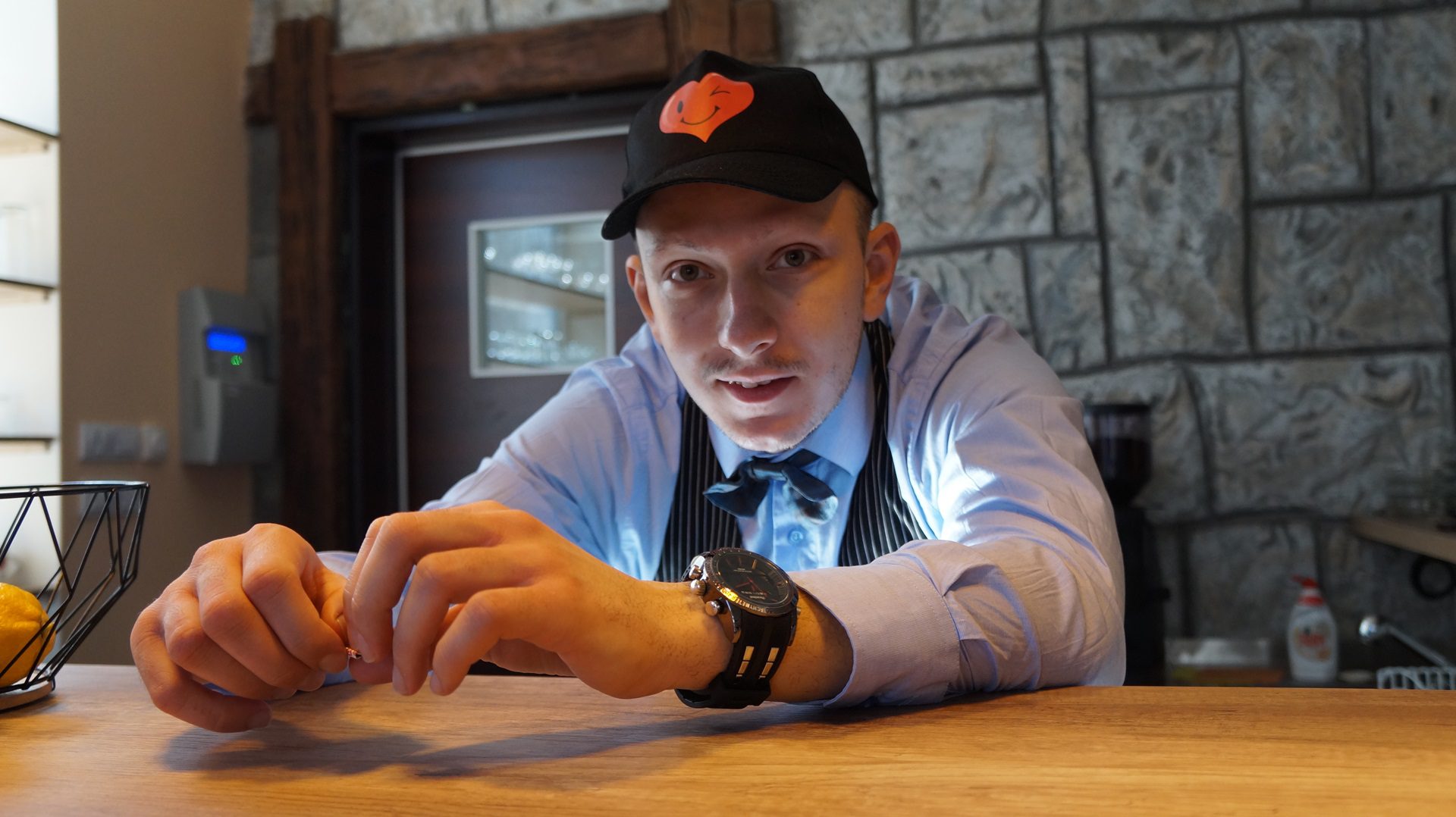
Zvuci Srca (Sounds of the Heart) has been offering valuable work opportunities to people with developmental disabilities since 2019. Fifteen of its 27 staff have learning difficulties or neurodevelopmental conditions. Here among the cafe’s brick-lined walls, comfy seats and cosy banquettes, customers chat over cups of strong Serbian coffee, cappuccinos, espressos or soft drinks. And when they leave, there’s no obligation to pay – they can donate as much or as little as they like. Intrepid travellers can experience it for themselves on the Explore the Balkans trip, a new inclusion for 2026.


‘It’s OK to be different’
Walk through the door of Zvuci Srca and one of the first things you’ll spot is an enticing display of tote bags, T-shirts, mugs, badges, magnets and assorted trinkets. Their eye-catching designs and slogans, many written in Cyrillic, reveal another side to the cafe – it’s also one of the six work centres across Serbia run by Decje Srce. This organisation, whose name translates as Children’s Heart, works to bring people with learning disabilities into all facets of society – and is celebrating its 25th anniversary in 2026. The cafe’s staff members not only serve coffee, but also work behind the scenes designing and making these products, with all profits from their sale going directly back to Decje Srce.
Social worker, Ana Zlatkovic, 32, joined Decje Srce in 2016 and sees the cafe as a ‘very good context [in which] to meet people with disabilities and [start being] more open about the differences we have.’ But it’s been a journey to get here. ‘In 2001 in Serbia, society was full of prejudice,’ she explains. ‘[People with disabilities] never went anywhere. They were [stuck] in their houses and [taught to be ashamed of] who they were.’
At that time, Ana says, there were only residential accommodation services for people with developmental disabilities and few daycare centres. Decje Srce’s co-founder, Goran Rojevic, who was working in special needs education at the time, could see there wasn’t enough being done to prevent people from becoming institutionalised, and wanted to keep children in particular within the family and the community.
‘That’s why Goran came up with the idea of increasing the visibility of people with disabilities in society. He started taking them to exhibitions, concerts and various events in Belgrade,’ she says, so that people would learn that ‘it’s OK to be different.’
The idea eventually spread to other cities across Serbia, with work centre-cafes opening in Subotica, Pancevo and Nis. In Serbia’s second city, Novi Sad, there’s only a cafe so far, but Decje Srce has plans to expand it to a work centre too. In the mountain resort of Zlatibor, Decje Srce runs a School of Life for young people with learning difficulties, where they can develop skills including cooking. But they also have sports activities, creative workshops and even disco nights. ‘We have such fun with them,’ adds Ana. ‘The main goal of School of Life is [to build] social skills, life skills, because it’s important for them to be independent.’
Read more: 10 new ways to travel with purpose


Harnessing special talents
Thirty-one-year-old Nemanja Jovic, who is autistic, has been working at Zvuci Srca since the very beginning. His week is a busy one: he lives in Pancevo and works one day a week in his local branch of Zvuci Srca, but spends four more days here in Belgrade.
Zvuci Srca gives him the chance to put his immense creativity and artistry to good use while developing skills such as printing and design. In fact, many of the cafe’s products were designed by Nemanja, and the working environment suits his personality. ‘I like to work in peace and quiet, and slowly,’ he says. ‘I must be able to concentrate fully.’ Even in his free time, Nemanja is still creating things, making decoupage boxes, magnets and earrings.
When he’s behind the bar, he enjoys seeing the world coming through the door. ‘We have people from all over,’ he says. ‘Austria, Bulgaria, Romania, Hungary, Croatia, Slovenia, Montenegro, Macedonia, Germany, America, Canada. It’s good. We also have Serbs from Australia.’
Read more: 13 new European trips and experiences


Inclusivity at all costs
Zvuci Srca’s donation policy means anyone can come in and have a drink, regardless of how much or how little money they have. Menus have lists of hot and cold drinks, but no prices. This gives the place a feeling of solidarity, says Ana. ‘People sense that it is inclusive for everyone.’
Almost all customers will leave a donation, of course, even just a few hundred dinars. But the lack of obligation takes the pressure off people who might be feeling the economic pinch. ‘It’s like no other place,’ says Ana. ‘It’s a place where everyone can feel welcome. This is the one place in the city where you can come and be totally relaxed and have a hug with our waiter, and they will say that you are beautiful; it is a totally honest place. [Neurotypical people] have all kinds of filters when showing emotions to others. And our colleagues don’t have a filter. If I’m beautiful to them, they will say that to me, or if I’m not beautiful, they will also say that, and it is fantastic.’
The cafe’s warm atmosphere is infectious, and Ana is keen to see the concept spread even further across Serbia. ‘My hope is to include as many people with disabilities as we can,’ she says. ‘[I’d love] every big city in Serbia to have a Zvuci Crca, to have some place that people can gather. Hopefully, other associations will follow our example.’
Get your caffeine fix, a special souvenir and an unfiltered compliment (if you’re one of the lucky ones) at Zvuci Srca on Intrepid’s Explore the Balkans trip.