On the outskirts of Rome, a small, dedicated team is leading the way in sustainable agriculture and creating new opportunities for the next generation of young farmers.
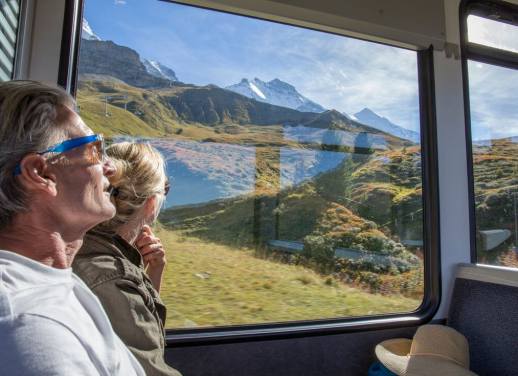
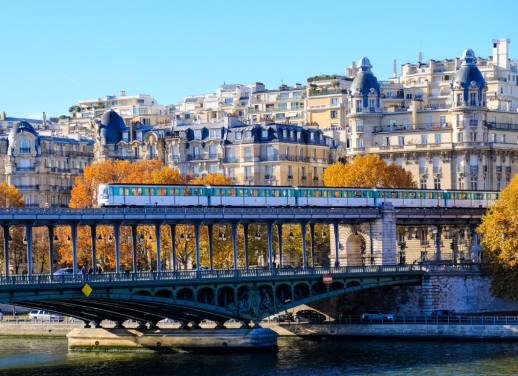
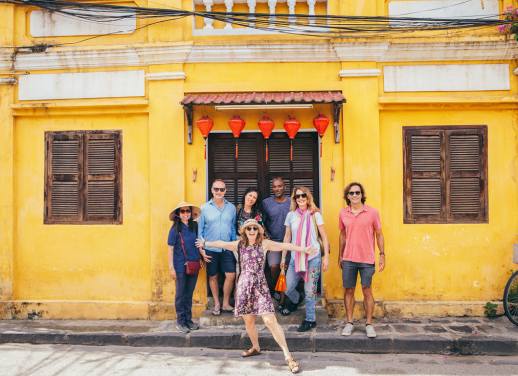
A light breeze rustles through the surrounding fields of crops as travellers on Intrepid’s Paris to Rome by Rail trip finish up their organic farm tour in the Italian countryside and gather around a large wooden picnic table.
They’re settling in for lunch. But it’s not just any lunch.
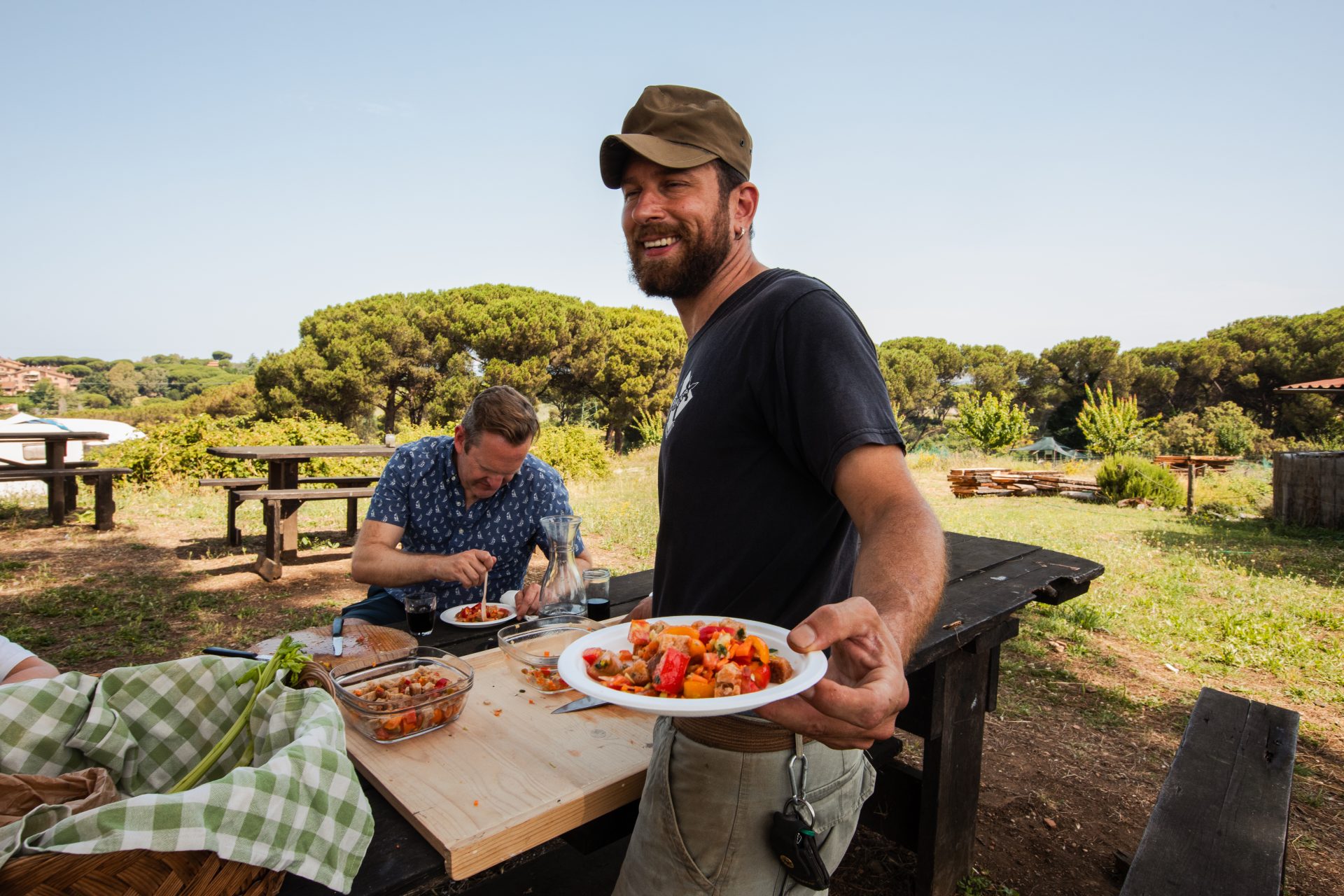
Putting the ‘farm’ firmly in farm-to-table, the alfresco meal is being prepared with ingredients pulled directly from the land they’re seated on. Under the guidance of Alessia, one of the passionate farmers here, they slice ripe tomatoes, tear basil leaves and learn how to toss together a traditional panzanella – a rustic salad made with produce picked from the fields, and olive oil, balsamic and bread from nearby.
As ingredients are chopped, stirred and seasoned, it’s hard not to notice the colours. They’re colours hard to find in supermarket aisles, with a vibrancy available only to ingredients with true zero-mile status. The tomatoes, in particular, a special drought-resistant kind grown year-round at the farm, are an impossibly deep red.
The fresh eats are courtesy of Cooperativa Coraggio, a collective of farmers who’ve transformed a deserted block into thriving farmland that produces quality organic ingredients, creates jobs and strengthens the local community.


An agricultural renaissance outside Rome
It was 2011 when Cooperativa Coraggio’s co-founder, Giacomo Lepri, and seventeen of his friends – an unlikely group of farm workers, chefs and waiters who spanned one end of the supply chain to the other – set out to imagine a better way for food to be grown and shared across Rome.
Giacomo says they each had a firsthand view of how unsustainable farming practices and long food supply chains damaged the environment they cared so much about. So, together, they decided to do something about it, and the figurative seed for Cooperativa Coraggio was planted.
Four years later, that vision found a home.
The Borghetto San Carlo Estate was originally earmarked to be a housing development and shopping mall, but plans were abandoned after archaeological remains were uncovered ahead of construction. In Italy, when this happens, the land can be declared archaeologically significant and transferred to public ownership.
More often than not, these sites are left barren and deserted, becoming targets for vandalism and petty crime – a fate the Borghetto San Carlo Estate was facing before the Cooperativa Coraggio team got involved. Giacomo and the team challenged the government’s claim on the land (in court), petitioning to regenerate the space into the farm it is today. When they won, they set a precedent that paved the way for other young farmers to follow in their footsteps.
‘Thanks to our work, [the municipality] created this public announcement where they’re willing to entrust these lands to people who they think are the most reliable to bring their sustainable projects to life,’ Giacomo explains.
‘This gives people – especially young people who are either disadvantaged or don’t have the economic means to start their own project – a way to break into the industry. It means farming isn’t just reserved for the ones with huge financial backing,’ he says.
It was a big win, not just for the farm but for the region as a whole. In the same round, 21-year-old Daniel Burrai was awarded 33 hectares in Rome’s Marcigliana Nature Reserve, where he now runs an organic farm and community allotments; in Lazio, a similar initiative launched and a young family took on 70 hectares north of Rome, where they now raise cattle, hens and sheep as part of a regenerative grazing project. Borghetto San Carlo’s success also helped shape a national land-access programme that has since supported similar initiatives in around 900 municipalities across Italy.
Cultivating change through tourism
Giacomo and the Cooperativa Coraggio team have been managing the 22-hectare Borghetto San Carlo Agricultural Estate, on the outskirts of Rome, since 2015.
They became an Intrepid Foundation partner in 2023 and began welcoming Intrepid travellers the following year for a farm tour and alfresco lunch. Intrepid is the only tour operator that visits the farm, though university groups sometimes come to learn about their work.
Even Intrepid travellers whose trips don’t visit the farm learn about the work of Cooperativa Coraggio and are encouraged to donate through The Intrepid Foundation, who matches all traveller donations. To date, the foundation has disbursed more than AUD 194,000 to the co-op.
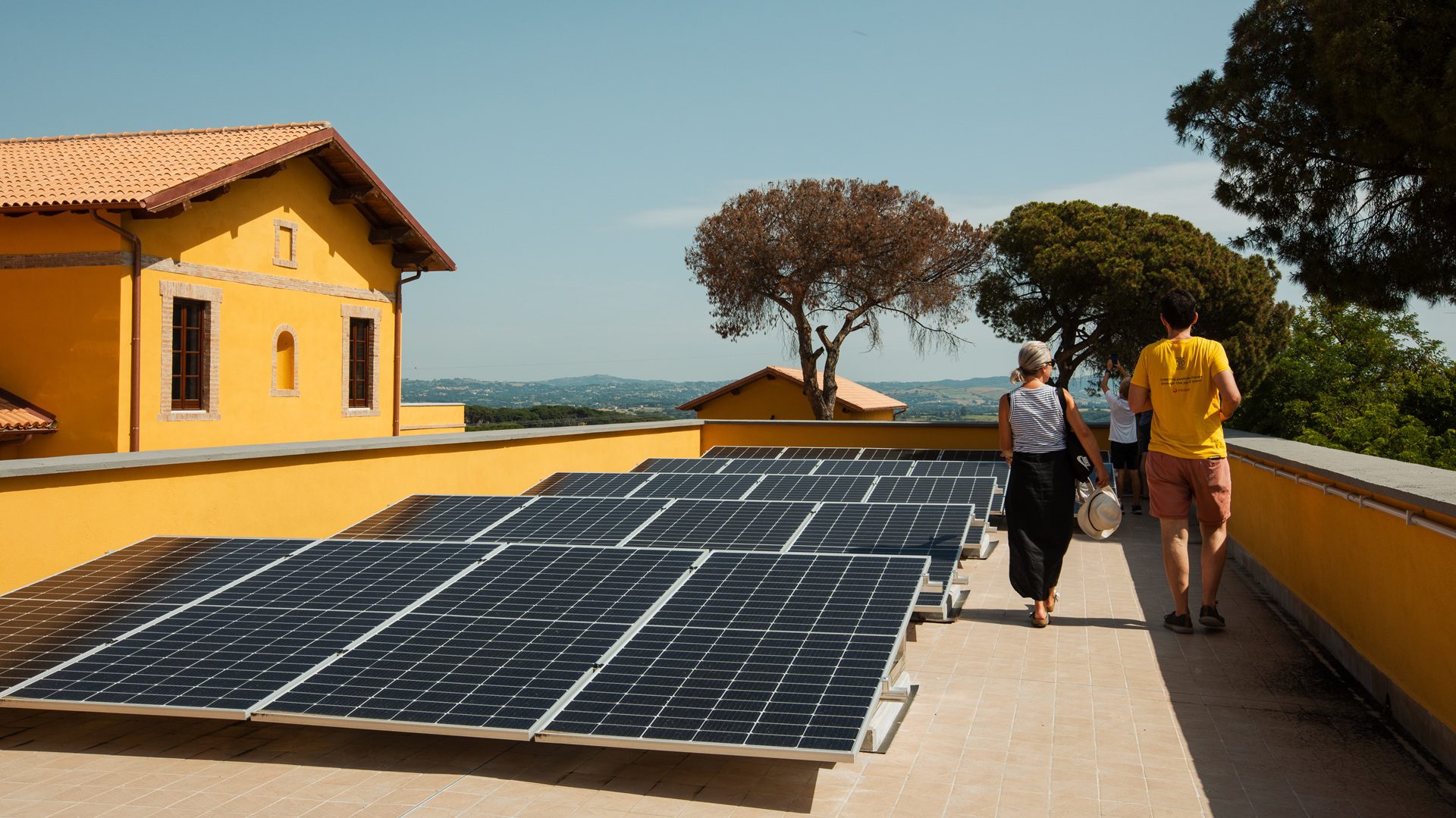
Cooperativa Coraggio has also received a AUD 50,000 Intrepid Foundation impact grant to install solar-powered showers for a new hostel that is being built on the farm. The team is transforming one of the estate’s old farmhouses into accommodation for volunteers who want to stay, learn and lend a hand. Alessia says that international support like this sends a clear message that the co-op’s vision has far-reaching backing.
Feeding a city and building a community
The regenerated green space also feeds some of Rome’s best restaurants, providing fresh, organic produce to four establishments – including two pizzerias run by world-renowned chef Gabriel Bonci, and another owned by one of his former students – and five local shops. Alongside shortening food supply chains for Rome and raising interest in organic produce, Cooperativa Coraggio creates meaningful employment for young people passionate about agroecology.
The team employs six local farmers and offers training opportunities for four interns. They also provide agriculture programs and skills development for people with intellectual disabilities.
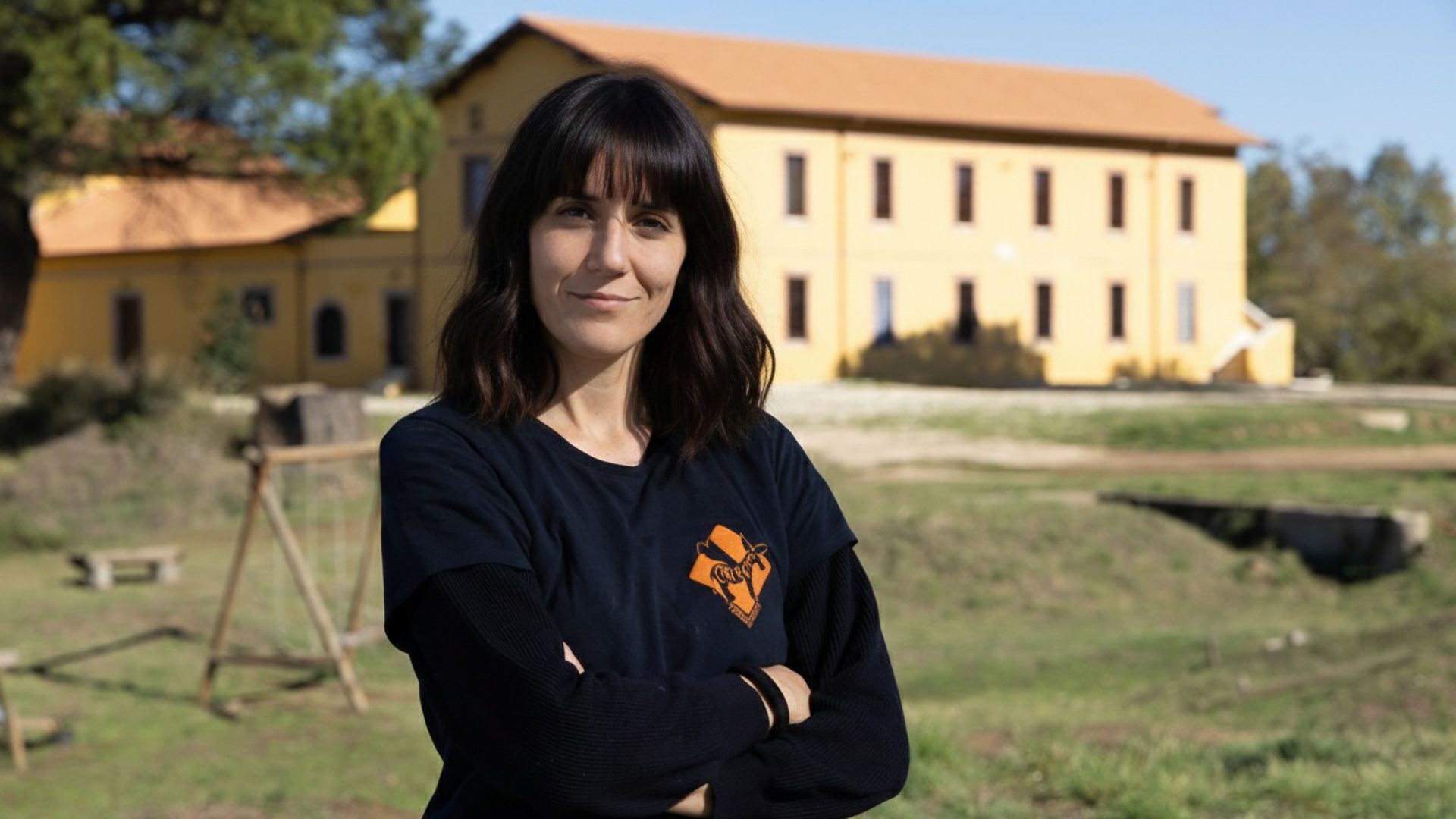
One of the people running these programs is Alessia Mazzu, the same woman who guides Intrepid travellers on the farm tour and cooking demonstration. She first arrived at Cooperativa Coraggio for what was meant to be a two-week placement after graduating with a degree in sustainability and environmental studies.
We work with nature and biodiversity rather than trying to control it. We don’t just extract from the land because we know it’s precious.
Seven years later, she still has no desire to leave.
She says that Cooperativa Coraggio is a place where she can fully express herself. And while she didn’t come from a farming background, the opportunity to have a hands-on impact in the field that she spent years studying in theory drew her in – and she never looked back.
‘Being a farmer, it’s a privilege, because if you do it in a good way, you’re also taking care of the environment and the people around you,’ Alessia says. ‘Here, we work with nature and biodiversity rather than trying to control it. We don’t just extract from the land because we know it’s precious.’
Giacomo adds, ‘We’re bringing back old farming traditions but finding new ways to do it because we need to adapt to a changing climate.’


When donkeys fly
At Borghetto San Carlo, they grow seasonal vegetables, cereals and legumes and tend to an orchard and olive grove. But, surprisingly, one of farming’s most essential ingredients is in short supply: water. Unlike most farms in Italy, Borghetto San Carlo doesn’t have its own well.
Rather than seeing it as a setback, the team took the opportunity to rethink how they farm.
‘At first, it was not a good surprise [to find there was no water source]. But instead of thinking, “Okay, we have to find water and dig everywhere we can,” we decided to adapt. We researched which plants could work with the dry and increasingly hot climate,’ says Alessia.
Their tomatoes are a case in point. The siccagno tomato is an ancient Sicilian heirloom variety that originated in the island’s dry, mountainous region. Perfect, as it turns out, for a farm without a well on the outskirts of Rome.
‘We’ve set up rainwater tanks and give these plants about one glass of water a week, which is very little compared to conventional tomatoes that require a lot of water,’ Alessia says. ‘We’re even beginning to study fog nets to see if we can harvest water in that way.’
This resilient spirit is reflected throughout Cooperativa Coraggio’s journey and also in its logo: a donkey with wings.
‘In Italian, we have a saying: “when donkeys fly” – it’s like “when pigs fly” in English,’ Alessia explains. ‘Back in 2011, Cooperativa Coraggio’s vision to create jobs and expand sustainable farming opportunities was bold and almost nobody believed a bunch of young people could do it.’
Today, the flying donkey stands as a symbol of what can happen when determination beats doubt and, as Alessia says, as a reminder of the challenges they’ve overcome.
Where next?
The team’s vision extends beyond the fields. With the new hostel on the way and continued support from the local community and Intrepid travellers, they hope to expand their social inclusion programs and provide more employment and learning opportunities for locals. Beyond that, Alessia says they want to become an agroecological hub that offers education programmes, food processing facilities, a restaurant and a gathering place for community.
‘It’s a beautiful thing we’re doing, but it’s hard work,’ Giacomo says. ‘We want to make the produce even more sustainable; even better for the environment but also educate people about responsible farming,’ he continues.
As platters of seasonal vegetables, local olive oil and freshly-made panzanella – with those small, flavour-packed Sicilian tomatoes – are passed around the communal picnic table, it’s clear this is more than a meal. This fresh lunch offers a glimpse into how a lunch stop can turn into support for local enterprise, climate adaptation and a new generation of farmers. It’s what happens when a simple idea, rooted in respect for the earth and the courage to fight for it, finds its wings.

Find out how your travels can create real change with The Intrepid Effect. You too can taste drought-resistant tomatoes and more at Cooperativa Coraggio on Intrepid’s Paris to Rome by Rail trip.