Tackling Western Australia’s long-distance coastal trail with her fellow 50-year-old friend allowed Dana Ronan time to pause, reconnect and find quiet.
There’s a yoga saying: I practice three times a week for my body, and every day for my mind.
My version of that is: In my 40s, I walked for my body. In my 50s, I walk for my mind.
That’s how I found myself on the edge of the Indian Ocean with one of my friends, Jen, walking the 125-kilometre Cape to Cape Track in Western Australia – a hike she quietly had to Google before the trip because she didn’t know where it was. It says a lot about our friendship that she said yes anyway, because she trusted me. And because she knew she needed this.
Life was unravelling a little. It had been a big year for us both: a joyful wedding (hers) and the kind of midlife whiplash – grief over loss, busy work, family commitments – that’s leaving so many of our 50-year-old friends brittle and too exhausted to know what they need.
My criteria for choosing a walking companion were simple: Who needed it? Who was fit enough? Who would I still love (and love me) at the end of seven days together?
Having forged an 11-year-long friendship over work, kids and life, Jen was top of the list. So, we began – two frazzled 50-something women stepping into one of Australia’s most iconic coastal trails, setting off not to achieve anything extraordinary, but to unwind, before we unravelled.


The way women walk
I’ve walked for much of my adult life, covering many of the country’s best multi-day guided hikes, so I understood how movement is tied to mood and mind, and knew that walking is the most honest way to know yourself.
Sometimes I forget, but I always come back. One foot in front of the other. Breathe in, breathe out. It’s not about the destination. It’s about rhythm. The slow unclenching of thoughts. The steady companionship of your own breath.
In my 30s and 40s, I chose a trail for its name and prestige. The ego and bragging rights. Now, I choose trails because they ask the right questions. Because they give enough silence and space for the truth to surface.
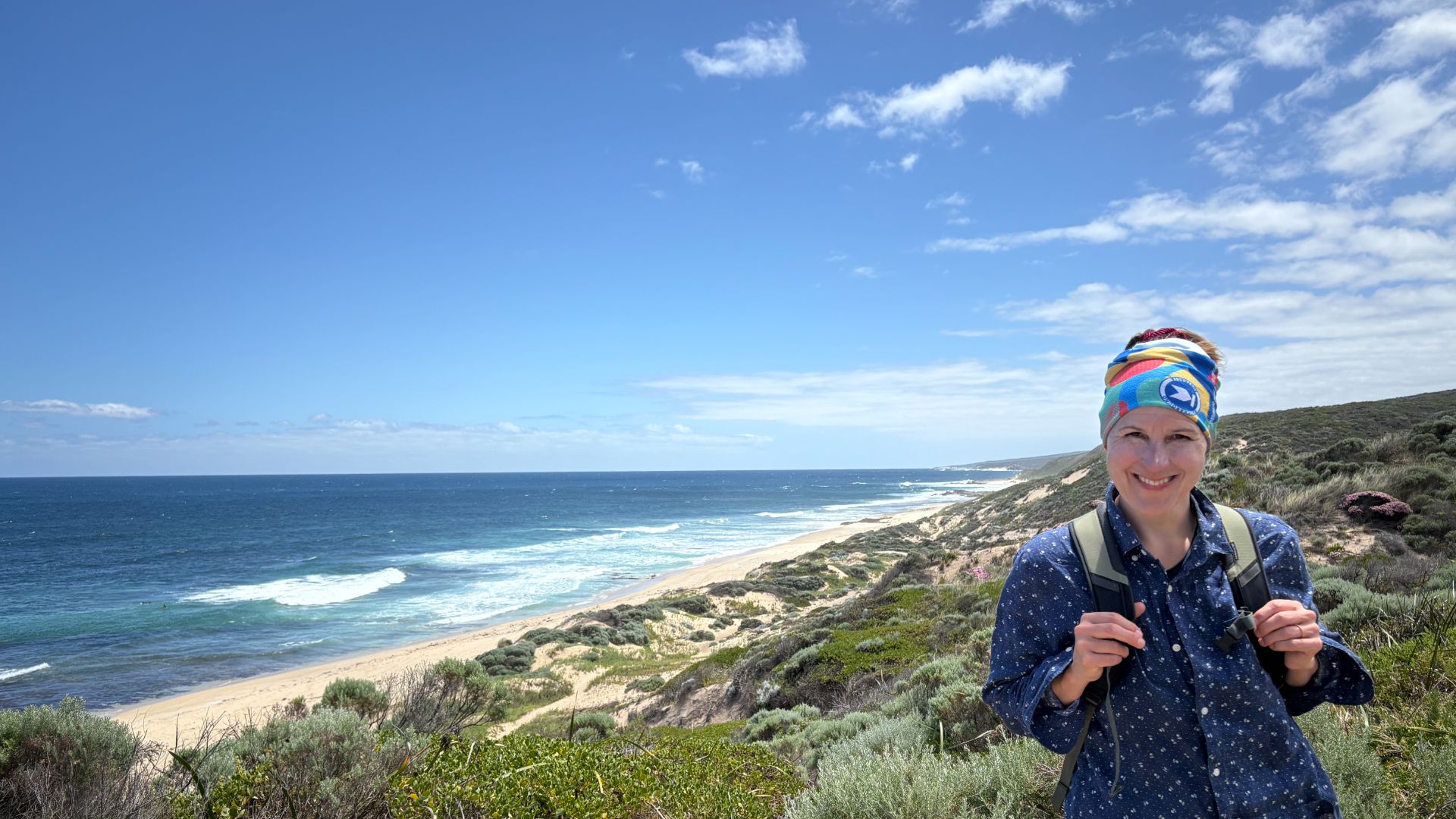
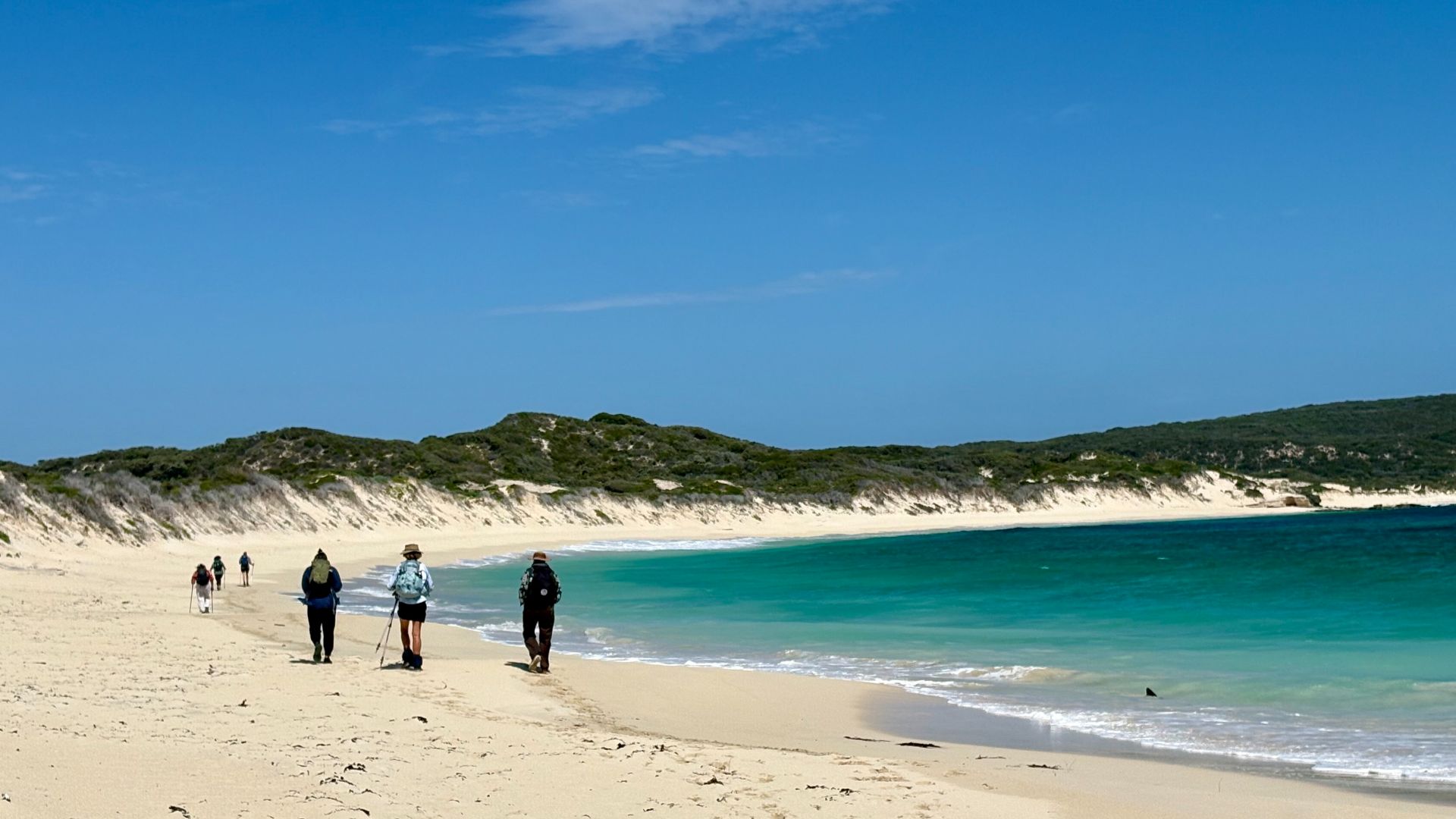
The Cape to Cape is perfect for that: rugged limestone cliffs, pale beaches that stretch into eternity, wildflowers dancing in the wind, and forests of peppermint bush and karri trees that hush you into reverence.
It’s a track known for its diversity – snaking between the lighthouse-topped coastal headlands of Cape Naturaliste and Cape Leeuwin. One hour you’re climbing vertiginous clifftops overlooking the meeting point between the Indian and Southern Oceans; the next, you’re tracing a trail through the sand between the low and high tide marks, or entering a hedge of heath, so dense the swirl of the sea becomes a whisper you can hear but no longer see. Along the way, following the coast of the Margaret River region, there’s always the possibility of spying dolphins, seabirds and even whales in season from May to late November.
I came into this walk with my own quiet goals: to slow down, to clear out the noise of a long year and to connect with myself again in the steady repetition of the trail. Walking always gives me that: the conscious return to your own inner tempo.
Jen, an endurance runner who has previously done a New York marathon, was a first-time group traveller, who came into the trip with no expectations – often the best way to arrive.
Read more: Things you should know before hiking the Larapinta Trail


Finding our rhythm
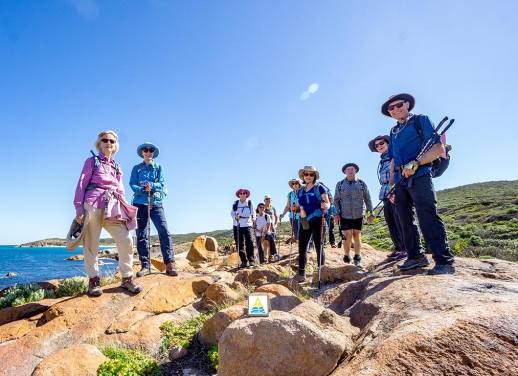
Walking with Intrepid, our group of strangers quickly became companions – present, supportive, but never intrusive. Because Intrepid handled all the hotels, meals, transfers, safety and guiding, all we had to carry was our daypack, water and unfolding thoughts.
The first afternoon was breezy and bright, the ocean steady at our right shoulder. We’d flown to Perth the night before. Jen was quiet. I was too. Not from discomfort, but from the simple fact that our lives leading in had been loud. Stepping onto the trail felt like turning down the volume.
By the second day, the rhythm had found us. Our pace became our own. Our breath softened. We talked in pockets, but we also walked in silence – the comfortable kind you only have with someone you’ve lived alongside for a while.
I learn so much from other people when I walk, especially the people I know well but rarely get uninterrupted time with. We revelled in the intellectual chats, philosophical discussions and future talk for ourselves, our lives and our kids.
On the long beach stretches, where sand pulls at your calves and the sun shows you what you’re made of, Jen found a part of herself she hadn’t met in a while. At one point, she stopped walking, took a breath and said gently: ‘Thank you for bringing me. This might be what I didn’t know I needed. I had to do something different. No app, grounding mat, breath class or gym regime was helping me unwind.’
The quietness of coming back to nature felt wonderfully right in an instant.
Read more: Ways to salute the outdoors in Australia


Moments you can’t plan for
Every walk has a moment – the one you’ll tell later, the one that unlocks the trip.
Ours happened on a dune climb off windswept Moses Beach midway through the week. The ocean was wild, wind squalling and whipping up in gusts. The group ahead of us had disappeared over a dune. It was just us.
Somewhere between exhaustion and exhilaration, Jen started laughing and pointed to a coastal rosemary bush. Its leggy new growth went still for a moment before the wind would whip its arms into a frenzy like a mosh pit at Glastonbury. ‘Oh look. It’s going crazy for us!’ she said, waving her arms and giggling.
It was a dance-like-no-one-is-watching moment – except I was watching, and there was such trust there in being allowed to witness the silliness, free from responsibility and anything being asked of us.
Walking does that. It frees something. The wildness of the coastline invites your own wildness to come out.
Later that night back at our apartment in Margaret River, she said quietly, ‘I didn’t realise how wound up I was until I started to unwind.’ That was her moment of triumph – not only finishing the trail, but finding her inner quiet again.
Read more: How to travel respectfully to Uluru and other sacred sites
The unexpected softness of paying attention
Throughout the week we didn’t check the news. We didn’t scroll. We didn’t keep up with the headlines.
Instead, we crouched down to photograph small mauve flowers hidden on the edge of the trail, delighting in being in our bodies, in our breath, beside the ocean, present. And we snuck in a side trip to the Leeuwin Estate winery and their private art gallery after one of the shorter days, because fine wine and Australian art are, like us, the perfect pairing.
By the time we reached the final stretch toward Cape Leeuwin, we weren’t triumphant in the Everest sense of the word. We weren’t transformed in the cinematic sense. But we were softer, warmer, more ourselves.
Looking out towards the two oceans meeting, Jen said, ‘I didn’t think unwinding could feel this gentle.’
That’s the gift of walking. Not the summit. Not the finish line. Not the map. But the moment you breathe deeply again. And put one foot in front of the other, step after step, 220,000 times in a week, as it turned out.
I achieved my own goals: to slow down, to listen, to reconnect with myself and my friend. To walk and surrender my mind a little. Jen, of course, came with none – other than making the time to do it – and left with more than she expected.
We both arrived a little frazzled; we finished unwound. And somewhere along the track, we remembered why walking with a friend is so special: because we keep each other steady, step by step, year after year.
Embark on your own adventure by hiking Intrepid’s Cape to Cape Track in Western Australia.