A new experience on Intrepid’s Japan: Land of the Rising Sun trip lets travellers visit a centuries-old brewery in Hagi to learn from one of the country’s rice-wine masters.
The first sake I ever tried came in a tiny vase, from which I attempted to drink, much to the amusement of my Japanese friend. ‘You need to wait for the cups first!’ she said, giggling. Two tiny cups followed, as the staff member apologised for forgetting them. Aside from the diminutive drinkware, my first impression of sake was that it was light, slightly sweet and dangerously easy to drink.
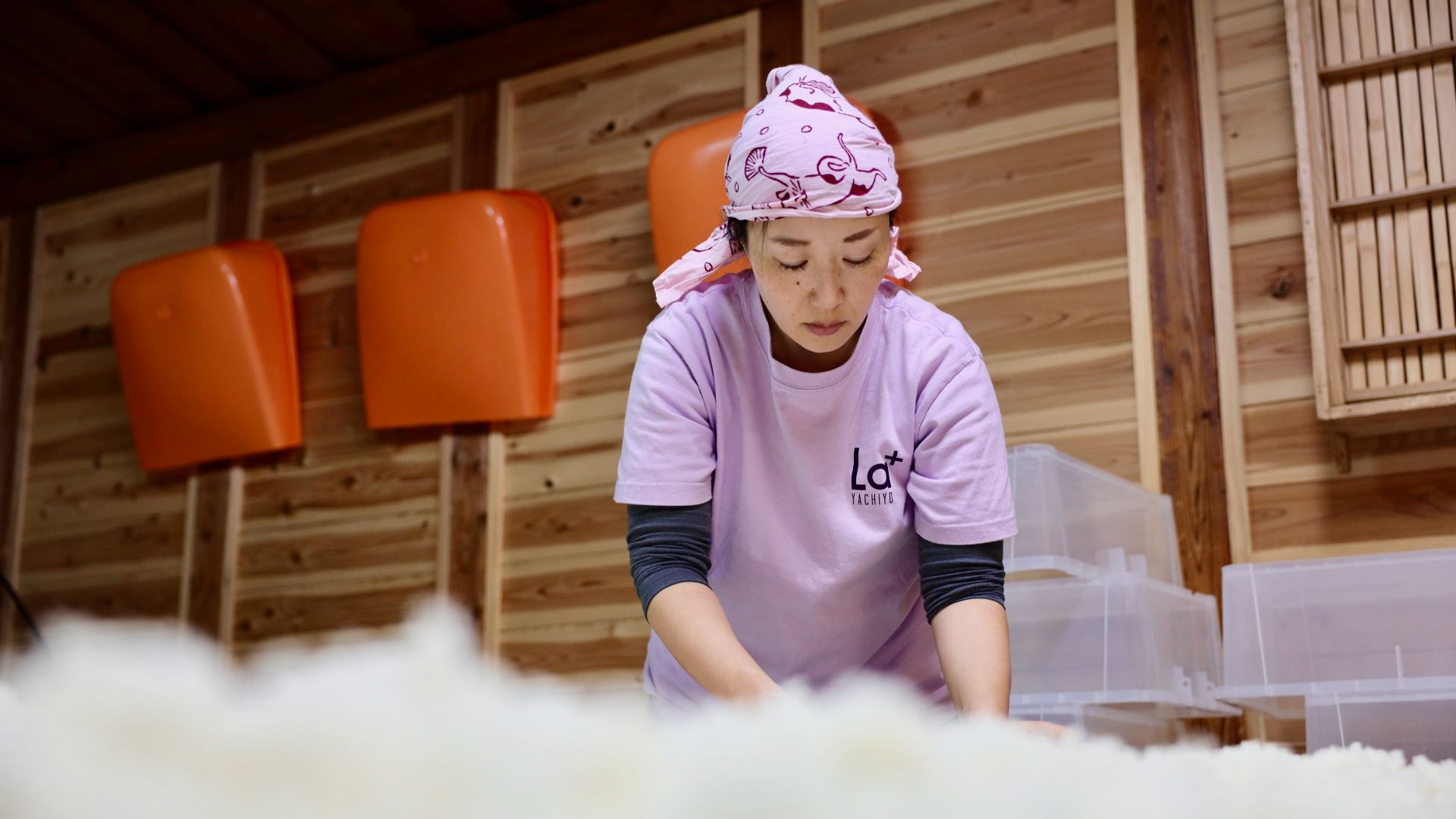
That was nearly a decade ago. Since then, as a writer living in Japan, I’ve tasted countless sakes, developing preferences and even an ability to distinguish between a few brands. Some have a drier taste. Others are known for their sweeter flavours. An example of this type is Yamaguchi Prefecture’s Yachiyo Shuzo, headed by Kumiko Kaba, one of the country’s few female sake brewers. Powered by centuries of family pedigree, she is taking the ancient drink firmly into the modern era, as visitors on Intrepid’s Japan: Land of the Rising Sun trip can now uncover when they visit Kaba’s brewery as part of a new experience for 2026.
Read more: How Japan’s dogs are helping in disaster zones


The trailblazer in the family
Sake is Japanese rice wine, made from polished rice that is fermented over several weeks. It began as much alcohol does: a drink for the gods, made as an offering in the Japanese animistic Shinto religion. The first reference to sake dates back thousands of years, appearing in a 3rd-century Chinese document describing Japanese mourning practices. It’s a drink that Kaba has grown up with, raised close to Yachiyo Shuzo, the brewery that her family founded in 1887.
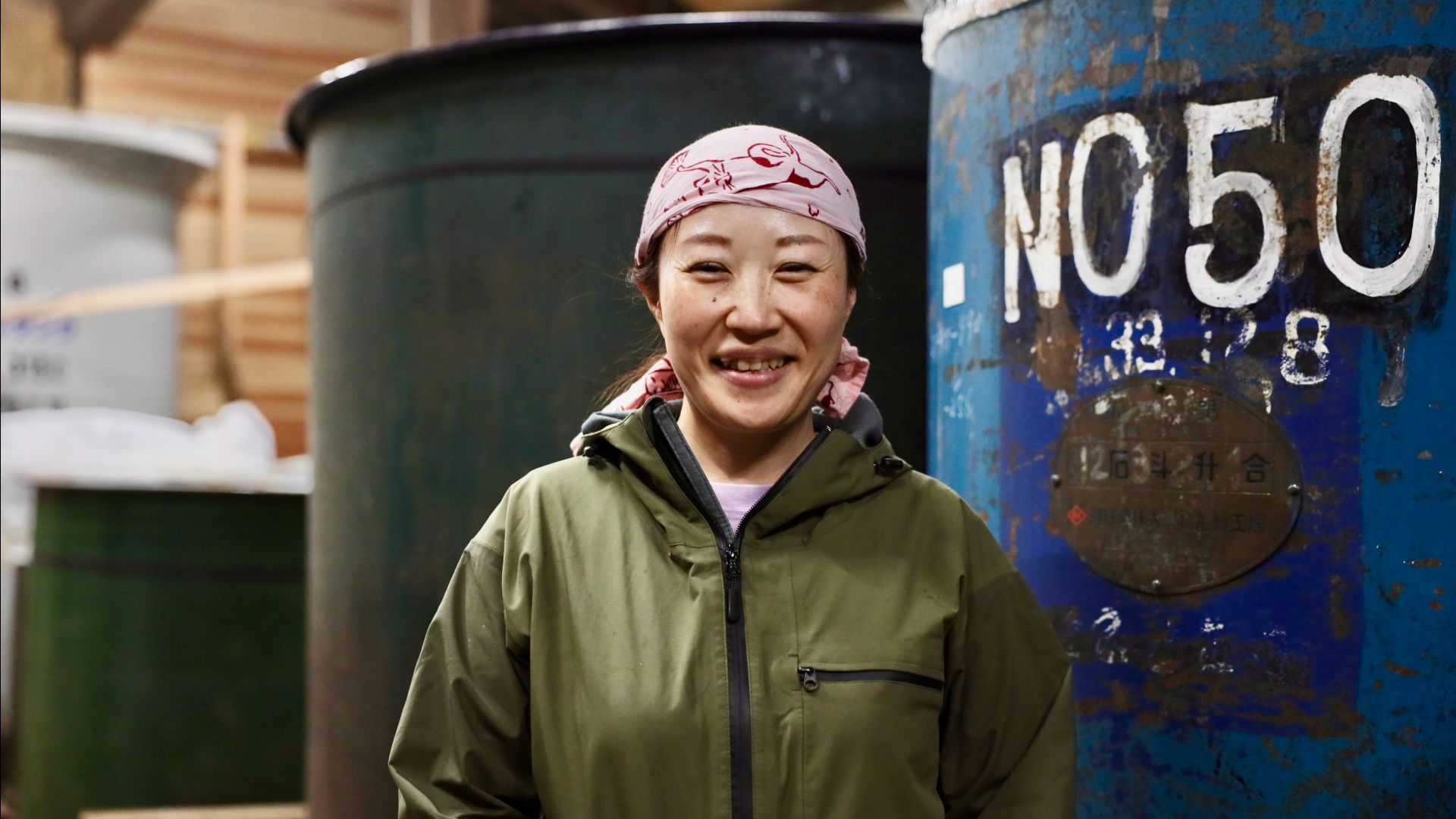
When I speak to Kaba, she’s in the brewery, based in Hagi, a castle town in Yamaguchi Prefecture. She tells me she’s the eldest of three sisters, although it was actually her middle sister who initially had her sights set on taking over the brewery from their father. Kaba instead trained to be a nutritionist, moving to Tokyo when she was 18 to study, working at schools and hospitals. But when the middle sister dropped out due to a change of heart, Kaba stepped in to helm the family business.
But even while she was away, she’d never forgotten her roots: ‘When I was in Tokyo, I’d go to sake tastings and always had a bottle of nigori (sake) in my fridge.’ In her late 20s, she began to notice the amount of breweries closing because there was no one to take over. ‘I couldn’t let the family brewery end with our generation. Since sake is Japan’s national drink, I felt a responsibility. I wanted to do something about it.’
She moved back to Hagi in 2017, taking over Yachiyo Shuzo in 2019, at the age of 35. But instead of training as a toji (master sake brewers) at her family brewery, Kaba took an unprecedented step. ‘If I studied the technique at Yachiyo Shuzo, nothing would change,’ she recalls, ‘I wanted to bring something new to the company.’ Instead, she trained at a different brewery close by, Sumikawa Shuzo, that acts as an informal incubator for aspiring sake brewers.
‘It’s rare for a brewery to train those who’ll essentially become its rivals,’ Kaba reflects.
Read more: Trips and experiences that celebrate women


From prohibited to progressive
Even though historically women were integral to the sake-making process, by the Edo period (1603–1868), they were banned from stepping foot in sake breweries. This came down to a theory which regarded the brewery god as a female who’d become jealous if other women stepped foot in her domain.
During the 1990s, spurred on by a lack of male brewers, the number of women toji increased. Yet, it’s only in the past couple of decades that sake brewing – and the toji title – has become accepted for women. To date, out of over 1000 breweries in Japan, only 33 women are registered as toji. With such a small percentage, peer support is a necessity.
The Kurajosei Summit is a group for female sake brewers that meets annually. Kaba is a member and the organisation discusses industry challenges, the latest trends, skill swaps and arranges tours of each others’ breweries. ‘It’s useful to see how others are doing it,’ Kaba says, ‘I might see something at another brewery that I can use at mine.’ She’s made lots of contacts. ‘It’s good to have people to confide in.’
Using her rare position as a female toji, Kaba has brought a new way of thinking about sake to her kura (brewery), starting by putting her heart into creating her first sake line, Room. It’s since become a cult favourite, with leading sake-review sites such as Sakenomy and Saketime praising its rounded sweetness and aroma. The secret to her success? Kaba is involved from conception to completion, carefully considering design aspects in relation to where and when she wants people to drink her sake.
‘Rather than stopping at taste and process, I also considered the philosophy of ‘who would drink this and where?’ Kaba recalls. She set off to share a new type of thinking, where the sake she created was curated to accompany very specific moments of everyday relaxation, such as at a meal with friends, or a Friday night after work. She relayed this through a minimal label design, a departure from typical elaborate sake labels.
In 2023, she expanded on this with Dear, designed to be given as a gift. The devil is in the details: its packaging is a circular gift box, just like whiskey (rarely, if ever, seen in the sake world), and the red tissue paper at the top of the bottle can be arranged into a rose. Dear stemmed from her consideration of ‘Saying cheers with someone special on a special occasion, with a special sake.’
Read more: Unmissable food and drink experiences
Sake enjoyment from start to finish
Kaba recommends enjoying Room and Dear on the rocks, with someone you’re close to, or heated slightly. ‘I’m also quite fond of it with blue cheese,’ she laughs. Blue cheese shares something with sake: they’re both fermented. ‘I think they really complement each other.’
Kaba enjoys hosting tours of the brewery. When she’s away, her elderly mother takes the lead – a mother-daughter affair. Travellers are often surprised at the living, bubbling liquid in the vats, a sign of healthy fermentation. ‘Another unexpected aspect is the kura itself. Its old, wooden structure makes a real impression,’ she says.
The brewery is located in the countryside of Yamaguchi, among rolling rice fields, and the tours offer the opportunity to get the feel of the entire sake-making process. ‘Visitors can cycle around the rice paddies, where the rice for the sake is grown, then come to the brewery for the insiders’ tour. This means that you can experience the sake process from the very start, right through to the end.’
There’s no better time to drink sake than after a brewery tour, to really appreciate the work that’s gone into making the drink, evolved over thousands of years. And what’s the best sake to drink in Japan? Well, despite sake’s growing popularity abroad, Kaba reveals that there’s one type that’s rarely exported: nama sake. Nama sake is a fresh, unpasteurised sake. ‘It’s not really available overseas,’ she says, ‘so I’d love for travellers to drink nama sake while in Japan.’
Sample sake at Yachiyo Shuzo brewery as part of a new experience to Intrepid’s Japan: Land of the Rising Sun trip.