Saris in India. Kimonos in Japan. Monteras in Peru. Traditional clothes are a fascinating reflection of local culture. But what’s the etiquette for travellers who want to find out more?
Understanding the ‘right’ thing to wear – or perhaps not wear – when travelling isn’t always obvious. The more places I’ve visited, the more I’ve learned that researching the values and etiquette of where I’m going is as important to me when choosing clothing for the trip as the weather forecast.
Wearing traditional clothing from another culture is a different consideration entirely.
When I found out that my India Women’s Expedition would include the opportunity to dress in a sari, I had many questions. All variations of ‘is this OK?’
The traditional dress for Indian women is so beautiful and the opportunity to learn more about it sounded really special. But as a white North American traveller, I admit I was worried about how donning a local outfit might be perceived. Appreciation? Or appropriation? The popular public service campaign ‘my culture is not a costume’ came to mind.
Read more: Expert tips for first-timers in India
‘We do acknowledge and understand that with this activity, a cautious and careful approach is required,’ says Rama Mahendru, general manager of Intrepid’s India adventures.
‘Instead of just handing clothes over to our travellers directly, we make sure our local leader is present and communicative about the appropriate behaviours while dressed in local wear. If we’re respectful and responsible, as Intrepid has always been, dressing in local clothes can be an amazing experience. It’s fun, interactive and can connect people better.’
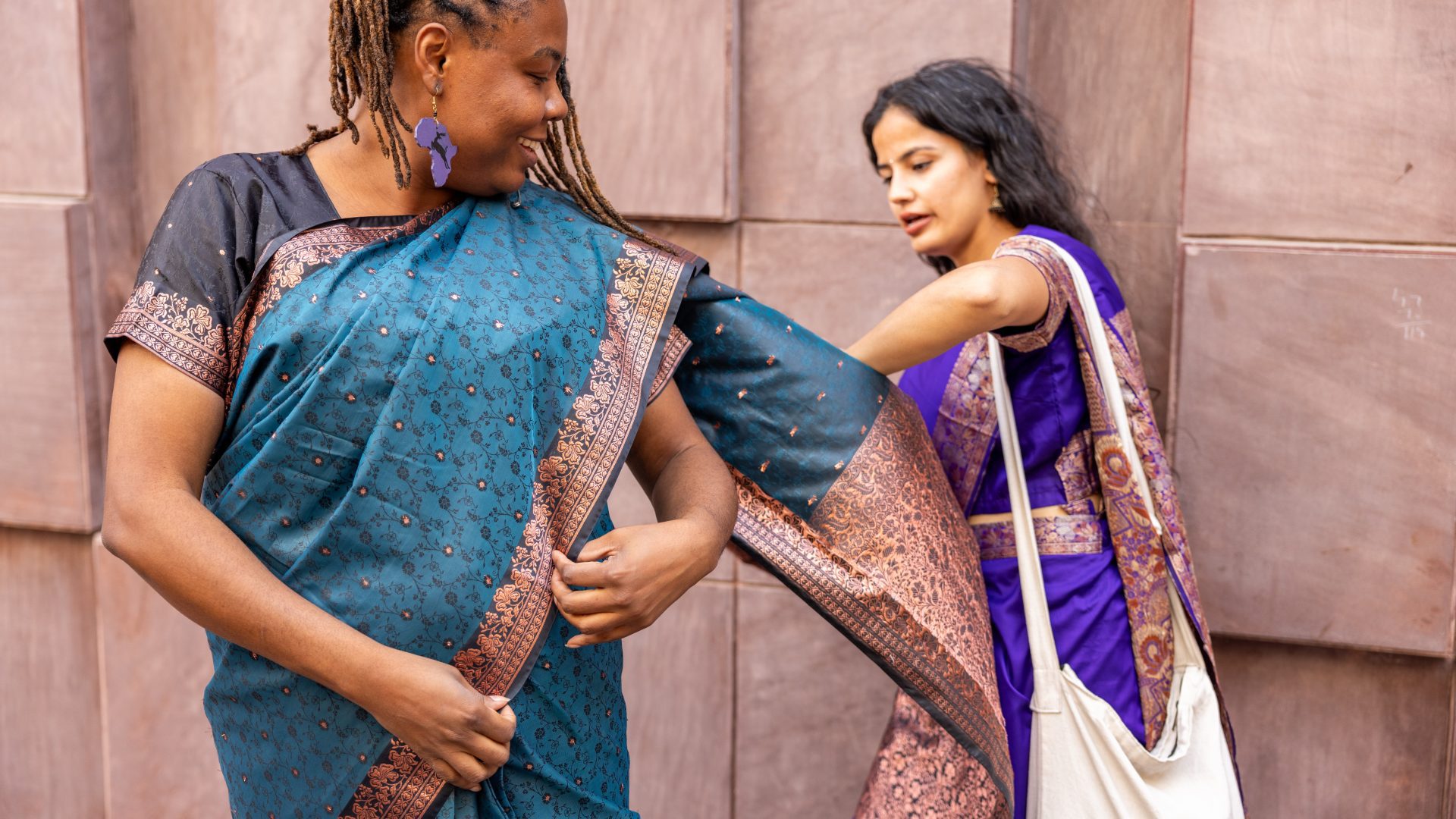
I was grateful to have a female Intrepid leader who I could talk to honestly about my reservations. Anjali explained we would be visiting the home of a local woman to choose a sari with their guidance and learn how to drape it. She reassured our group that locals are appreciative of our interest and efforts to connect more with their culture.
I’ve learned that authentic interaction like this between guests and locals is at the heart of all Intrepid’s activities – including those involving traditional dress.
‘Traditional attire has always been a big part of the culture of a country,’ explains Rama. ‘On our trips, we offer this experience as an opportunity for our guests to be mingled with the culture of the country more deeply… to connect them with the location and increase the local interaction.’
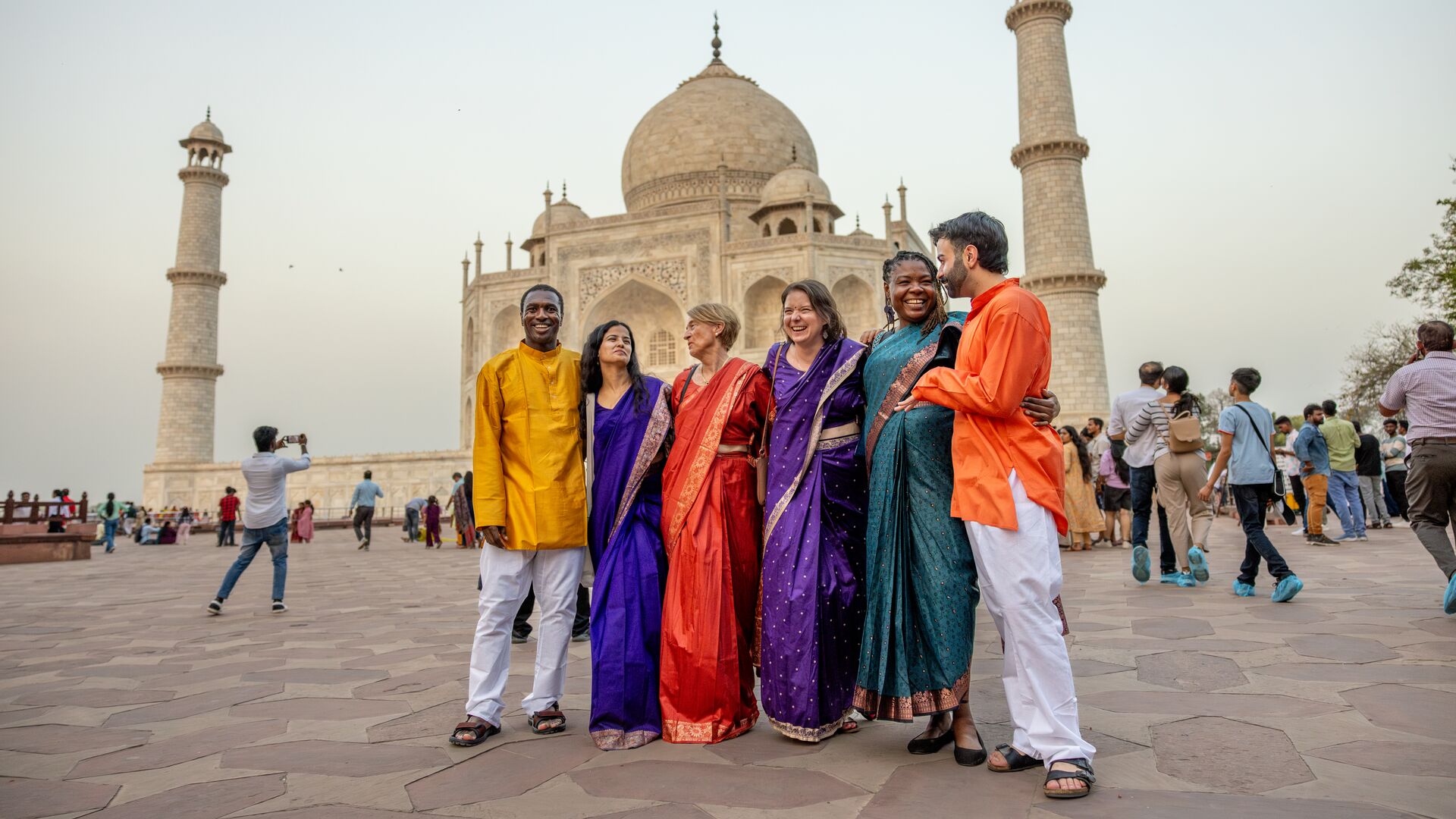
In India, there are three opportunities for Intrepid travellers to participate in this type of cultural exchange. My group experienced this in Agra, where women are offered pre-stitched ready-to-wear saris (a skirt, top and draping scarf). Traditional male kurta pyjamas are also available to wear for their visit to the Taj Mahal.
On the Classic Rajasthan trip, guests have the chance to wear traditional apparel for a special dinner at Fort Madhogarh, including a lehnga (skirt), kurti (tunic) and odhni (scarf) for women, while men may wear pagris (traditional turbans, which are different to Dastaars worn by Sikhs on their head).
Elsewhere in Asia, Intrepid’s Essential Japan trip for 18-to-35s offers an optional kimono rental in Kyoto. Meanwhile, on the Explore Taiwan adventure, groups visit the Indigenous Ayatal people in Yilan and travellers can learn about (and try on) their traditional clothes. On the South Korea Family Holiday, adults and kids alike are provided with pants and a tunic to wear in the Golgulsa Temple, in accordance with the monastery’s dress code.
In South America, Peru Essentials features a visit to the folklore capital of the country on Lake Titicaca and includes a homestay with the opportunity to wear in local Inca clothing, like mantas (shawls) and monteras (hats).
Read more: First time in India? Learn more about what to pack
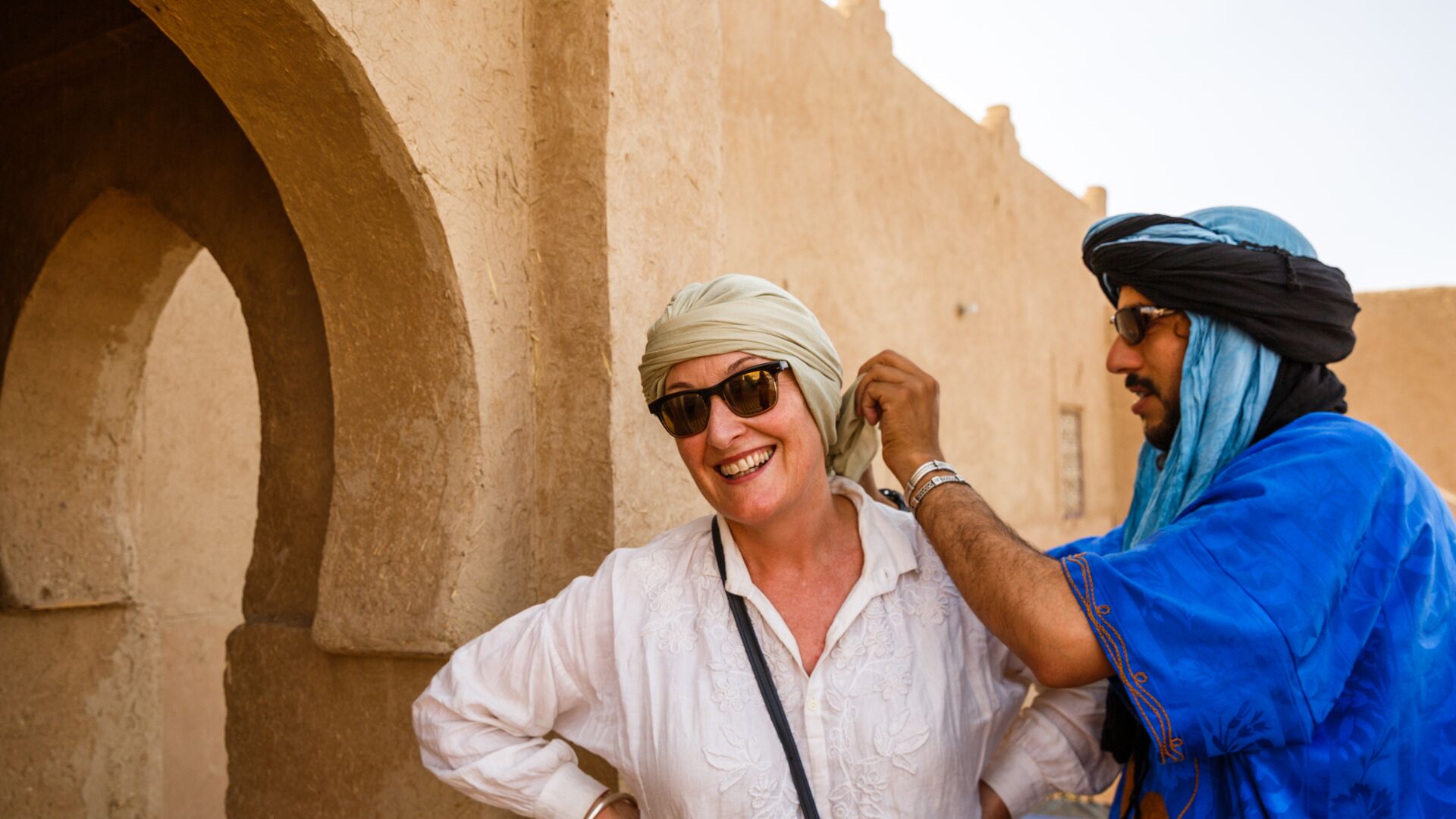
When I think back to my own Intrepid trip in Morocco, I regret not taking advantage of the offer to learn how to tie a shesh (head scarf) in a traditional manner for our camel ride across the Sahara. At the time, I wasn’t quite convinced it would be appropriate to try and dress like a local, so I tied my scarf myself. Spoiler: in the beautiful-but-oh-so-unforgiving desert environment, learning the Desert way of doing things is always a smarter idea than what you think you know.
It’s important to note that sometimes there are opportunities that don’t feel right, so if you’re unsure it’s best to follow your leader’s cues – and your own instinct. For example, Intrepid’s Tibet staff do not recommend dressed photo stops in Lhasa, where traditional Tibetan clothing is often not authentic, nor to the benefit of Tibetans themselves.
Having a local leader for this kind of experience is helpful not only for choosing clothing with care and understanding, but also for navigating any questions that may come up as you wear the clothing in public. Going to the Taj Mahal in a sari attracted a lot more attention than I am used to from locals, but after being advised to meet their curiosity with a smile, the awkwardness disappeared.
I still believe it’s normal to have questions and concerns before dressing in traditional clothing as a traveller, but I’m also confident that trying this out on an Intrepid trip, with the guidance of a leader, can be a very positive experience for both visitors and locals. Wearing local outfits is also optional, of course, so there’s no pressure.
I look back at my photos in the sari in India with much happiness knowing that the once-in-a-lifetime experience was educational, joyful and, most importantly, respectful.
Discover authentic experiences on Intrepid’s small-group adventures around the world.