After a first-time Rajasthan adventure, Kate Gazzard shares her must-see cities – from Jaipur and its blushing pink palaces to Jaisalmer and its golden fort.
Every single city in India is magnificent, so believe me when I say it was hard to narrow it down to just five. As a child, I was fascinated by Bollywood movies full of colour and passion, thanks to a best friend’s love of the genre (and my love for all things drama). As a teenager, getting a rich, tomato-y butter chicken with (extra) garlic naan was always my go-to takeaway. Now, as an adult, I can’t get over the transcendent story of love behind the creation of the Taj Mahal. So, when deciding which country to visit on my annual trip, India was a no-brainer.
India has been on my must-visit list for a while, however, the thought of travelling there was a little overwhelming. I wanted to go, but I didn’t really know how. Could I brave the language barrier and cultural differences and explore the country as a solo traveller? Or would I need a local guide to show me where to buy the creamiest lassi and how to avoid getting kicked by a curb-side cow?
I went with the latter on Intrepid’s 15-day Rajasthan Experience. It was still overwhelming, but these five cities – including Delhi, Jaipur and Agra, which make up India’s Golden Triangle – made me appreciate this kaleidoscopic country in a whole different way and if I had my way, no one would travel to India without visiting them.
I know not all of the cities I’ve listed are technically in the state of Rajasthan, but, hey, India isn’t one to follow rules – and we still visited them as part of the Rajasthan Experience, so I’ve included them anyway.
1. Delhi
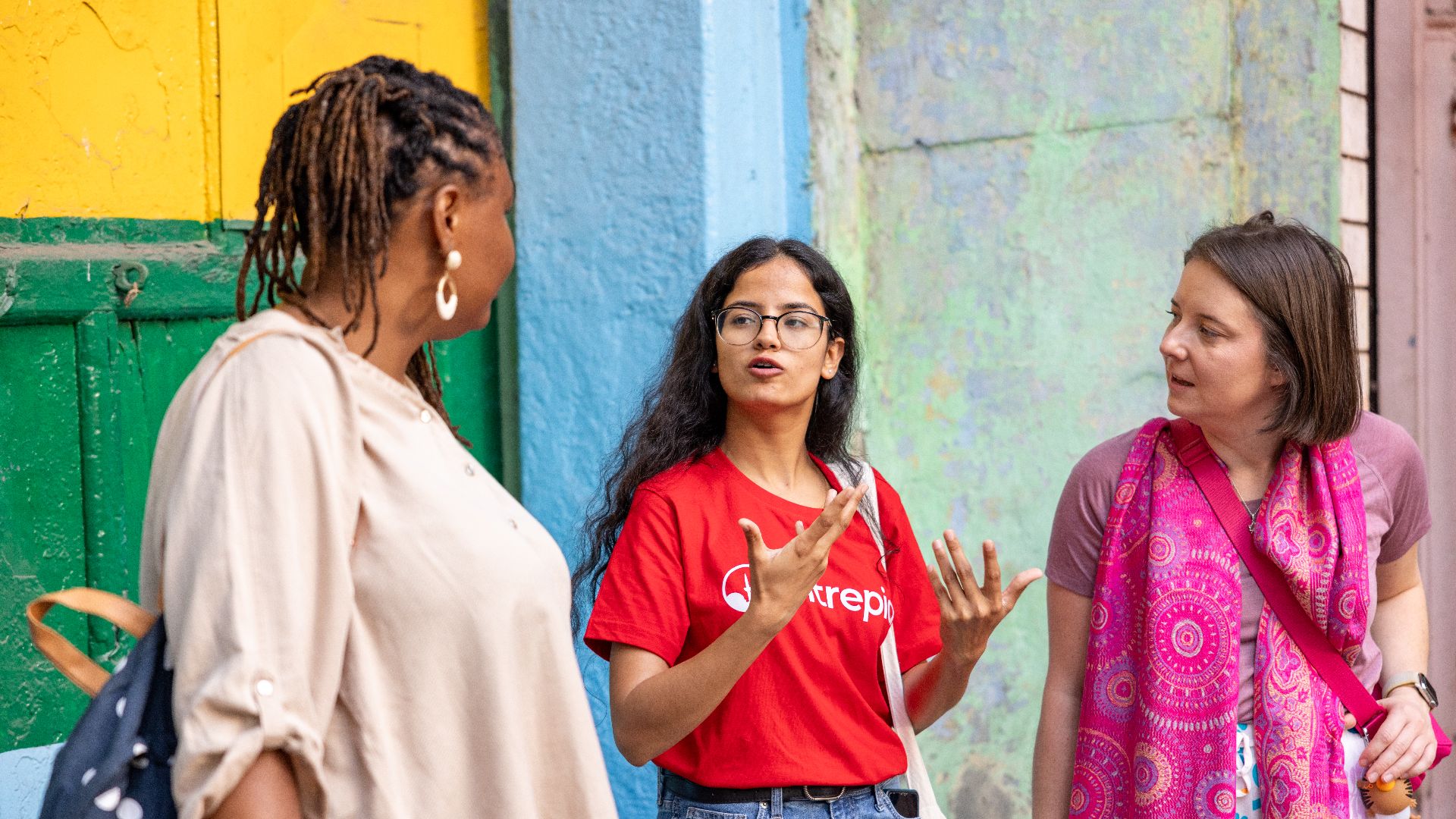
You can read all the travel guides and do hours of research, but nothing prepares you for the sensory overload of Delhi. Home to nearly 33 million people, this city overflows with history-steeped sights, tastebud-tempting smells and symphony-like noises so loud and constant you’ll wonder whether you’ll ever want peace and quiet again.
Delhi was the meeting point for the start of the adventure, so there were no activities included, but I had some time to explore the city before the welcome meeting. Because of that, this city is etched in my mind as the place where I dived straight in to India’s culture, headfirst.
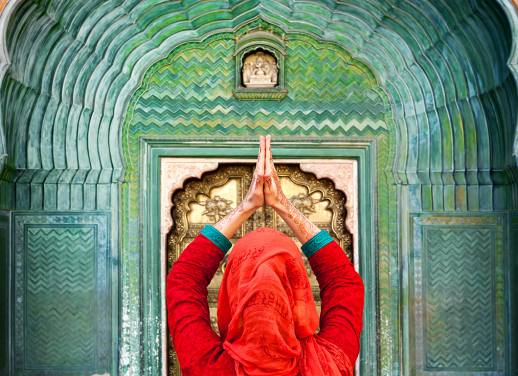
From the marble domes and towering minarets of Jama Masjid to the frenzied Khari Baoli market street – where bags of turmeric, cumin and powdered red chilli sit beside cashews and peanuts by the kilo – it was the perfect place to get my feet wet, literally. A few Hindu temples in Delhi required us to remove our shoes and place our feet in a trough full of marigold-infused water as a sign of respect, cleanliness and humility before we could enter.
We only spent one night in Delhi, but that was all it took to get me excited. Yes, I was still feeling apprehensive, but my nervousness was slowly and surely being replaced by anticipation of the coming adventure.
Read more: An expert’s guide to India for first-time travellers
2. Agra
After a brief, air-conditioned train ride (an important detail, when temperatures of 35˚C+ are expected), we arrived in Agra. I was ready to do some hardcore sightseeing. By that, I mean I wanted our leader to point me toward the Taj Mahal the second we stepped out of the station. Before he could make my dreams come true, however, we had a visit to Agra Fort.
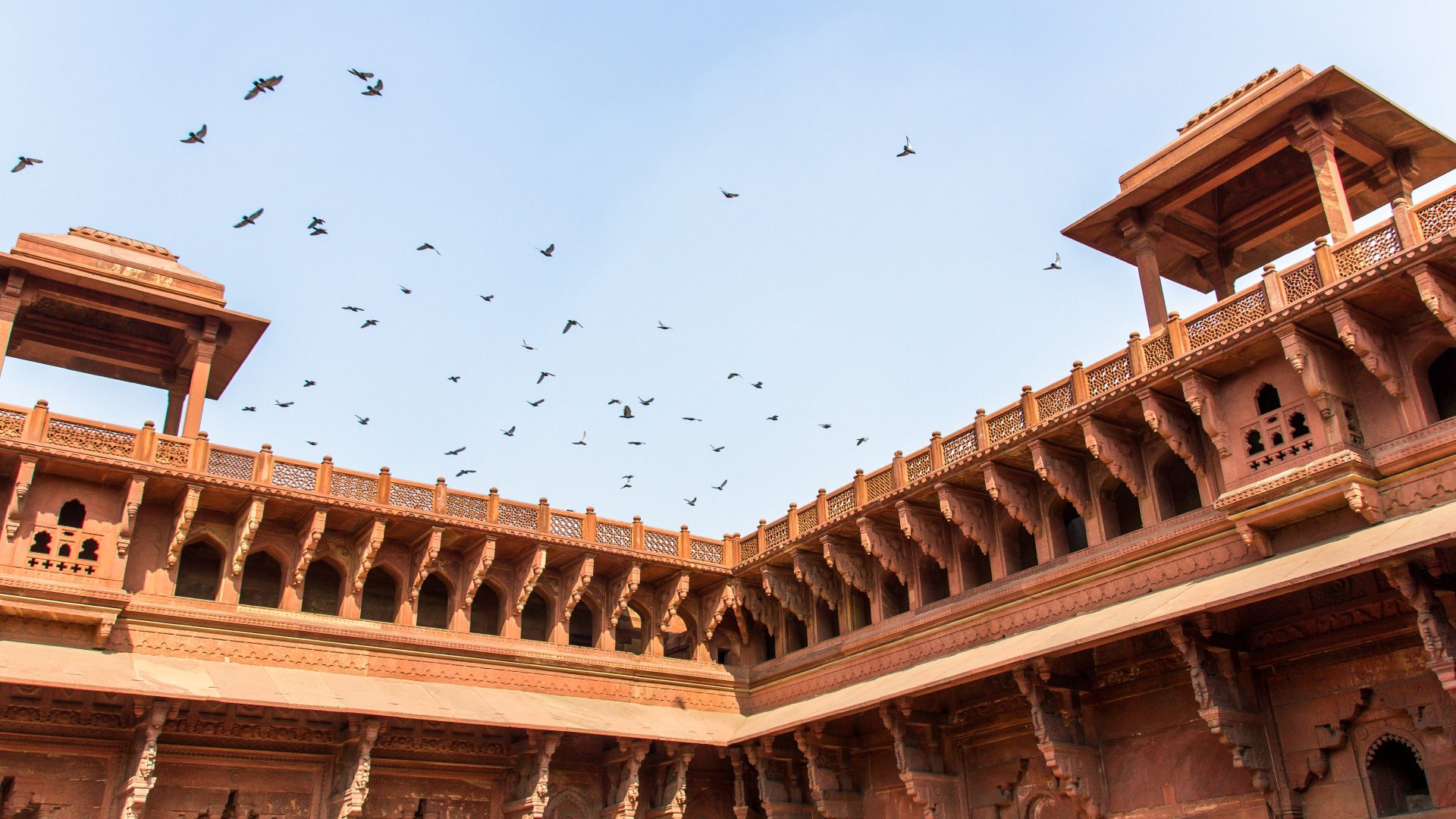
An icon in its own right, Agra Fort was originally built out of vivid red sandstone by Emperor Akbar as a military structure in 1565. But in my eyes, this grand majestic building could easily have passed for a palace. The rich red colour of the sandstone, paired with the Mughal architecture that was common during the era, blew my sweat-soaked sandals off. I did warn you about the heat.
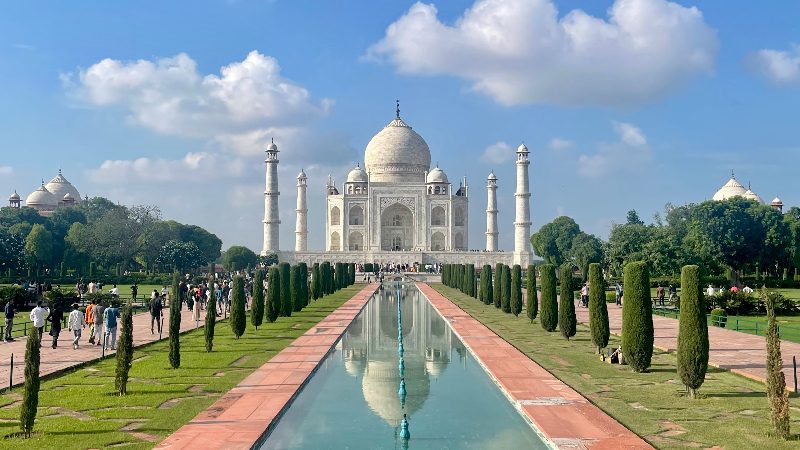
And from its ramparts, I caught my very first glimpse of the Taj Mahal (there may or may not have been some anticipatory squealing).
The Taj Mahal was everything I expected it to be. I knew Emperor Shah Jahan had built it in loving memory of his wife, Mumtaz Mahal, but I didn’t realise you’d be able to sense that same love coursing through the structure’s white marble and providing life to the grounds’ lush greenery.
When I entered this sacred complex, a certain peace came over me. Like nothing bad could, or would, ever happen here. There might’ve been a couple hundred people walking around, but it was so quiet. Almost as if everyone there recognised they were in the presence of a greater devotion – one that time had stood still for. To put it mildly, I was in complete awe. I ended the day feeling grateful that Emperor Jahan was thoughtful enough to share his love in a way we could all feel 400 years later.
Read more: A rickshaw ride that puts women in the driver’s seat
3. Jaipur
Jaipur was next, and I was excited to leave the reds and whites behind for hues of pink. Why the colour? Well, the city was painted pink in 1876 in preparation for a visit from Albert Edward, the Prince of Wales, who later became King Edward VII.
Fast forward around 150 years and this friendly city continues to honour its pink heritage by incorporating pink materials in new construction.
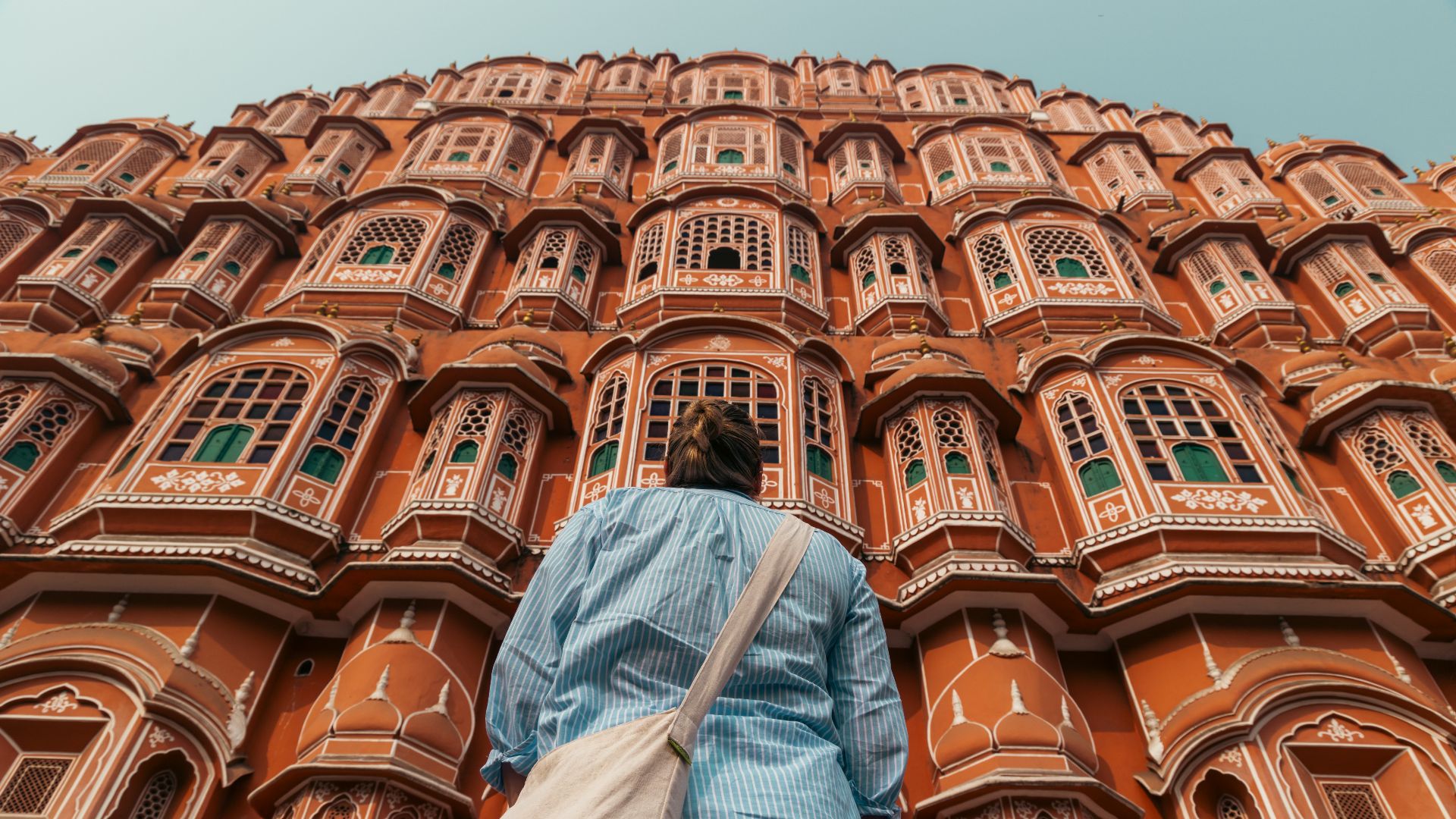
We started our day with a (pink) bang at Hawa Mahal – or the ‘Palace of Winds’ – constructed in 1799.
Shaped like a perfectly preserved honeycomb – with a mosaic of tiny windows – this beautiful palace was created in 1799 for female royal family members so they could observe the happenings in the street below without being seen themselves. It was originally made with pink sandstone and then pink-washed before Prince Albert’s visit as a sign of Jaipur’s hospitality. With intricate details that combine aspects of both the Hindu Rajput and Islamic Mughal design styles, it’s easy to see how it’s fit for royalty.
Coloured architecture isn’t the only thing that makes this city unique. From taking a ride with a women’s rickshaw company in search of street snacks to watching a Bollywood heartthrob defeat the bad guys in one of Jaipur’s oldest cinemas, you’ll never get bored exploring the city’s fascinating culture and heritage. I certainly didn’t.


4. Jaisalmer
Next up on Rajasthan’s city colour wheel is Jaisalmer or – as it’s more affectionately known – ‘the Golden City’. I didn’t have any expectations of Jaisalmer. I’d never heard of it before travelling to India and if I’m honest, I wasn’t all that excited for a two-night stop here.
However, as we drove along the dusty, desert road that would deliver us straight into the city’s heart, listening to our leader talk about Jaisalmer’s hilltop fort, snaking alleyways and intricately designed houses, my interest was piqued.
Like a lot of cities in Rajasthan, Jaisalmer has its own fort. While most forts have been turned into museums and listed as World Heritage sites, Jaisalmer’s stronghold stands out as the largest out of the few living forts left in the world. Around 3,000 people still live within the fort’s walls much like they would’ve back when it was built out of yellow sandstone in 1156.
Our local leader led us through the fort’s maze of temples, boutique shops, old haveli townhouses and traditional hotels. When the heat became too much, we stopped at a cafe, cracked open a cold can of Sprite and admired the spectacular views across the whole city. Talk about a pinch-me moment.
While the fort may have been the star jewel in Jaisalmer’s crown, there were plenty of other places to explore. We visited the city’s garment district with its rich colours and textured fabrics, and enjoyed moments by Gardisar Lake, where the calm surface reflects the temples and shrines along the water’s edge.
5. Udaipur
Picking my favourite city in Rajasthan is nearly impossible, but if I had to pick one, it would be Udaipur. If you’re also wondering whether it has its own colour, of course it does. Udaipur is known as ‘the White City’ thanks to its pristinely preserved marble palaces.
From laneways lined with stores selling aged leather and coffee shops, where I easily could have spent hours, to the homemade lunch we had with a local family and the royal treasures and ancient murals of the City Palace, Udaipur was magical.
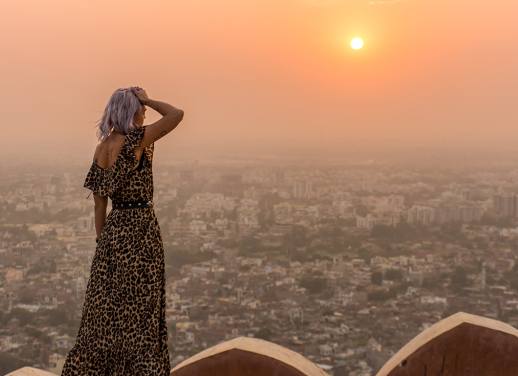
On our penultimate night as a group, our leader recommended a family run rooftop restaurant on Lake Pichola’s edge. We got to the restaurant, took the rickety lift to the seventh floor and stepped out to see the sunset. Flush with reds, oranges, pinks and purples, the sky looked magnificent – nature’s send-off to an unforgettable two weeks in India.
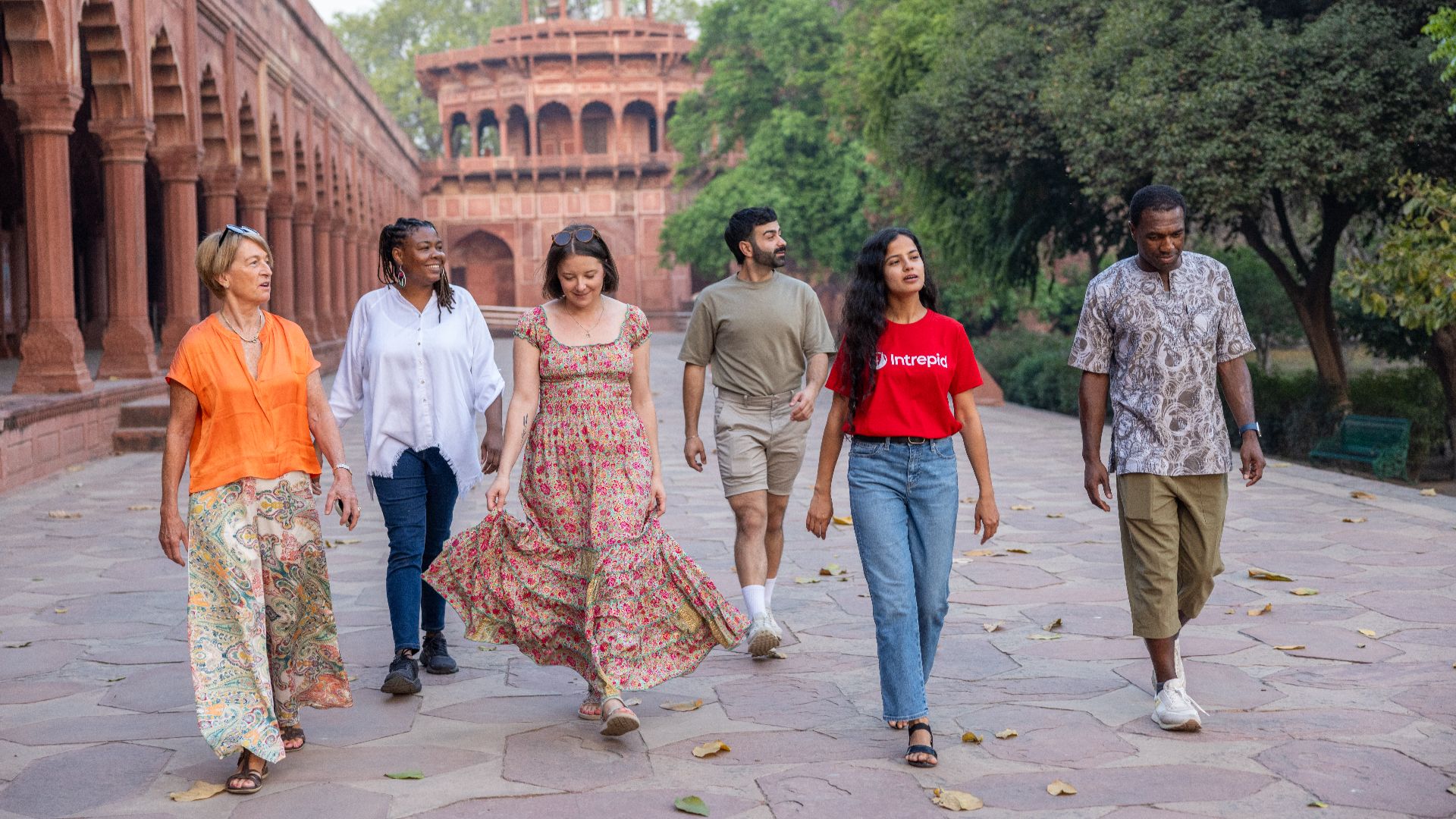
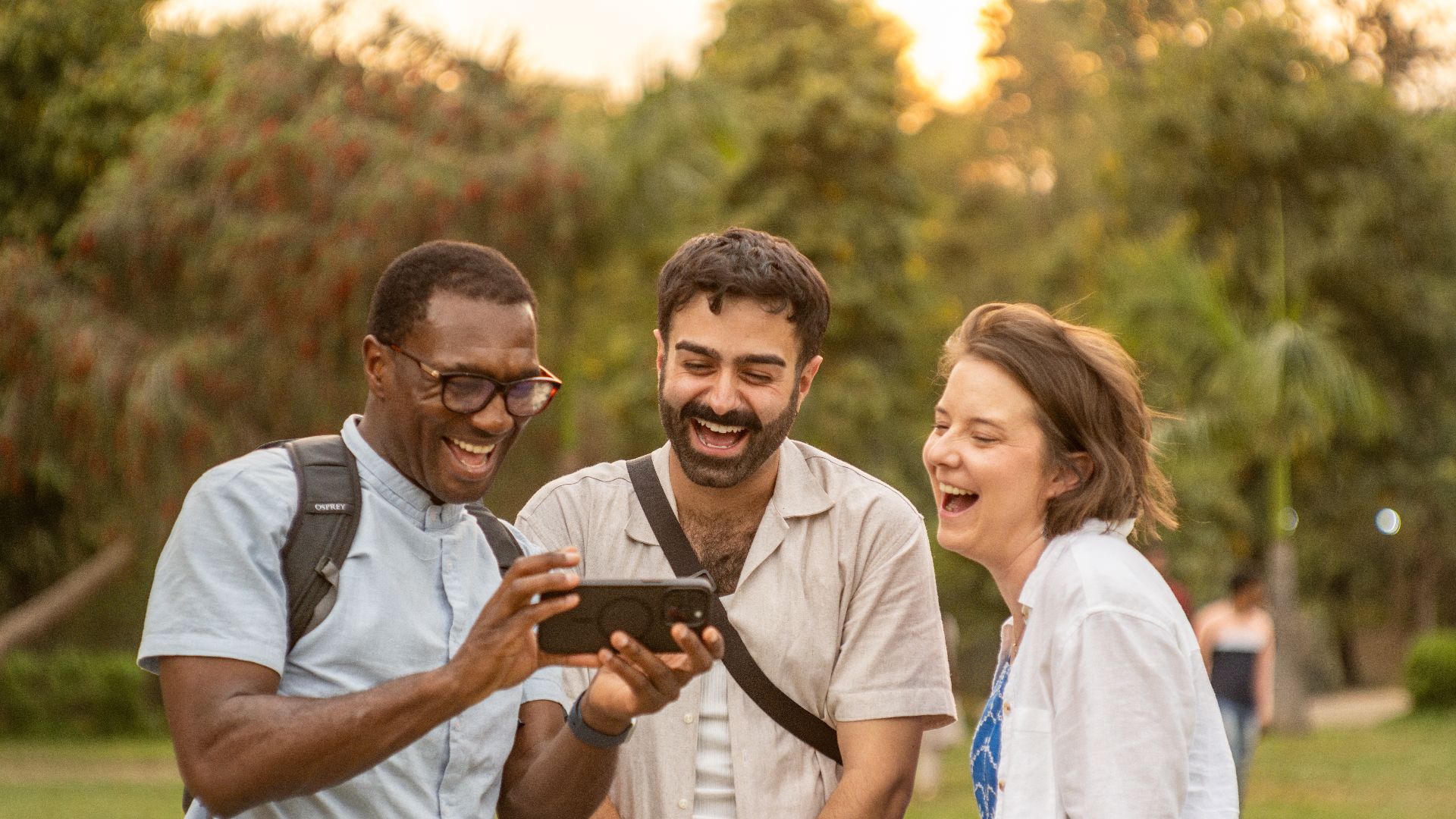
We drank, laughed and ate way too much spicy food as we all reflected on our favourite parts of the trip. As we exchanged numbers for a WhatsApp group, I knew we were leaving India with countless memories, nine new friends – and about 1,278 photos.
We visited more destinations than I’ve shared, but these cities left an India-shaped mark on me personally. Rajasthan is possibly the most daunting, astounding and unbelievable destination I’ve ever been to. I’d go back in a heartbeat.
Embark on your own adventure to India with a small-group trip in Rajasthan led by locals.