
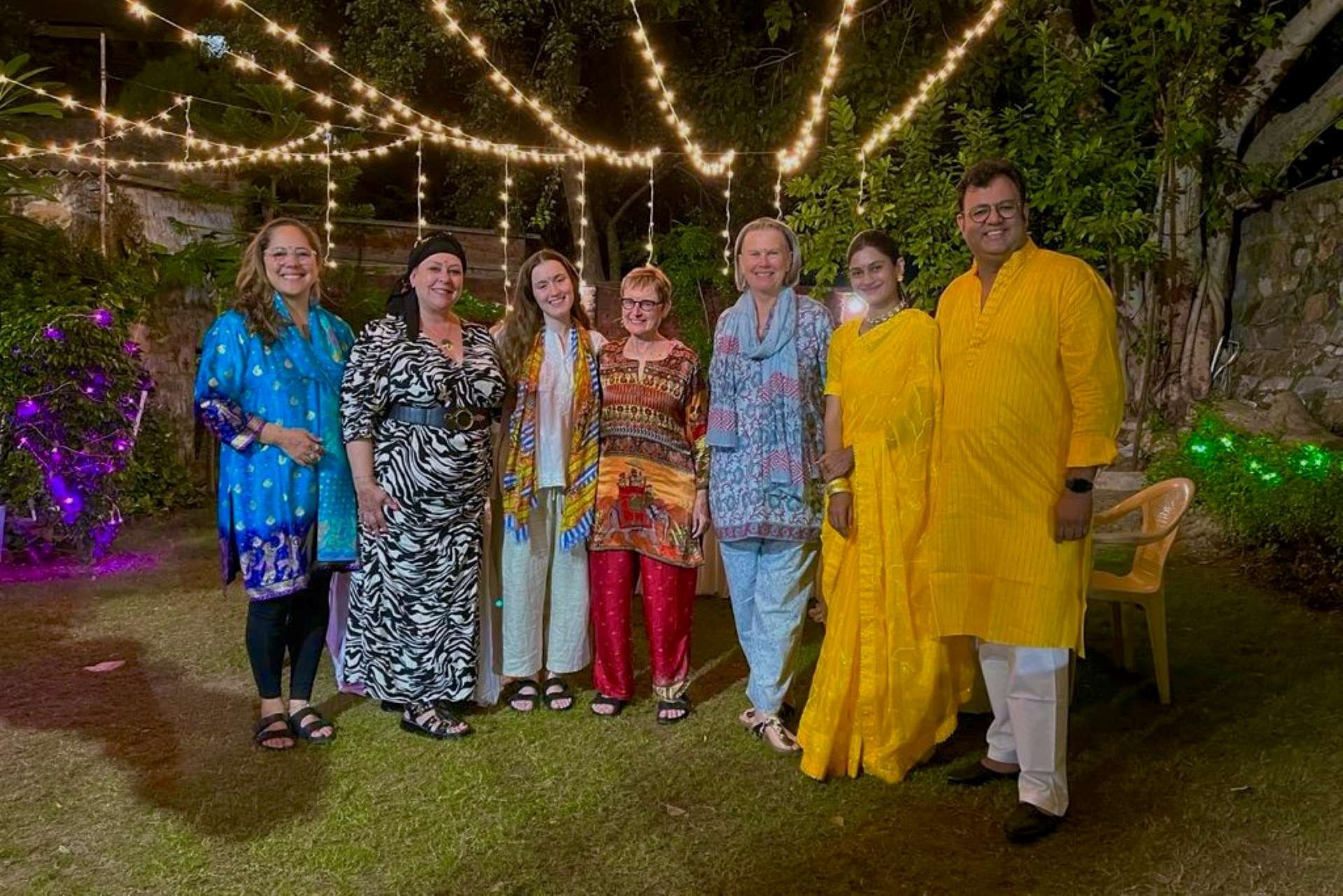
On her first trip to India, Liisa Ladouceur experienced the true spirit of Diwali thanks to a local Indian family who welcomed her into their home.
I admit – somewhat sheepishly – that I didn’t know all that much about Diwali before my Women’s Expedition with Intrepid. As a first-time traveller in India, I had no idea what to expect.
India is a uplifting place to visit any time of year, but Diwali is something else. Everyone was in a bright mood. Streets sparkled with strings of lights, fireworks lit up the sky with colour and markets were filled with sweets, orange marigold garlands, giant stalks of fresh sugar cane and piles of small clay oil lamps called diyas, which our trip leader, Anjali, explained gave Diwali its name.
Celebrated in India – and a handful of other Asia countries – Diwali is observed by more than a billion people worldwide of Hindu, Jain, Sikh and Buddhist faiths. This five-day festival marks the beginning of a new year and celebrates the triumph of good over evil and light over darkness.
As our group travelled around Rajasthan in the days leading up to the festival’s main event (the third, and darkest, day), we had the opportunity to learn about various Diwali traditions – which, over the course of the trip, meant I came away with a deeper understanding of Diwali and the culture and spirit of India’s people.
Taking part in local traditions
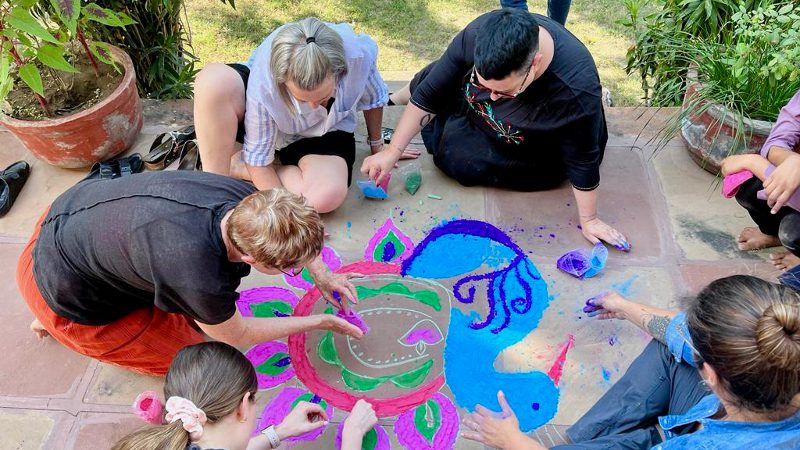
In the small, rural village of Chandelao, we got to help create a rangoli, an intricate decoration made with coloured sand to adorn the floor of an entranceway. Here, it was a delight to learn from some young Indian women who drew a pretty peacock design for us to fill in, even if it did test my hip flexibility and art skills. We were also treated to a session with a henna artist, who painted our hands in beautiful designs.
As we moved through Rajasthan, I learned that as well as a celebration of lights, this festival is a time of faith, family and feasts. Behind the scenes, families prepare for Diwali by cleaning their homes and buying new clothes and jewellery.
Not for the first time on this trip, I was reminded that hospitality is part and parcel of life in India.
Happily, I didn’t just get to experience the festival of lights on the streets – but with an Indian family in their Jaipur home, allowing me to witness all this up close.
Tasting new dishes was high on my list of reasons for visiting this country, so I was excited that our itinerary included a cooking demonstration at the home, where we would learn recipes from a local chef and enjoy a vegetarian meal together.
Having witnessed how much preparation goes into Diwali and the importance of being with loved ones during this festival, it was so generous of this family to welcome us. Not for the first time on this trip, I was reminded that hospitality is part and parcel of life in India.
Diwali in a local home
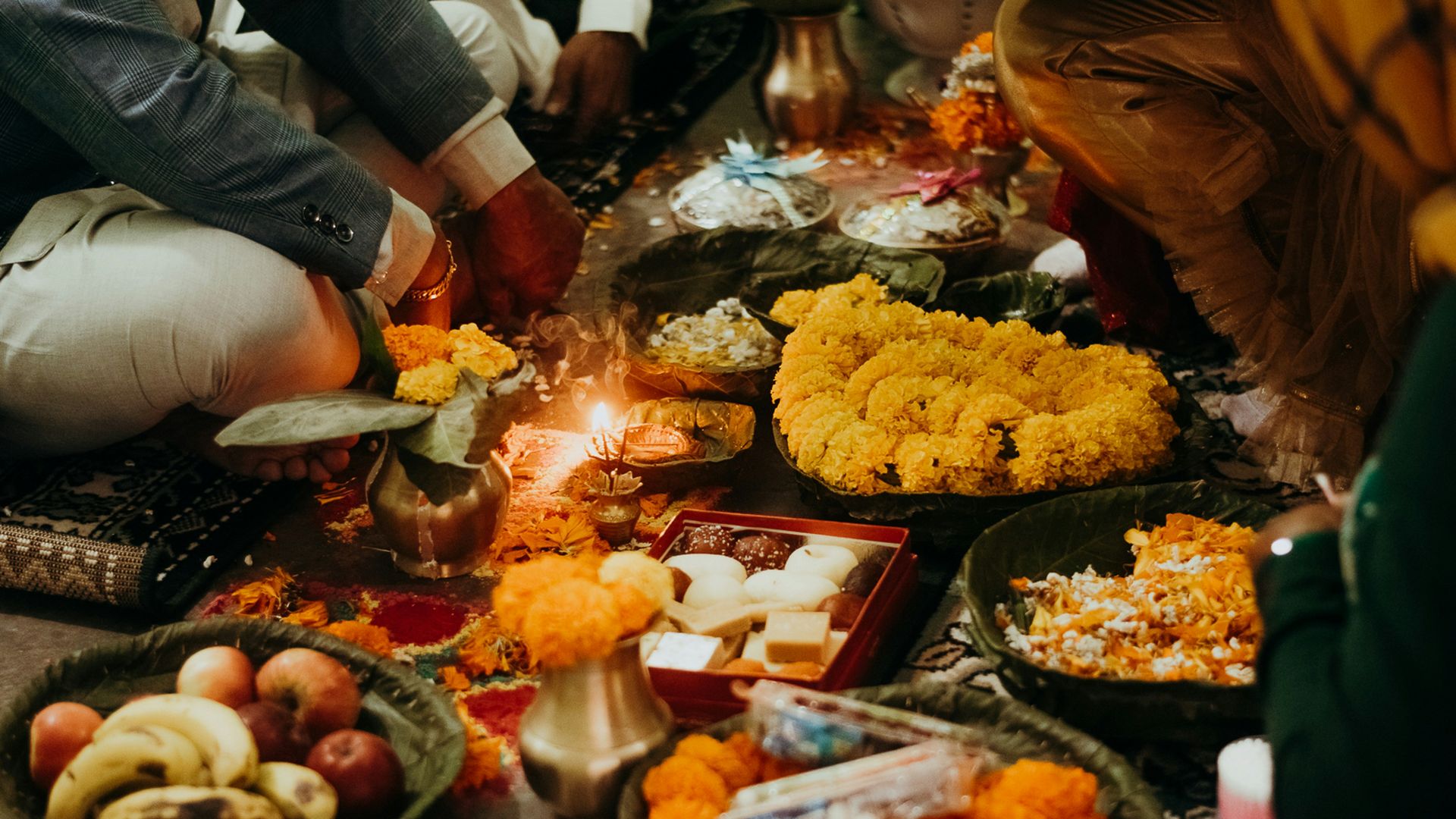
Our hosts, Divyashree and Saurabh, greeted us with a tilak: a small marking on the forehead made with red paste and grains of rice that has many significances in the country, including a greeting for guests. In return, as is customary during Diwali, we offered them sweets.
Immediately, we could feel the festival all around us. Our hosts had decorated their backyard with strings of white, purple and green lights, and the entire neighbourhood seemed to be setting off firecrackers.
Divyashree explained their family are Pushkarna Brahmin and follow a vegetarian diet that does not include any onion or garlic. So, for our meal, we’d be learning how to cook traditional Brahmin dishes with spices and ingredients that might be new to us.
Accordingly, I was introduced to asafoetida, a pungent onion substitute and a fruity mango powder called amchoor. Also featured was kalonji black nigella seeds and chaat masala, a medley of spices that our hosts told me you can eat with everything. I later picked up some chaat masala at the market to see for myself once I returned home, and it’s true.
During the lesson, we were invited to roll up our sleeves to help fry pakora dumplings and roll the dough for poori – a fried bread that puffs up into a ball when placed into hot oil – satisfying to watch.
Lightness amid the dark
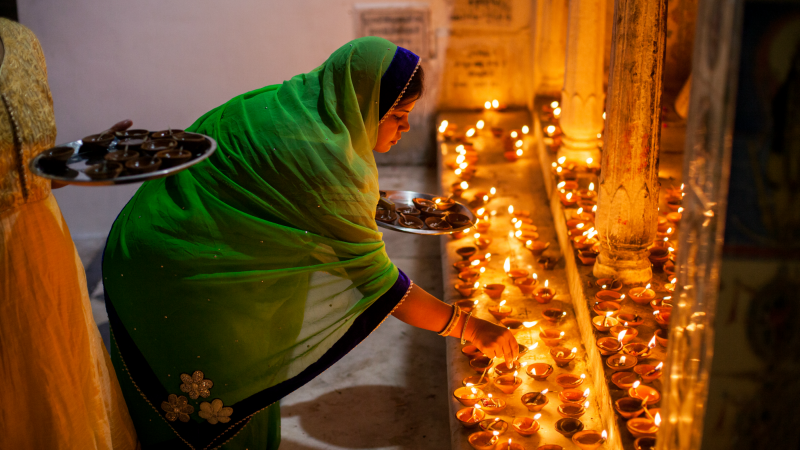
While our group was focused on the food, more family members arrived, bearing sweets and trays of burning diyas. Anjali told us this was the true spirit of Diwali. Saurabh invited us to join the family in taking a diya around the yard. ‘Wherever there is dark, put a light,’ he said.
Surrounded by the glow of light and the warmth of our hosts, we were seated to enjoy our special Diwali dinner. The couple prepared a silver thali plate for everyone with dishes like mango launji (chutney), bharwa bhindi (stuffed okra) and jeera aloo (spiced potatoes). It was by far the most delicious meal we had during the trip. Divyashree even gifted us her recipes in a booklet to take home.
But as much as I enjoyed making (and eating) the food, the joy of our evening came from the company and conversation. It came from the family who welcomed us into their home, the travel companions who had become my new friends and Anjali, who was so generous with answering our questions about Diwali. I want to return to India, but this felt like a once-in-a-lifetime experience, and I’m grateful to everyone who made it special.
With fireworks popping all around me, I left our Diwali dinner feeling full in my belly – but somehow lighter, illuminated by the people I’d met.
Liisa travelled with Intrepid on the India Women’s Expedition. These trips offer immersive local experiences for women that are ordinarily off limits on our regular group departures. To experience India during Diwali, search our India trips for corresponding dates.