Writer Cathy Winston was ready to be wowed by orangutans on her mum-and-daughter trip. But Borneo’s wildlife made such an impression, it inspired them to help protect it.
‘Look at their noses wobbling, mum!’ My 11-year-old daughter giggled as we watched a troop of proboscis monkeys tucking into their food.
Our visit to Labuk Bay Proboscis Monkey Sanctuary in Borneo was the final stop of our adventure around the Malaysian state of Sabah with Intrepid, but just one of many high points during a week spent spotting unforgettable native wildlife and their furry little offspring.
We expected to be wowed by the orangutans (and we were), but there was so much more which left my animal-loving daughter open-mouthed, grinning and determined to do her bit to help all of Borneo’s endangered wildlife. Here are our highlights from all the country’s best wildlife encounters.


Sepilok Orangutan Rehabilitation Centre and Bornean Sun Bear Conservation Centre
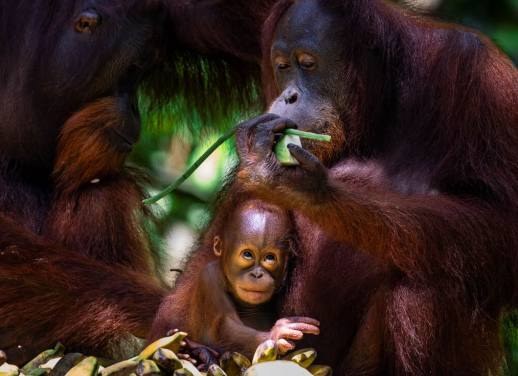
Early in the week, we got to watch the orangutans at Sepilok Orangutan Rehabilitation Centre, where you can not only see these great apes during twice-daily feedings, but learn more about how they’re being protected. The daily chow-downs are supplementary here, with the red apes otherwise given an unchanging menu of food to encourage them to forage in the semi-wild enclosure for themselves.
When we arrived, a one-year-old orangutan was practising forward rolls, legs flying with each roly-poly, grin visible on the other side of the play area. Elsewhere on the ropes – which the orangutans use to access raised feeding platforms – another little one was hanging off a bigger friend, the pair of them having huge fun dangling and climbing.
If you ignored the orange fur, you could have been in any playground in the world. But these were some of the rescued and orphaned orangutans that the centre takes in each year due to the the effects of the illegal pet trade, palm-oil plantations, habitat loss and being hunted for meat or medicine. There are currently 60 to 80 housed in the rainforest reserve here.
For orphaned babies who are brought in young, before they’ve had chance to master their skills, they’re often paired with an older orangutan ‘buddy’ as they play in the nursery – a rare treat to watch for visitors, who get to glimpse them behind one-way glass, so they’re unaware of any scrutiny. As they get older, they’re gradually moved to different areas, which open onto the rainforest so they’re free to leave.
Some never return to the sanctuary, while others head back every few days, so there are no guarantees you’ll see the adults. But you might get a lot closer than you expect. Strolling along the wooden walkways to the feeding platform, we spotted two full-grown orangutans making their way along the handrail.
Across the road at the Sun Bear Conservation Centre, which helps protect the world’s smallest bear, a mother orangutan with her baby sat resting at the junction of three paths. I edged past cautiously with my own daughter, who’d been chattering away about which orangutan she wanted to adopt. She was instantly silenced, eyes wide at the thrill of being so near.
Since then, she’s put an adopted orangutan and sun bear on her birthday wish list, and she suggested the orangutan rehabilitation centre as a charity for her school to support – proof of just how big an impact travel like this can have for little ones (human and furry).
Read more: How Intrepid has levelled up nature experiences
Sandakan Rainforest Discovery Centre
My daughter gasped as the squirrel leapt into the air, its ‘wings’ opening as it glided easily to the next tree. Watching giant flying squirrels high up in the tree canopy, on a walkway 620 metres above ground level, was a world away from spying their everyday grey cousins in our local park.
In the background, was the soundtrack of the huge pomponia merula: better known as the ‘six o’clock cicada’, as it starts its mix of croaking and high-pitched chirrups around sunset, some clocking up more decibels than the average motorbike.
As night fell, we wandered the paths by the light of our torches feeling miles from civilisation. Having Intrepid take care of the practical side of this family adventure, especially as I was travelling alone with my daughter, was a huge advantage when you’re heading off the beaten track. Thankfully, our night-walk guide not only kept us from getting entirely lost, but also had an impressive ability to spot some of the forest’s shyest and rarest nocturnal creatures.
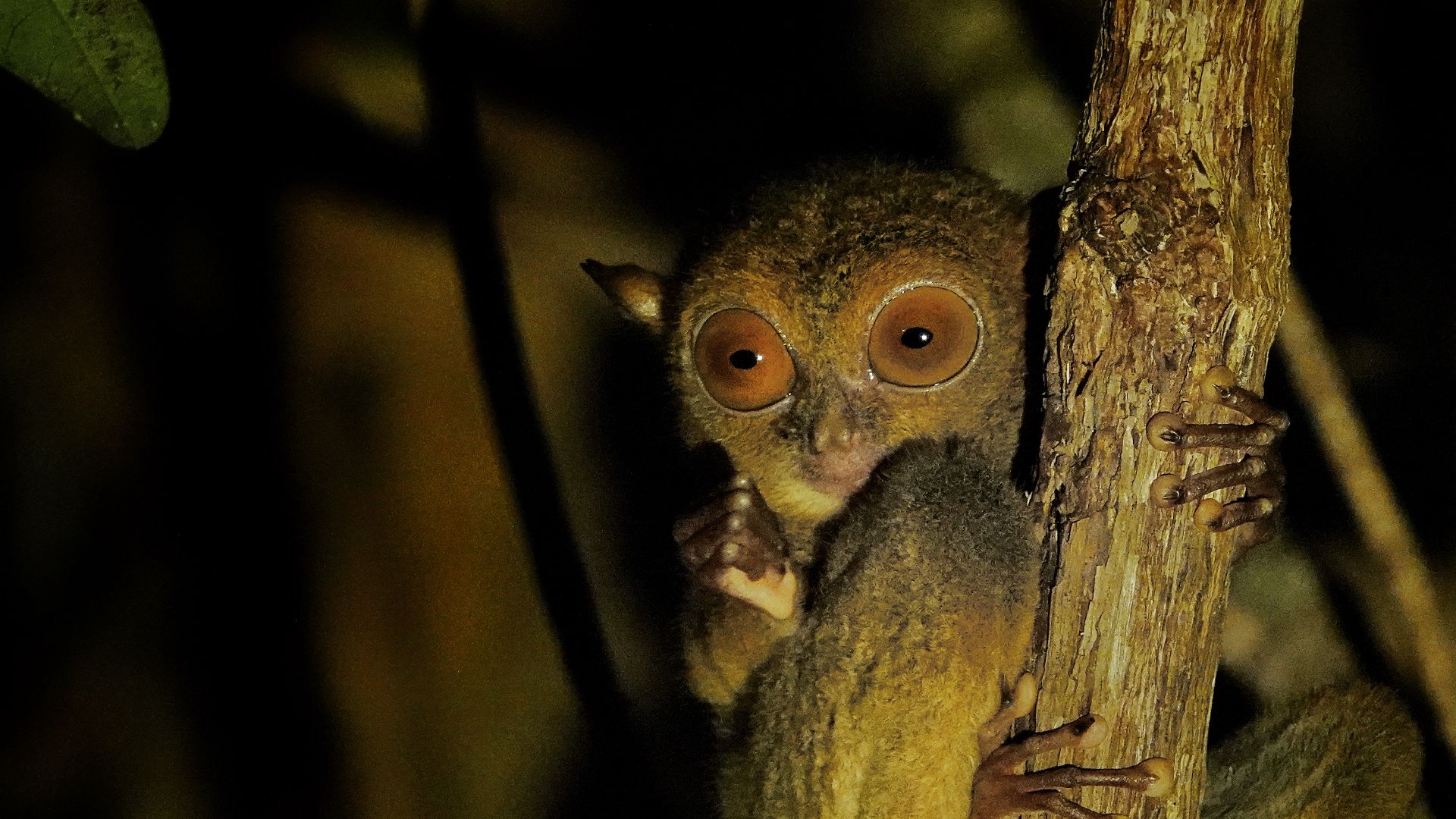
The highlight? Seeing a western tarsier – one of the oldest mammals on the planet, dating back an astonishing 55 million years, with its giant eyes and strange elongated fingers, that wouldn’t look out of place on ET (great for gripping trees).
The first two we encountered had heard us coming and leapt off into the undergrowth. But our persistence paid off with the sight of one clinging to a branch, eyes gleaming in the dark.
Emerging from the knee-high bushes, we were silently thrilled to have seen one for ourselves – and in my case, also pleased that we hadn’t encountered another native forest-dweller (the leech) on our after-dark adventure.


Labuk Bay Proboscis Monkey Sanctuary
If the macaques won the title of cheekiest monkeys spotted during our Borneo family holiday, the proboscis monkeys won my daughter’s heart for their, shall we say, unique looks.
To make it in the proboscis-monkey world, the bigger your nose and belly, the better. Having seen the males from a distance, clambering in the trees along the Kinabatangan River, harems in tow, or some of the bachelor groups settling down at night, we couldn’t wait to see them up close at the sanctuary.
We had to pass by the silvered-leaf langur monkeys first, including some bright orange/maroon babies, clearly visible against their grey mothers. One of the langur babies was being looked after by a well-meaning, but slightly ineffectual big sister, while its own mother snacked nearby.
But for entertainment, you couldn’t beat the proboscis monkeys: lounging casually on a branch as if it were an armchair, paws on knees and noses wobbling up and down with each bite they took. We even learned that proboscis monkeys can use those big noses as snorkels when they swim.
They quickly became my daughter’s firm favourite. We’ve now got a much-cuddled fluffy proboscis monkey toy as a permanent reminder of our unforgettable Borneo family adventure.
Read more: From solo traveller to family traveller – a mum’s journey


The Kinabatangan River region
Ten minutes after climbing into our boat and speeding off down the Kinabatangan River, we saw them – a family of three pygmy elephants in the water.
Trunks entwined, the baby was busily play-fighting with one of its parents, while the other splashed through the water looking for food on the opposite bank. They’re around eight to ten feet tall when fully grown, which may be small for elephants, but to the human eye, they’re still pretty sizeable.
How could we possibly top that kind of wildlife spotting? Well, the ecosystems along the Kinabatangan River region are so rich and varied that each of our multiple boat cruises to spot Borneo’s wildlife in its natural habitat was packed with countless moments to remember.
During two afternoon boat trips, we saw monkeys splashing about by the water’s edge before settling down in the trees to sleep, their backs to the river, as night-time predators come from the forest. There they were, proboscis monkeys, silvered-leaf langurs, long- and short-tailed macaques all leaping, climbing and then curling up together as the sun sank in the horizon.
Elsewhere, crocodiles basked on the banks, while birds flew overhead – an iridescent flash of blue from a kingfisher, dramatic black-and-red broadbills with their eye-catching green beaks, several species of hornbill, gleaming white herons and more.
Read more: Meet the mountain-climbing legend of Borneo
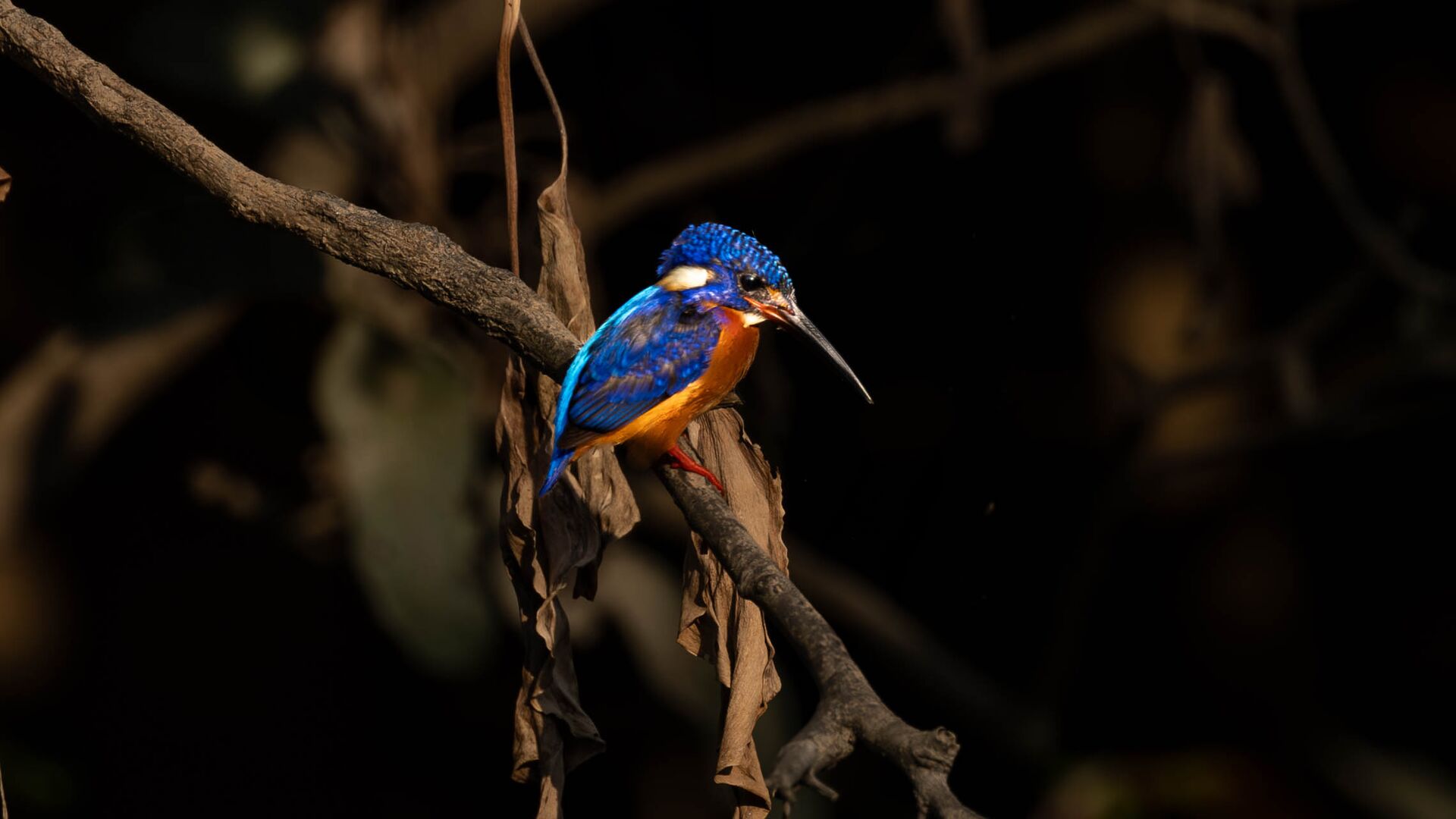
At night, the river has its own story. We glimpsed an owl waiting to hunt, while a rare slow loris clung to a branch during its nocturnal outing, all under more stars than we’ve ever seen, only the splash of our wake disturbing the silence.
We got to play a small part in helping protect the animals too, joining RESPonsible Elephant Conservation Trust (RESPECT), a local conservation project, to plant elephant grass in an effort to counteract the habitat loss and destruction of their food sources that contributes to the biggest threat facing Borneo’s 1,500 remaining pygmy elephants. Seeing them in the river might have been a holiday highlight for us, but it’s due to a lack of food that they’re often forced along the riverbanks to forage.
Supported by The Intrepid Foundation, RESPECT provides an opportunity for tourism to make a positive impact and give families a chance to get hands on. While my city-dwelling daughter isn’t usually keen on getting her hands dirty, she jumped at the chance to help the elephants, feeling a particular connection after seeing them first-hand. Suddenly, abstract images from books became real – and Borneo’s wildlife, in all its many shapes and sizes, was something not just to be seen, but saved.
Cathy Winston and her daughter travelled on Intrepid’s nine-day Borneo Family Holiday.
Images: Wildlife photography shot on location by local Intrepid leader Ben Duncan Angkee.